'Stuck in a swamp': Saudi Arabia seeks exit from Yemen war / Photo: © AFP/File

Eight years after launching its military campaign in Yemen, Saudi Arabia wants to extricate itself from the conflict, despite slim hopes of lasting peace, to focus on ambitious projects at home.
The oil-rich monarchy gave a signal this month by announcing plans to resume ties with Iran, which backs Yemen's Huthi rebels against the Saudi-supported government in a proxy war.
But as Saudi Arabia instigates sweeping social and economic changes as part of Crown Prince Mohammed bin Salman's "Vision 2030" reform, it "is seeking to shift its approach in Yemen from a military strategy to a soft security and political one", said Ahmed Nagi, from the International Crisis Group.
Since the Saudi-led military intervention began on March 26, 2015, the kingdom has pounded its impoverished neighbour with air strikes in a conflict that has triggered one of the world's worst humanitarian crises, according to the United Nations.
Hundreds of thousands of people have been killed through direct and indirect causes, with 4.5 million people internally displaced and more than two-thirds of the population living below the poverty line, according to UN estimates.
Nagi said that "military operations, such as air strikes" are now likely to cease, adding that the priority now is a "diplomatic solution".
The Saudi-led intervention, which marks its eighth anniversary on Sunday, came after the Huthis took control of the capital Sanaa in 2014.
- Rebranding project -
A UN-brokered ceasefire that took effect last April brought a sharp reduction in hostilities. Even though the truce expired in October, fighting has largely remained on hold.
Even before the truce, Saudi Arabia and the Huthis were engaging in back-channel negotiations, including talks in neutral neighbour Oman.
Riyadh's top priority is securing border areas and stopping the drone and missile attacks that have targeted its all-important oil facilities, analysts say.
"Saudi is currently negotiating with the Huthis to establish understandings that would enable it to secure its borderlands while maintaining influence" in areas controlled by Yemen's government, Nagi said.
"This new approach could enable Saudi to remain the key actor in Yemen's domestic politics, to ensure that no security threats can affect the kingdom in case conflict continues at the local level," Nagi added.
The Saudi-led intervention's stated aim was to protect civilians from Huthi attacks, restore the government and stop Yemen becoming a safe haven for Iranian-backed forces.
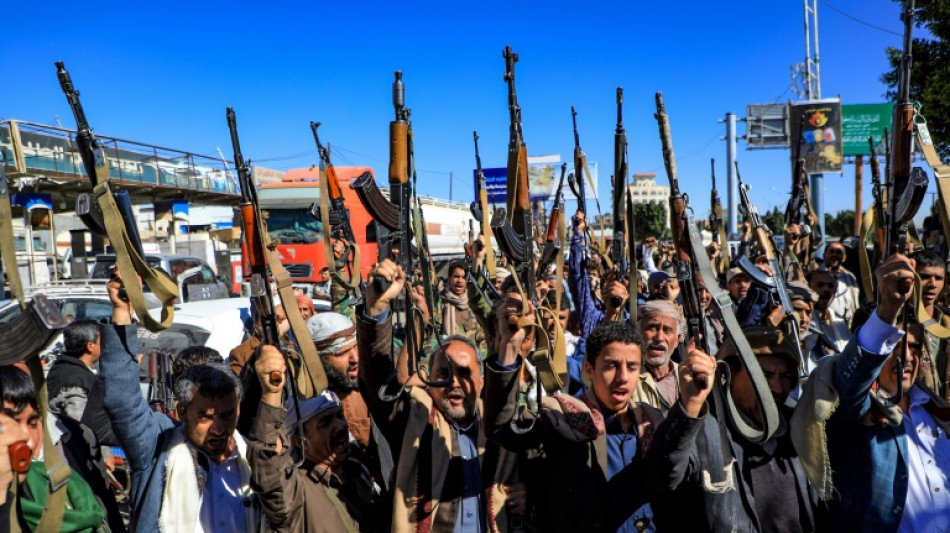
Eight years in, the rebels control swathes of the country and command an impressive arsenal of weapons that they have used to attack Saudi Arabia and the United Arab Emirates, another coalition member.
For Riyadh, the fallout jeopardises a rebranding project that aims to turn the conservative country into a hub for tourism and investment.
Saudi Arabia, relatively closed off for decades, is building a $500 billion futuristic new city, NEOM, and a swathe of holiday resorts and attractions.
"There is a huge focus in Saudi now on development, tourism, mega-projects," said an analyst following the negotiations between Riyadh and Huthi officials, speaking on condition of anonymity because he is not authorised to speak to the press.
For Riyadh, there is concern that "anything involving conflict" will harm investment and stability, the analyst added.
- 'Wash their hands' -
The unofficial talks with the Huthis are now maturing into a potential "understanding" that could pave the way for a slimmer Saudi military role ahead of a UN-sponsored inter-Yemeni dialogue, the analyst said.
"They want to go from some form of Saudi-Huthi understanding to being able to hand it over to a wider UN process," he said.
The Saudis "want to wash their hands of the situation," and avoid responsibility for any future flare-ups, he added.
A Saudi official, also speaking anonymously, said the country "will not tolerate any threat to our security", noting it shares a long border with Yemen.
"Iran can and should play a major part in promoting this -- and we hope it will," the official said, confirming negotiations with the Huthis aimed to revive UN-facilitated peace talks.
"We did see some progress of course, and we want to build on that progress to achieve lasting peace to open up for a political solution," the official said.
Many analysts are pessimistic that Riyadh's plans for a downsized military role will bring peace to Yemen, which remains deeply fractured along religious, regional and political lines.
Saudi Arabia, nonetheless, has "decided to leave Yemen whatever the price is", said an Arab diplomat in Riyadh. "They are... stuck in a swamp that is very costly on all levels."
T.Wu--ThChM