'I was born here': Thousands in limbo in Dominican Republic / Photo: © afp/AFP

When Andres was 12, his Dominican Republic citizenship -- his only possession of any real value -- was snatched from him by a court ruling targeting people with foreign-born parents.
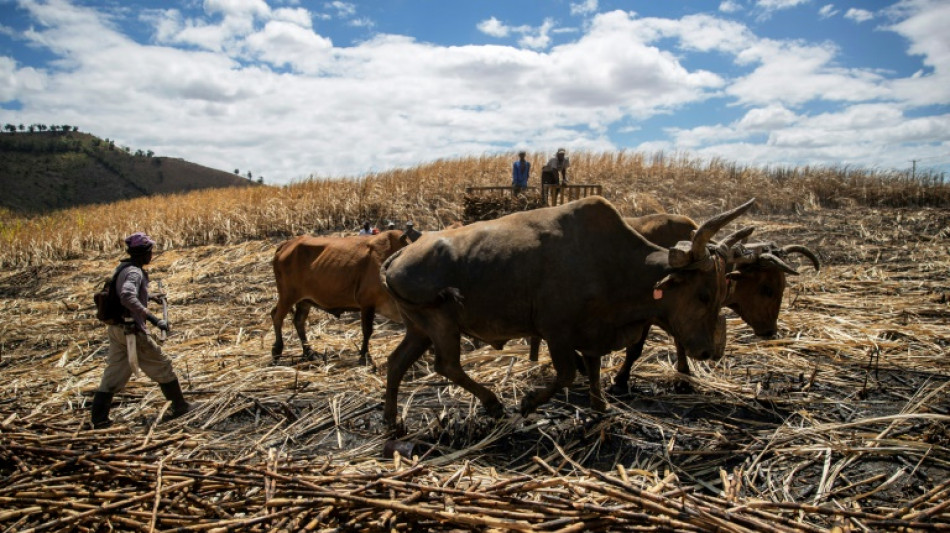
Ten years later, Andres is still undocumented in the country where he was born, working a backbreaking, low-paying job in the sugarcane fields with little hope of bettering himself.
Andres's mother is from Haiti, with which the Dominican Republic shares the island of Hispaniola and a long history of migratory conflict.
His father, a local, is not in the picture.
"I was born here... my nationality is Dominican," said the young man who has a birth certificate but no ID card -- a prerequisite for any administrative procedure.
Andres, whose surname is being concealed to protect him, is one of some 250,000 Dominicans born to foreign parents -- mainly Haitians -- who had their birthright citizenship stripped by a Constitutional Court ruling in 2013.
The court decided that only people born in the country to Dominican parents or legal residents can be citizens.
The ruling was applied retroactively to all people born to expats in the republic from 1929 to 2010 -- creating "a situation of statelessness of a magnitude never before seen in the Americas," according to the Inter-American Commission on Human Rights.
Thousands of newly undocumented people have since been expelled from the country of 10.5 million inhabitants -- many to Haiti, a failing country they do not even know.
- Paying for a name -
Many undocumented cane workers like Andres live in "bateyes" -- precarious settlements of rickety wooden houses with outside toilets.
Immigration raids are rare here. But the cane workers regularly get rounded up when they go to the cities and towns in search of higher-paying jobs or medical care.
Even pregnant women have been expelled after going for checkups.
At one settlement around a batey in El Seibo, some 120 kilometers (75 miles) east of the capital Santo Domingo, children play on dirt streets while workers play dominoes and make jokes in Creole -- the Haitian language derived from French.
Most are from Haiti or descendants of Haitians -- a throwback from the time of dictator Rafael Leonidas Trujillo (1930-1961) who actively pursued laborers from there.
Most who came to the Dominican Republic were illiterate and were never provided with proper migration papers even though they stayed on as life in neighboring Haiti -- the poorest country in the Americas -- became more and more complicated.
There was no visa and no official residence -- a situation interpreted by the Constitutional Court as meaning those first generations of workers were merely in transit.
Until the ruling, those born on Dominican soil -- except for those born to migrants in transit -- were automatically citizens. But no longer.
Desperate, some have taken to paying Dominicans to adopt their children, at least on paper, so that they can have ID papers.
- 'Enormous vulnerability' -
The government in 2014 announced the creation of a special register to formalize the residency status of undocumented laborers, but the NGO Participation Ciudadana said only about 27,000 people had gone through the process.
"They are neither from here nor from there," said 34-year-old Elena Lorac, an activist herself affected by the court ruling.
"All these policies of denationalization have left us with enormous vulnerability."
The Spanish-speaking Dominican Republic maintains a bitter relationship with Haiti, dating all the way back to 22 years of Haitian occupation which ended in 1844.
The illegal immigration of Haitians in recent years has added to the tension and xenophobia.
Many Dominicans talk of an "invasion," frequently claiming there are as many as three million Haitian immigrants and descendants in the country, although officially the number is just over 750,000.
"They immediately point me out: 'This one is Haitian,' because of my skin color and because I have frizzy hair," said Maria Paul, 53.
She too was born in the Dominican Republic, but has no ID papers.
"My parents were immigrants, but I'm not an immigrant," she insisted to AFP.
Added Lorac: "We are here. We are not going anywhere. We don't even know" Haiti.
The government of President Luis Abinader, widely criticized for its stance on Haitian migration -- with a sharp rise in deportations and the erection of a border wall -- did not reply to AFP's request for comment.
D.Pan--ThChM