The China Mail - Iceland eruption confirms faultline has reawakened: expert

USD -
AED 3.672497
AFN 64.499262
ALL 81.070066
AMD 361.549984
ANG 1.789785
AOA 917.999711
ARS 1524.2543
AUD 1.431496
AWG 1.8
AZN 1.701035
BAM 1.743829
BBD 2.014417
BDT 123.721084
BGN 1.747831
BHD 0.377781
BIF 3002.474199
BMD 1
BND 1.279451
BOB 11.686453
BRL 5.0403
BSD 1.000134
BTN 94.889261
BWP 13.713165
BYN 2.983818
BYR 19600
BZD 2.011502
CAD 1.407405
CDF 2315.000055
CHF 0.825305
CLF 0.024929
CLP 981.129534
CNY 6.67915
CNH 6.67879
COP 3160.57
CRC 454.28202
CUC 1
CUP 24.00428
CVE 98.600451
CZK 21.665901
DJF 178.099352
DKK 6.656515
DOP 61.513085
DZD 134.611017
EGP 53.948904
ERN 15
ETB 160.898607
EUR 0.89054
FJD 2.258101
FKP 0.751528
GBP 0.749245
GEL 2.595043
GGP 0.751528
GHS 11.687293
GIP 0.751528
GMD 73.495892
GNF 8797.502876
GTQ 7.646492
GYD 209.208602
HKD 7.84807
HNL 26.939936
HRK 6.709901
HTG 130.833872
HUF 323.453013
IDR 18005
ILS 3.106575
IMP 0.751528
INR 94.89735
IQD 1516.294414
IRR 1795727.495433
ISK 121.28025
JEP 0.751528
JMD 158.942169
JOD 0.709034
JPY 158.157002
KES 129.860504
KGS 87.450057
KHR 4069.000026
KMF 438.999746
KPW 899.999961
KRW 1327.620108
KWD 0.31071
KYD 0.833489
KZT 452.159957
LAK 22492.498389
LBP 89549.999703
LKR 331.452008
LRD 171.097242
LSL 16.409783
LTL 2.95274
LVL 0.60489
LYD 6.419778
MAD 9.781598
MDL 17.833435
MGA 4549.999778
MKD 54.963867
MMK 2099.540776
MNT 3598.083246
MOP 8.085328
MRU 40.201353
MUR 47.259761
MVR 15.449721
MWK 1742.00016
MXN 18.419165
MYR 4.083502
MZN 63.909703
NAD 16.410287
NGN 1326.497435
NIO 36.845037
NOK 9.39476
NPR 151.823815
NZD 1.760115
OMR 0.384503
PAB 1.000129
PEN 3.448497
PGK 4.50225
PHP 63.1005
PKR 276.825016
PLN 3.892445
PYG 5768.724951
QAR 3.642013
RON 4.744799
RSD 104.559014
RUB 82.752979
RWF 1475
SAR 3.763651
SBD 8.058149
SCR 13.892637
SDG 601.503112
SEK 9.9015
SGD 1.278555
SHP 0.750188
SLE 24.679996
SLL 20969.504398
SOS 571.498196
SRD 37.695129
STD 20697.981008
STN 21.95
SVC 8.751165
SYP 13001.999685
SZL 16.410307
THB 33.604502
TJS 9.211455
TMT 3.5
TND 3.00401
TOP 2.40776
TRY 49.578201
TTD 6.785253
TWD 32.623903
TZS 2645.334979
UAH 45.096251
UGX 4160.276757
UYU 40.158351
UZS 12045.00023
VES 879.788897
VND 25882
VUV 119.358066
WST 2.773115
XAF 584.156242
XAG 0.017477
XAU 0.000242495668
XCD 2.70255
XCG 1.802595
XDR 0.707052
XOF 584.156242
XPF 106.498957
YER 236.149942
ZAR 16.41496
ZMK 9001.197866
ZMW 19.978334
ZWL 321.999592
SSP 5816.545442
MXV 2.079212
  • RYCEF

    0.4000

    19.71

    +2.03%

  • CMSC

    0.0000

    20.4

    0%

  • BTI

    0.4200

    56.05

    +0.75%

  • BP

    0.2800

    44.43

    +0.63%

  • RBGPF

    1.6000

    67

    +2.39%

  • RIO

    -0.1500

    94.41

    -0.16%

  • AZN

    -0.4300

    166.15

    -0.26%

  • GSK

    0.4600

    49.7

    +0.93%

  • BCE

    -0.4100

    20.56

    -1.99%

  • NGG

    -0.2500

    75.24

    -0.33%

  • VOD

    -0.0400

    16.58

    -0.24%

  • RELX

    -0.4500

    33.07

    -1.36%

  • BCC

    -0.5500

    76.59

    -0.72%

  • CMSD

    -0.0300

    20.27

    -0.15%

  • JRI

    -0.2500

    10.77

    -2.32%

Iceland eruption confirms faultline has reawakened: expert
Iceland eruption confirms faultline has reawakened: expert / Photo: © AFP/File

Iceland eruption confirms faultline has reawakened: expert

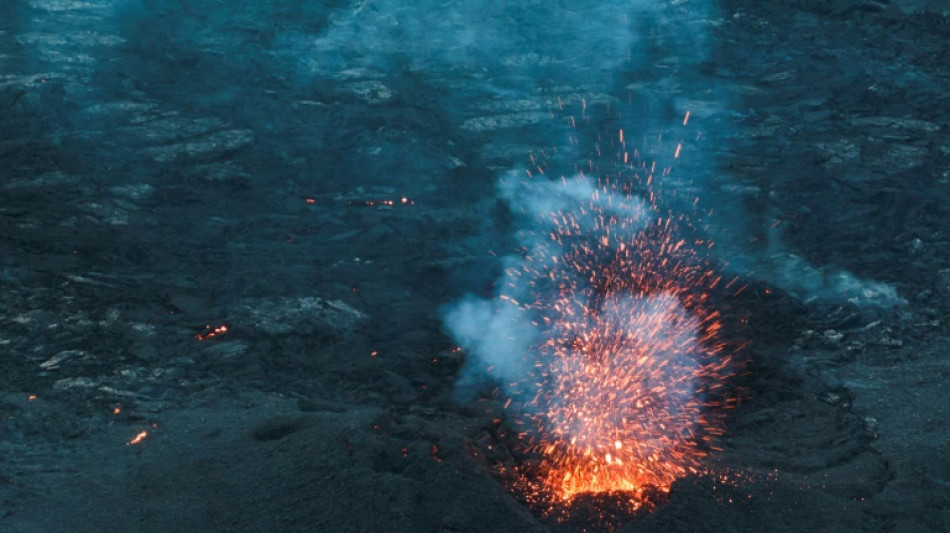
A volcanic eruption that has engulfed homes in an Icelandic fishing port confirms that a long-dormant faultline running under the country has woken up, threatening to belch out lava with little warning for years to come, an expert warned on Tuesday.

Text size:

Glowing lava swallowed several homes on Sunday at the edge of the town of Grindavik, southwest of the capital Reykjavik.

The fishing town was mostly evacuated due to threat of an eruption last month and the most recent volcanic activity has since eased, authorities in the North Atlantic nation said on Monday.

The island straddles the Mid-Atlantic Ridge, a crack in the ocean floor separating the Eurasian and North American tectonic plates.

Sunday's eruption was the fifth in fewer than three years on the Reykjanes peninsula, which had not previously seen one in centuries.

"After eight centuries of a relative break and a complete cessation of surface activity, we have entered a new episode of plate separation which could last several years -- possibly decades," volcanologist Patrick Allard from France's Institut de Physique du Globe de Paris told AFP.

Even before the first of the five eruptions on March 2021, scientists "saw the ground distorting, with magma rising from the depths and seeping into" an area three to 10 kilometres (two to six miles) below the surface, he said.

As that magma bubbled its way upwards through fissures in the Earth, eruptions started to occur.

- 'Ready to erupt' -

The two most recent eruptions -- last month and on Sunday, both threatening Grindavik -- were brief and preceded by very little seismic activity.

This shows that the "magma is very close to the surface, ready to erupt", Allard said.

The thinness of the Earth's crust near the faultline under Iceland will help prompt these magma "pressure releases," he said.

But the amount that will actually burst out of the Earth's surface is not expected to be enormous, he added.

The location of this fragile faultline is likely to continue to be a problem.

It poses a threat to the nearby Svartsengi geothermal plant, which provides electricity and water to the 30,000 residents of the Reykjanes peninsula -- a tenth of Iceland's population.

The eruptions have also forced the closure of the Blue Lagoon, a popular tourist destination near Grindavik famed for its geothermal spas.

Allard said Grindavik was built on lava flows from 800 years ago, which "raises the question as to (the logic behind) the town's very existence".

And there will probably be little warning before the next eruption.

During the last two eruptions, there were only a "few hours of critical seismic activity" to warn that magma was quickly rising to the surface, he said.

There was also a risk of an underwater eruption, which could create an "explosive phenomenon, releasing more volcanic ash".

However experts have said that such an extreme event is considered unlikely to happen on the Reykjanes peninsula.

Y.Su--ThChM