The China Mail - Climate change drove extreme rain in southeast Africa storms: study

USD -
AED 3.672498
AFN 65.000011
ALL 81.757752
AMD 363.060451
ANG 1.790365
AOA 918.000024
ARS 1517.698862
AUD 1.433048
AWG 1.8
AZN 1.69681
BAM 1.745081
BBD 2.014187
BDT 123.310283
BGN 1.683441
BHD 0.377783
BIF 2992.192728
BMD 1
BND 1.280571
BOB 11.845639
BRL 4.990799
BSD 1.000045
BTN 96.679902
BWP 13.757752
BYN 3.042248
BYR 19600
BZD 2.011332
CAD 1.426899
CDF 2309.999691
CHF 0.829664
CLF 0.024814
CLP 976.9698
CNY 6.69215
CNH 6.69365
COP 3214.008476
CRC 456.301584
CUC 1
CUP 24.001785
CVE 98.38501
CZK 21.763303
DJF 178.086103
DKK 6.672598
DOP 60.611198
DZD 134.724069
EGP 52.403301
ERN 15
ETB 162.480749
EUR 0.892502
FJD 2.24725
FKP 0.755711
GBP 0.755201
GEL 2.589813
GGP 0.755711
GHS 11.755521
GIP 0.755711
GMD 73.499807
GNF 8797.680125
GTQ 7.645773
GYD 209.172429
HKD 7.848102
HNL 26.843631
HRK 6.725599
HTG 130.956948
HUF 325.846024
IDR 17891.4
ILS 3.06346
IMP 0.755711
INR 96.7755
IQD 1515.056882
IRR 1779469.999944
ISK 122.150283
JEP 0.755711
JMD 158.724069
JOD 0.708976
JPY 158.535039
KES 129.698862
KGS 87.449835
KHR 4060.673656
KMF 440.000378
KPW 900.000318
KRW 1340.879899
KWD 0.31096
KYD 0.833371
KZT 454.436761
LAK 22426.053982
LBP 89555.476244
LKR 330.885568
LRD 171.010484
LSL 16.545706
LTL 2.95274
LVL 0.60489
LYD 6.430515
MAD 9.82021
MDL 17.93085
MGA 4459.513718
MKD 54.940888
MMK 2099.813295
MNT 3595.111531
MOP 8.083426
MRU 39.963417
MUR 47.460157
MVR 15.449719
MWK 1734.106625
MXN 18.432498
MYR 4.085502
MZN 63.910148
NAD 16.545706
NGN 1328.999855
NIO 36.80571
NOK 9.75455
NPR 154.687486
NZD 1.780844
OMR 0.384742
PAB 1.000045
PEN 3.429668
PGK 4.534464
PHP 62.745003
PKR 276.931162
PLN 3.90775
PYG 5688.155253
QAR 3.65532
RON 4.766002
RSD 104.733437
RUB 85.159581
RWF 1474.102164
SAR 3.75677
SBD 8.078071
SCR 14.674973
SDG 601.501083
SEK 10.045855
SGD 1.273898
SHP 0.755572
SLE 24.67031
SLL 20969.491881
SOS 571.492304
SRD 37.692501
STD 20697.981008
STN 21.860361
SVC 8.75039
SYP 13002.000254
SZL 16.542494
THB 33.553
TJS 9.200535
TMT 3.51
TND 2.984609
TOP 2.40776
TRY 49.221296
TTD 6.793665
TWD 31.961396
TZS 2640.285523
UAH 44.916529
UGX 4089.225965
UYU 40.169529
UZS 11900.959179
VES 875.701601
VND 25899.5
VUV 119.371348
WST 2.785507
XAF 585.442846
XAG 0.016442
XAU 0.000238418806
XCD 2.70255
XCG 1.802364
XDR 0.707052
XOF 585.442846
XPF 106.410886
YER 236.195179
ZAR 16.60625
ZMK 9001.202842
ZMW 19.875976
ZWL 321.999592
SSP 5757.531856
MXV 2.082409
  • RYCEF

    0.4000

    19.71

    +2.03%

  • CMSC

    0.0000

    20.4

    0%

  • BTI

    0.4200

    56.05

    +0.75%

  • BP

    0.2800

    44.43

    +0.63%

  • RBGPF

    1.6000

    67

    +2.39%

  • RIO

    -0.1500

    94.41

    -0.16%

  • AZN

    -0.4300

    166.15

    -0.26%

  • GSK

    0.4600

    49.7

    +0.93%

  • BCE

    -0.4100

    20.56

    -1.99%

  • NGG

    -0.2500

    75.24

    -0.33%

  • VOD

    -0.0400

    16.58

    -0.24%

  • RELX

    -0.4500

    33.07

    -1.36%

  • BCC

    -0.5500

    76.59

    -0.72%

  • CMSD

    -0.0300

    20.27

    -0.15%

  • JRI

    -0.2500

    10.77

    -2.32%

Climate change drove extreme rain in southeast Africa storms: study


Climate change drove extreme rain in southeast Africa storms: study

A string of deadly storms pummelled Madagascar, Malawi and Mozambique with more intense rainfall because of climate change, new research found Monday.

Text size:

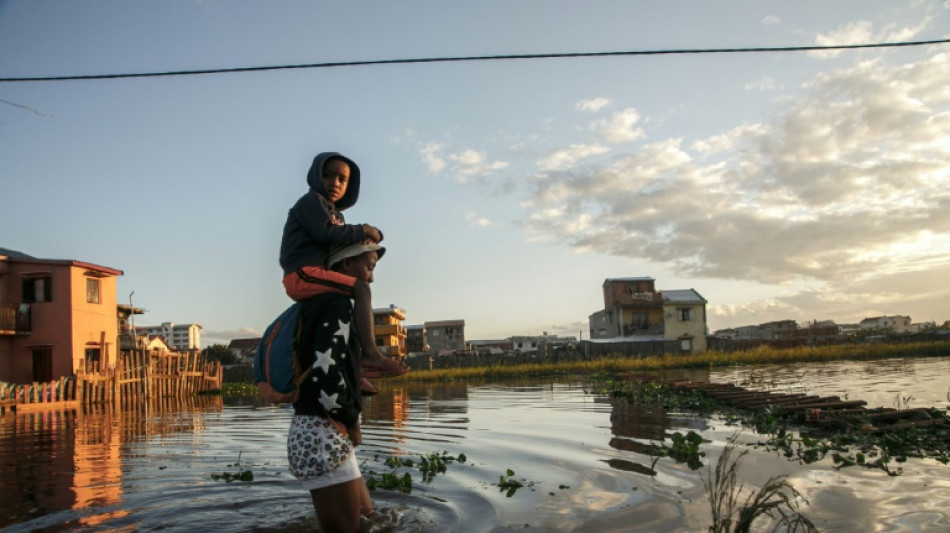
Three tropical cyclones and two tropical storms hit Southeast Africa in just six weeks in the first months of this year, causing widespread flooding.

More than a million people were affected and at least 230 people died.

The analysis was carried out by the World Weather Attribution (WWA) network of scientists, which has pioneered ways to speedily link extreme weather events to climate change.

They said that it was climate change that had made the heavy rains brought by the back-to-back storms both heavier and more likely.

"Again we are seeing how the people with the least responsibility for climate change are bearing the brunt of the impacts," said WWA co-founder Friederike Otto, of the Grantham Institute at Imperial College London.

After Tropical Storm Ana smashed into the region in January, Tropical Cyclone Batsirai hit Madagascar in early February, followed in quick succession by Tropical Storm Dumako and Tropical Cyclones Emnati and Gombe.

WWA scientists used weather observations and computer simulations to compare rainfall patterns under today's climate to that of the pre-industrial area, before global warming.

They focused on two of the wettest periods -- during storm Ana in Malawi and Mozambique and during cyclone Batsirai in Madagascar.

"In both cases, the results show that rainfall associated with the storms was made more intense by climate change and that episodes of extreme rainfall such as these have become more frequent," WWA said in a report of their findings.

That tallies with overall climate research showing that global warming can increase the frequency and intensity of rainfall.

- Data plea -

But the scientists were not able to determine exactly how much climate change influenced the extreme events because of a shortage of high quality historical rainfall records for the region.

This is a particular concern in poorer nations, which are also especially vulnerable to the impacts of climate change.

"Strengthening scientific resources in Africa and other parts of the global South is key to help us better understand extreme weather events fueled by climate change, to prepare vulnerable people and infrastructure to better cope with them," said Izidine Pinto, of the University of Cape Town and the Red Cross Red Crescent Climate Centre.

WWA said that of 23 weather stations in the affected area in Mozambique, only four had relatively complete records going back to 1981.

In Madagascar and Malawi there were no weather stations with suitable data.

Madagascar, one of the poorest countries in the world, has also been ravaged by drought in its southern region, leading to malnutrition and pockets of famine.

In December, the WWA said global warming had played only a minimal role in that crisis, contradicting a UN description of the situation as a "climate change famine".

A.Kwok--ThChM