Philippine, Chinese ships collide near hotspot reef: Beijing / Photo: © AFP/File

A Philippine ship and a Chinese vessel collided near the Second Thomas Shoal in the disputed South China Sea on Monday, the Chinese Coast Guard said.
Known in Chinese as the Ren'ai Reef, the Second Thomas Shoal hosts a garrison of Philippine troops on a grounded navy vessel, the Sierra Madre, to assert Manila's claims to the waters.
The area has seen a number of confrontations between Chinese and Philippine ships, often during Philippine attempts to supply the garrison.
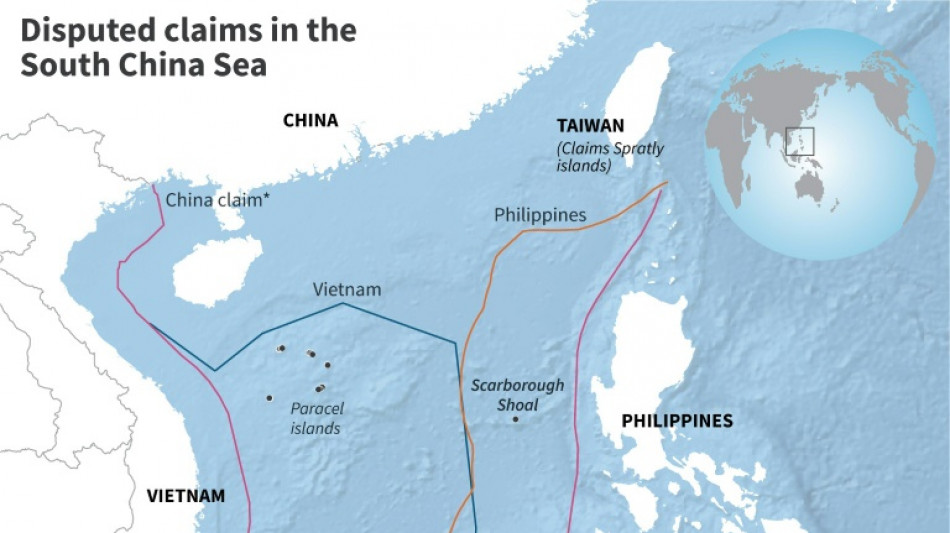
The Shoal lies about 200 kilometres (120 miles) from the western Philippine island of Palawan and more than 1,000 kilometres from China's nearest major landmass, Hainan island.
The Chinese coast guard said in a statement Monday that a Philippine resupply ship in the area had "ignored many solemn warnings from the Chinese side".
It "approached the... Chinese vessel in an unprofessional way, resulting in a collision", the statement said.
Beijing accused the ship of having "illegally broken into the sea near Ren'ai Reef in China's Nansha Islands".
"The Chinese Coast Guard took control measures against the Philippine ship in accordance with the law."
Beijing claims almost the entirety of the South China Sea, brushing aside competing claims from several Southeast Asian nations including the Philippines and an international ruling that its stance has no legal basis.
China deploys coast guard and other boats to patrol the waters and has turned several reefs into militarised artificial islands.
This month, Manila accused Chinese boats of illegally seizing food and medicine airdropped to the Philippine outpost at the Second Thomas Shoal.
It was the first time supplies had been seized, the military said.
Chinese personnel on the boats later dumped the items in the water, Philippine Navy spokesman for the West Philippine Sea Commodore Roy Vincent Trinidad said.
It was not clear if they belonged to the Chinese coast guard or navy, the military said.
China in response insisted the Sierra Madre was illegally grounded on the reef and urged the Philippines to "stop making trouble".
- 'Dangerous' incursions -
On Saturday, new Chinese coast guard rules took effect under which it can detain foreigners for alleged trespassing in the disputed sea.
Manila has accused the Chinese coast guard of "barbaric and inhumane behaviour" against Philippine vessels, and President Ferdinand Marcos has called the new rules a "very worrisome" escalation.
China has defended its new coast guard rules. A foreign ministry spokesman said last month they were intended to "better uphold order at sea".
Chinese Coast Guard vessels have used water cannon against Philippine boats multiple times in the contested waters.
There have also been collisions that injured Philippine troops.
The Group of Seven bloc on Friday criticised what it called "dangerous" incursions by China in the South China Sea.
Confrontations between China and the Philippines have raised fears of a wider conflict over the sea that could involve the United States and other allies.
Trillions of dollars in ship-borne trade passes through the South China Sea annually, and huge unexploited oil and gas deposits are believed to lie under its seabed, though estimates vary greatly.
P.Deng--ThChM