The China Mail - Wildfires pushed Canada into top four CO2 emitters in 2023

USD -
AED 3.672497
AFN 64.498121
ALL 80.674975
AMD 361.449729
ANG 1.789785
AOA 917.000131
ARS 1524.732201
AUD 1.426904
AWG 1.80125
AZN 1.701879
BAM 1.74449
BBD 2.013379
BDT 123.649824
BGN 1.747831
BHD 0.37725
BIF 2996
BMD 1
BND 1.278292
BOB 11.691144
BRL 5.024301
BSD 0.999639
BTN 94.927772
BWP 13.724852
BYN 2.981492
BYR 19600
BZD 2.010606
CAD 1.40649
CDF 2315.999692
CHF 0.825545
CLF 0.024781
CLP 975.309893
CNY 6.67805
CNH 6.67463
COP 3182.13
CRC 454.01635
CUC 1
CUP 23.991865
CVE 98.499594
CZK 21.636496
DJF 177.719792
DKK 6.656395
DOP 61.550176
DZD 134.506481
EGP 54.499602
ERN 15
ETB 161.149556
EUR 0.89057
FJD 2.253799
FKP 0.751528
GBP 0.74763
GEL 2.589945
GGP 0.751528
GHS 11.625024
GIP 0.751528
GMD 73.5023
GNF 8795.000334
GTQ 7.639477
GYD 209.088355
HKD 7.848475
HNL 26.832455
HRK 6.710604
HTG 130.906561
HUF 324.334983
IDR 18004.3
ILS 3.089355
IMP 0.751528
INR 94.71665
IQD 1513
IRR 1832374.999997
ISK 121.28996
JEP 0.751528
JMD 158.652431
JOD 0.708976
JPY 158.288022
KES 129.86023
KGS 87.450524
KHR 4069.999646
KMF 439.506495
KPW 899.999961
KRW 1324.364983
KWD 0.30972
KYD 0.833107
KZT 449.788164
LAK 22524.999793
LBP 89550.000019
LKR 331.534585
LRD 171.075026
LSL 16.390338
LTL 2.95274
LVL 0.60489
LYD 6.415054
MAD 9.799033
MDL 17.934092
MGA 4562.500628
MKD 54.858704
MMK 2099.540776
MNT 3598.083246
MOP 8.081669
MRU 40.225029
MUR 47.259878
MVR 15.46029
MWK 1742.000044
MXN 18.42429
MYR 4.082397
MZN 63.898647
NAD 16.390017
NGN 1330.840447
NIO 36.830169
NOK 9.406595
NPR 151.877982
NZD 1.76168
OMR 0.384494
PAB 0.999728
PEN 3.427036
PGK 4.504979
PHP 63.073501
PKR 276.749824
PLN 3.88926
PYG 5737.960807
QAR 3.645501
RON 4.743201
RSD 104.641973
RUB 82.800045
RWF 1475.5
SAR 3.762651
SBD 8.07458
SCR 13.978921
SDG 601.50389
SEK 9.907555
SGD 1.27792
SHP 0.7473
SLE 23.919567
SLL 20969.504398
SOS 571.497911
SRD 37.661499
STD 20697.981008
STN 21.95
SVC 8.747581
SYP 13001.999685
SZL 16.390239
THB 33.617026
TJS 9.232052
TMT 3.51
TND 2.995019
TOP 2.40776
TRY 49.591503
TTD 6.78527
TWD 32.592597
TZS 2644.99303
UAH 45.054454
UGX 4169.008054
UYU 40.102397
UZS 12019.999891
VES 879.788904
VND 25876
VUV 119.358066
WST 2.773115
XAF 584.175347
XAG 0.017281
XAU 0.000242901212
XCD 2.70255
XCG 1.801632
XDR 0.707052
XOF 584.175347
XPF 106.501015
YER 236.095715
ZAR 16.394905
ZMK 9001.196955
ZMW 20.018642
ZWL 321.999592
SSP 5816.545442
MXV 2.079791
  • RYCEF

    0.4000

    19.71

    +2.03%

  • CMSC

    0.0000

    20.4

    0%

  • BTI

    0.4200

    56.05

    +0.75%

  • BP

    0.2800

    44.43

    +0.63%

  • RBGPF

    1.6000

    67

    +2.39%

  • RIO

    -0.1500

    94.41

    -0.16%

  • AZN

    -0.4300

    166.15

    -0.26%

  • GSK

    0.4600

    49.7

    +0.93%

  • BCE

    -0.4100

    20.56

    -1.99%

  • NGG

    -0.2500

    75.24

    -0.33%

  • VOD

    -0.0400

    16.58

    -0.24%

  • RELX

    -0.4500

    33.07

    -1.36%

  • BCC

    -0.5500

    76.59

    -0.72%

  • CMSD

    -0.0300

    20.27

    -0.15%

  • JRI

    -0.2500

    10.77

    -2.32%

Wildfires pushed Canada into top four CO2 emitters in 2023
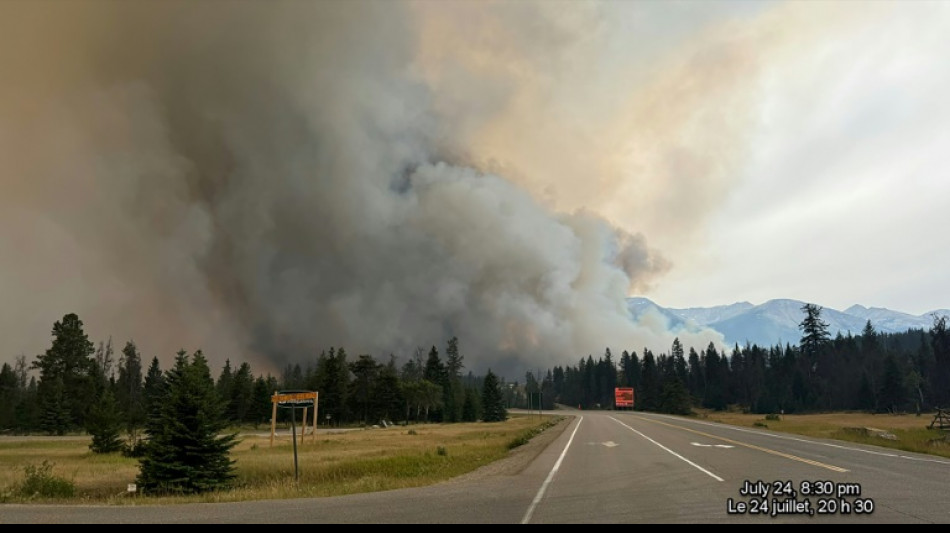
Wildfires pushed Canada into top four CO2 emitters in 2023 / Photo: © Jasper National Park/AFP

Wildfires pushed Canada into top four CO2 emitters in 2023

Record wildfires in 2023 bumped Canada into the top four greenhouse gas-emitting countries in the world that year, according to a study Wednesday that also cast doubt on its forests' future ability to capture and store significant amounts of CO2.

Text size:

Last year saw a catastrophic number of wildfires across the country, with 15 million hectares -- some 58,000 square miles, or about four percent of Canada's total forest area -- burned and more than 200,000 people displaced.

Looking at satellite data of smoke plumes from fires that burned from May to September of last year, researchers determined that 2,371 megatonnes of carbon dioxide and monoxide were released, pushing Canada's ranking up from eleventh to fourth among the world's top carbon emitters.

It put the country behind only China, the United States and India for 2023.

The research was published in the journal Nature.

The researchers warn that the hot, dry weather responsible for those blazes is forecast to become the norm by the 2050s, and is "likely to drive an increase in fire activity."

"This raises concerns about whether potentially more frequent and intense fires in the coming decades will suppress the ability of Canadian forests to continue serving as carbon sinks," Brendan Byrne, lead author of the study, told AFP.

Canada's boreal forest, a vast swath stretching from the Pacific to the Atlantic oceans, holds significant amounts of what is known as "sequestered" CO2.

As scorched forests regrow over decades, the CO2 released by wildfires is usually reabsorbed.

But a jump in the size and number of annual fires, coupled with droughts in some regions, could mean forests take longer to grow back.

That in turn "could suppress carbon uptake by the forests," said the study.

Canada would have to adjust downward its level of allowable fossil fuel emissions in order "to compensate for reduced carbon uptake by forests," it concluded.

Ottawa has agreed under the Paris agreement to reduce carbon emissions by 40 to 45 percent from 2005 levels by 2030.

Canada's total CO2-equivalent emissions from burning fossil fuels in 2022 were 708 megatonnes, according to government data.

As human activity has warmed the planet over the past two decades, the frequency and intensity of extreme wildfires have more than doubled worldwide, according to another study published in June in the journal Nature Ecology & Evolution.

The wildfire situation in Canada this year has been more subdued but still calamitous in some parts, with the beloved tourist town of Jasper in the western part of the country partially destroyed in July.

As of Wednesday, there were 732 fires burning -- 136 out of control.

R.Yeung--ThChM