The China Mail - Surging tourism is polluting Antarctica, scientists warn

USD -
AED 3.672504
AFN 65.503991
ALL 83.072963
AMD 376.980403
ANG 1.790083
AOA 917.000367
ARS 1386.420402
AUD 1.448436
AWG 1.80025
AZN 1.70397
BAM 1.695072
BBD 2.009612
BDT 122.428639
BGN 1.709309
BHD 0.378163
BIF 2970
BMD 1
BND 1.2851
BOB 6.894519
BRL 5.160604
BSD 0.997742
BTN 92.939509
BWP 13.688562
BYN 2.956504
BYR 19600
BZD 2.006665
CAD 1.39475
CDF 2305.000362
CHF 0.79876
CLF 0.023281
CLP 919.250396
CNY 6.88265
CNH 6.886225
COP 3668.42
CRC 464.279833
CUC 1
CUP 26.5
CVE 96.000359
CZK 21.288304
DJF 177.720393
DKK 6.487804
DOP 60.850393
DZD 133.256954
EGP 54.334939
ERN 15
ETB 155.800822
EUR 0.86804
FJD 2.253804
FKP 0.757614
GBP 0.756401
GEL 2.68504
GGP 0.757614
GHS 11.00504
GIP 0.757614
GMD 74.000355
GNF 8780.000355
GTQ 7.632939
GYD 208.828972
HKD 7.83775
HNL 26.504427
HRK 6.539104
HTG 130.952897
HUF 333.930388
IDR 16994.6
ILS 3.130375
IMP 0.757614
INR 92.978504
IQD 1307.141959
IRR 1319175.000352
ISK 125.380386
JEP 0.757614
JMD 157.303566
JOD 0.70904
JPY 159.65404
KES 129.803801
KGS 87.450384
KHR 3990.137323
KMF 427.00035
KPW 899.985922
KRW 1510.230383
KWD 0.30934
KYD 0.831502
KZT 472.805432
LAK 21970.392969
LBP 89502.03926
LKR 314.804623
LRD 183.088277
LSL 16.955078
LTL 2.95274
LVL 0.60489
LYD 6.380628
MAD 9.374033
MDL 17.55613
MGA 4171.343141
MKD 53.495639
MMK 2099.969769
MNT 3573.217716
MOP 8.055104
MRU 39.637211
MUR 46.950378
MVR 15.460378
MWK 1730.071718
MXN 17.891704
MYR 4.031039
MZN 63.950377
NAD 16.954711
NGN 1378.130377
NIO 36.712196
NOK 9.77265
NPR 148.701282
NZD 1.750854
OMR 0.385097
PAB 0.997734
PEN 3.45194
PGK 4.316042
PHP 60.409504
PKR 278.39991
PLN 3.71375
PYG 6454.29687
QAR 3.638018
RON 4.416604
RSD 101.901662
RUB 80.325739
RWF 1457.240049
SAR 3.754558
SBD 8.038772
SCR 14.446904
SDG 601.000339
SEK 9.483104
SGD 1.286704
SHP 0.750259
SLE 24.650371
SLL 20969.510825
SOS 570.192924
SRD 37.351038
STD 20697.981008
STN 21.233539
SVC 8.730169
SYP 110.556627
SZL 16.948198
THB 32.635038
TJS 9.563492
TMT 3.51
TND 2.941459
TOP 2.40776
TRY 44.520504
TTD 6.768937
TWD 31.995038
TZS 2600.000335
UAH 43.698134
UGX 3743.234401
UYU 40.405091
UZS 12122.393971
VES 473.390504
VND 26340
VUV 119.346905
WST 2.766243
XAF 568.506489
XAG 0.013693
XAU 0.000214
XCD 2.70255
XCG 1.798209
XDR 0.708068
XOF 568.516344
XPF 103.361457
YER 238.650363
ZAR 16.972865
ZMK 9001.203584
ZMW 19.281421
ZWL 321.999592
  • RBGPF

    -13.5000

    69

    -19.57%

  • RELX

    0.3600

    33.59

    +1.07%

  • VOD

    0.0800

    15.21

    +0.53%

  • NGG

    1.1500

    87.99

    +1.31%

  • RYCEF

    0.9000

    15.99

    +5.63%

  • AZN

    2.7600

    203.49

    +1.36%

  • GSK

    0.7000

    56.69

    +1.23%

  • CMSC

    0.0500

    22.04

    +0.23%

  • RIO

    -0.3600

    94.45

    -0.38%

  • BTI

    0.3900

    58.28

    +0.67%

  • CMSD

    0.1100

    22.26

    +0.49%

  • BCC

    -1.8800

    73.2

    -2.57%

  • BCE

    -0.9300

    24.45

    -3.8%

  • JRI

    0.0900

    12.61

    +0.71%

  • BP

    0.9500

    47.12

    +2.02%

Surging tourism is polluting Antarctica, scientists warn
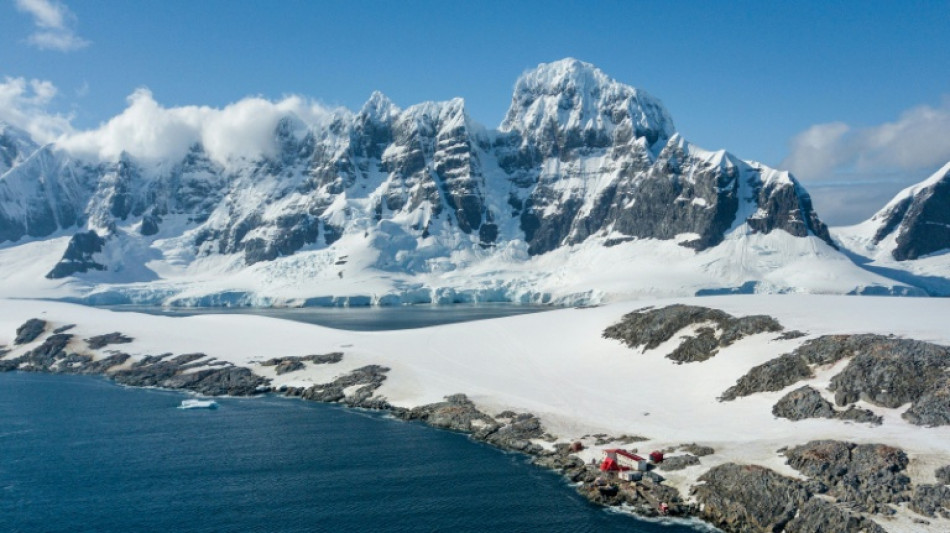
Surging tourism is polluting Antarctica, scientists warn / Photo: © University of Santiago USACH/AFP

Surging tourism is polluting Antarctica, scientists warn

Soaring numbers of tourists and expanding research projects are increasingly polluting Antarctica, scientists warned Wednesday, a fresh blow for one of Earth's most pristine environments already threatened by human-driven climate change.

Text size:

In Antarctic areas where humans have been active, the concentration of fine particles containing heavy metals is 10 times higher than it was 40 years ago, the international team of researchers said in a new study.

That change has come as the number of annual tourists visiting the white continent has risen from 20,000 to 120,000 over the last two decades, according to the International Association of Antarctica Tour Operators.

"The increasing human presence in Antarctica raises concerns about pollutants from fossil fuel combustion, including those from ships, aircraft, vehicles and supporting infrastructure," the study in the journal Nature Sustainability said.

Ships carrying tourists are powered by dirty fossil fuels, which are the source of fine particles containing things like nickel, copper, zinc and lead.

"Snow melts faster in Antarctica due to the presence of polluting particles in areas frequented by tourists," study co-author Raul Cordero told AFP.

"A single tourist can contribute to accelerating the melting of around 100 tons of snow," said the scientist at the University of Groningen in the Netherlands.

The researchers -- from countries including Chile and Germany -- spent four years traveling 1,200 miles (2,000 kilometers) in Antarctica to measure the contamination.

The presence of heavy metals has also increased due to scientific expeditions. Research projects that stay for an extended time can have up to 10 times more of an impact than a single tourist, Cordero said.

The study acknowledged there have been "meaningful steps forward" in attempts to protect Antarctica, such as a ban on highly polluting heavy fuel oil and the tourism industry embracing electric-hybrid ships.

"Nevertheless, our results show that more remains to be done to reduce the burdens of human activities in Antarctica," including speeding up the transition to renewable energy and slashing fossil fuel use, the study said.

A different Nature study also published on Wednesday warned that potentially irreversible changes in Antarctica driven by climate change could lift global oceans by meters and lead to "catastrophic consequences for generations."

Q.Moore--ThChM