The China Mail - Thousands evacuate from 'dangerous' Sydney floods

USD -
AED 3.672502
AFN 64.999773
ALL 81.855804
AMD 362.209807
ANG 1.789738
AOA 917.999724
ARS 1516.733502
AUD 1.438663
AWG 1.8
AZN 1.700145
BAM 1.75007
BBD 2.014862
BDT 123.150572
BGN 1.752486
BHD 0.377597
BIF 2993.213105
BMD 1
BND 1.281167
BOB 11.849764
BRL 4.986797
BSD 1.000362
BTN 95.757408
BWP 13.762835
BYN 3.017158
BYR 19600
BZD 2.011999
CAD 1.42804
CDF 2309.999995
CHF 0.834395
CLF 0.024821
CLP 976.870224
CNY 6.69215
CNH 6.695265
COP 3196.38
CRC 455.621222
CUC 1
CUP 24.010451
CVE 98.666285
CZK 21.841399
DJF 177.720388
DKK 6.699599
DOP 60.747601
DZD 134.682
EGP 52.651596
ERN 15
ETB 163.410241
EUR 0.89623
FJD 2.252799
FKP 0.755381
GBP 0.757145
GEL 2.589926
GGP 0.755381
GHS 11.764759
GIP 0.755381
GMD 73.500156
GNF 8801.199025
GTQ 7.647672
GYD 209.197346
HKD 7.847445
HNL 26.853679
HRK 6.751099
HTG 131.006868
HUF 327.010046
IDR 17931.45
ILS 3.07312
IMP 0.755381
INR 95.77525
IQD 1516.587254
IRR 1779470.000274
ISK 122.070023
JEP 0.755381
JMD 159.428395
JOD 0.708991
JPY 158.465499
KES 129.749677
KGS 87.450035
KHR 4061.472384
KMF 440.000396
KPW 899.999787
KRW 1336.884972
KWD 0.31141
KYD 0.83368
KZT 450.673097
LAK 22494.642322
LBP 89587.097063
LKR 331.142539
LRD 170.576208
LSL 16.549941
LTL 2.95274
LVL 0.60489
LYD 6.428319
MAD 9.679166
MDL 17.917366
MGA 4512.529585
MKD 55.186847
MMK 2100.025299
MNT 3596.153429
MOP 8.086399
MRU 40.212066
MUR 47.530237
MVR 15.45041
MWK 1734.769206
MXN 18.274525
MYR 4.087597
MZN 63.910612
NAD 16.549941
NGN 1327.389666
NIO 36.811188
NOK 9.57443
NPR 153.214773
NZD 1.790915
OMR 0.384504
PAB 1.00038
PEN 3.44445
PGK 4.471368
PHP 62.7935
PKR 276.99451
PLN 3.93035
PYG 5690.893229
QAR 3.657001
RON 4.782599
RSD 105.193002
RUB 83.925737
RWF 1475.068787
SAR 3.75677
SBD 8.078071
SCR 13.887146
SDG 601.500338
SEK 10.03961
SGD 1.28094
SHP 0.755572
SLE 24.670109
SLL 20969.498405
SOS 571.773706
SRD 37.666995
STD 20697.981008
STN 21.922074
SVC 8.753932
SYP 13001.999388
SZL 16.544455
THB 33.63009
TJS 9.218882
TMT 3.51
TND 2.992694
TOP 2.40776
TRY 49.358855
TTD 6.803001
TWD 31.943097
TZS 2640.002996
UAH 45.034652
UGX 4132.087205
UYU 40.23891
UZS 11905.241259
VES 875.7016
VND 25937
VUV 119.754657
WST 2.785507
XAF 587.888197
XAG 0.01664
XAU 0.0002400701
XCD 2.70255
XCG 1.802979
XDR 0.707052
XOF 587.888197
XPF 106.711286
YER 236.197294
ZAR 16.556103
ZMK 9001.199859
ZMW 19.858175
ZWL 321.999592
SSP 5757.531856
MXV 2.063864
  • RYCEF

    0.4000

    19.71

    +2.03%

  • CMSC

    0.0000

    20.4

    0%

  • BTI

    0.4200

    56.05

    +0.75%

  • BP

    0.2800

    44.43

    +0.63%

  • RBGPF

    1.6000

    67

    +2.39%

  • RIO

    -0.1500

    94.41

    -0.16%

  • AZN

    -0.4300

    166.15

    -0.26%

  • GSK

    0.4600

    49.7

    +0.93%

  • BCE

    -0.4100

    20.56

    -1.99%

  • NGG

    -0.2500

    75.24

    -0.33%

  • VOD

    -0.0400

    16.58

    -0.24%

  • RELX

    -0.4500

    33.07

    -1.36%

  • BCC

    -0.5500

    76.59

    -0.72%

  • CMSD

    -0.0300

    20.27

    -0.15%

  • JRI

    -0.2500

    10.77

    -2.32%

Thousands evacuate from 'dangerous' Sydney floods
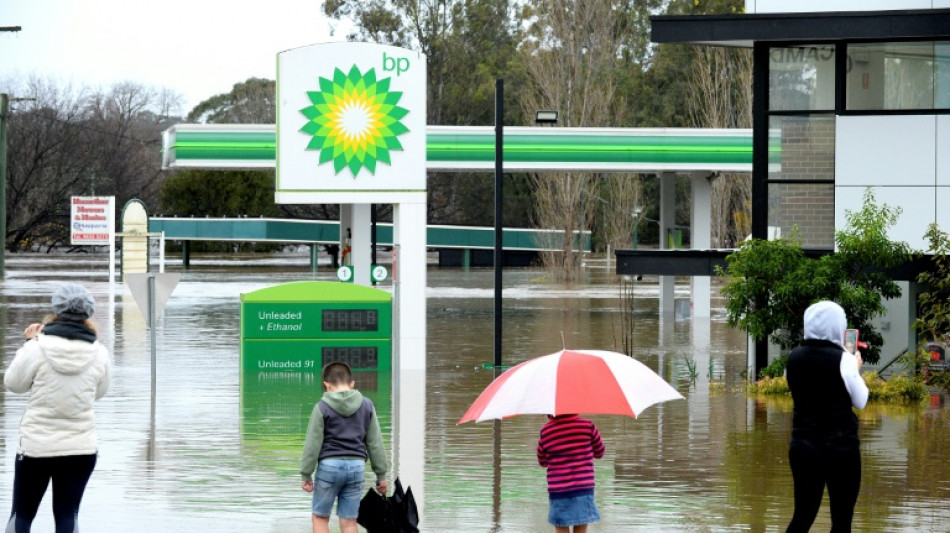
Thousands evacuate from 'dangerous' Sydney floods / Photo: © AFP

Thousands evacuate from 'dangerous' Sydney floods

Rapidly rising rivers swamped swathes of rain-lashed Sydney on Monday, forcing thousands to flee "dangerous" floods as the city's largest dam spilled torrents of water.

Text size:

On the third day of torrential east coast rains, emergency workers said they had rescued more than 80 people since the previous evening.

Many people had been trapped in their cars trying to cross flood-swept roads or were unable to leave homes surrounded by rising waters.

Australia has been at the sharp end of climate change, with droughts, deadly bushfires, bleaching events on the Great Barrier Reef and floods becoming more common and intense as global weather patterns change.

Higher temperatures mean the atmosphere holds more moisture, unleashing more rain.

About 32,000 people were ordered to evacuate or be ready to flee across New South Wales, the emergency services department said, with the army sending 100 troops to help operations in the storm-battered state.

"The ground is saturated, the rivers are fast flowing, the dams are overflowing," said State Emergency Services commissioner Carlene York.

"It is particularly dangerous out there," she said at a news conference.

Mud-brown river waters transformed a large stretch of land into a lake in the southwestern Sydney suburb of Camden.

Roads disappeared into the waters and mobile homes stood in knee-high water, at least one toppled on its side, television images showed.

Large volumes of water gushed from the Warragamba Dam, which has been spilling excess water since Sunday.

The huge concrete dam lies on the western outskirts of Sydney and provides most of the city's drinking water.

Heavy rains in New South Wales may persist for at least another 24 hours, forecasters said.

- 'Becoming more common' -

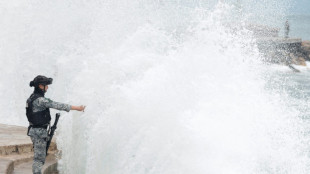
The wild weather whipped up drama off the Sydney coast, as rescuers battled to help the 150-metre Portland Bay cargo ship with 21 crew which lost power in heavy seas.

The Hong Kong-registered bulk carrier is double-anchored, a police spokesman said.

A plan to airlift crew members off the boat with two helicopters had been delayed because of safety concerns, he said.

Two tugboats were headed to the ship to take it further offshore.

Australia's east coast has suffered repeated flooding in the past 18 months.

More than 20 people died only in March this year as floodwaters lapped at rooftops and torrents swept cars off roads.

The current weather system over Sydney is being fed by warm, wet air from near the equator, said Kimberley Reid, an atmospheric scientist at Monash University.

Rainfall in eastern Australia is highly variable, making it hard to pin this event to climate change, she said.

"However, our research of the March 2021 Sydney floods found that similar events over Sydney were likely to occur 80 percent more often by the end of the 21st century."

Australia must prepare for more regular flooding events, New South Wales Premier Dominic Perrottet told a news conference.

"There is no doubt these events are becoming more common," he said.

"Governments need to adjust and make sure that we respond to the changing environment we find ourselves in."

A.Zhang--ThChM