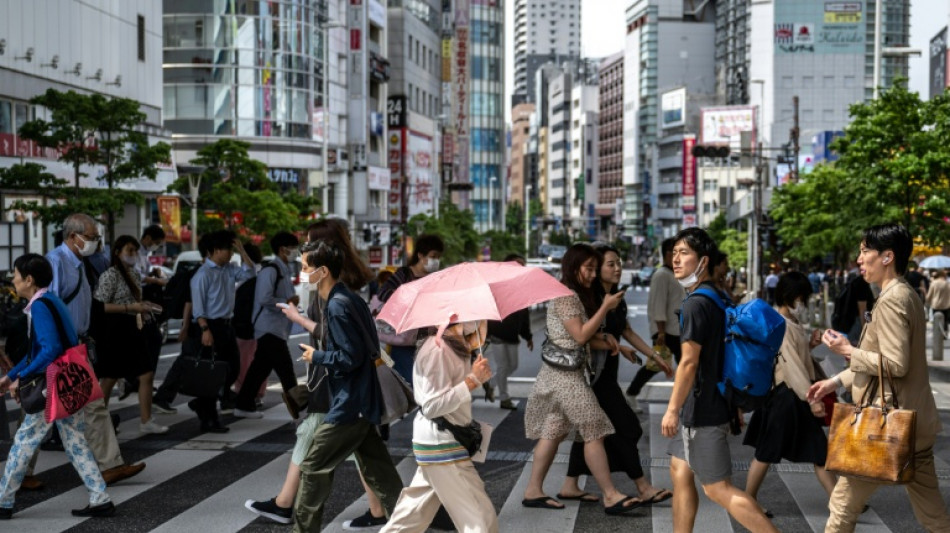
Vietnamese caught in Japan's illegal worker crackdown / Photo: © AFP

For a decade, Vietnamese worker Minh did tough jobs like sandblasting ships and welding steel, helping address rapidly ageing Japan's dire labour needs.
But now, having overstayed his visa, he is in the crosshairs of Prime Minister Sanae Takaichi's promised crackdown on illegal workers.
Minh, a pseudonym used to protect his identity, came to Japan in 2015 under its Technical Intern Training Program (TITP), which is billed as a way for foreign workers to learn skills to take back to developing countries.
But critics say it also helps Japan get cheap workers who are vulnerable to debt and exploitation, with some of them deserting their jobs and falling into crime.
"A lot of Japanese people look only at the surface -- that foreigners committed crimes," Minh, a former TITP intern living near Tokyo, told AFP.
"They don't think about the root cause of it: how and why these foreigners got to that point."
Of the roughly 450,000 technical interns in Japan as of June, just under half were from Vietnam and worked across agriculture, construction and food processing.
Many arrive heavily indebted with recruitment and brokerage fees -- including Minh, who intended to work to pay off the $7,500 he owed and send money to his family.
But with opportunities scarce back home at the end of his three years, finding a welding job as an undocumented labourer proved much simpler.
"Without foreign workers like us, there is no way Japan's economy can function," the 30-year-old said.
- 'Extremely dirty' -
Immigration levels in Japan remain low compared with other rich economies.
But with an ageing population, one of the world's lowest birth rates and labour shortages across industries, the number of foreign workers has hit record levels.
That, along with dwindling salaries in real termsand higher living costs, has seen resentment towards foreign workers swell.
"Anger at (Japanese people's) own financial struggles is taken out on foreigners," Jiho Yoshimizu, head of a Tokyo-based non-profit supporting Vietnamese nationals, told AFP.
Since taking office, Takaichi has vowed action, promising a policy package later this month that will reportedly include stricter visa management.
The proportion of crimes committed by non-Japanese is low; 5.5 percent of the roughly 190,000 people arrested in 2024 for penal code offences were foreigners, according to police.
Separate police data shows that among foreigners arrested in 2024 -- excluding those with permanent residency and others -- Vietnamese topped the list at over 30 percent, including for theft.
The figures are partly explained by surging numbers of Vietnamese -- up ninefold from a decade ago -- who now make up a quarter of Japan's 2.3-million-strong foreign workforce and are the biggest contingent.
Overstaying his visa aside, Minh says he has never been involved in crime.
He considers his internship a success, despite his "extremely dirty" task of sandblasting rust off ships, a job he says few Japanese on site were saddled with.
Yoshimizu said that "some technical interns are stuck in conditions that they just have to flee".
Though most employers are conscientious, common complaints include low wages, sub-par housing and sexual harassment, she added.
Under the rules of the scheme, interns are usually forced to stay with their employers, even if they are unhappy.
Japan's immigration agency says around 6,500 trainees disappeared from their workplaces last year.
- Prejudice -
Absconders may turn to Facebook communities dubbed "Bodoi" -- a vernacular term for "soldiers" -- to look for black marketjobs, or sometimes they are illegally hired through brokers by labour-hungry businesses, Yoshimizu said.
"Those who find these unofficial gigs can get by, but those who don't can be driven into committing crimes like selling drugs," she added.
The government plans to transition TITP into a new system in 2027, with more flexibility for job transfers but imposing stricter requirements on Japanese language skills.
Still, it remains unclear whether the programme will continue to attract high-quality candidates.
The yen's weakness has devalued remittances sent home and there is increasing competition from labour markets such as South Korea, denting Japan's reputation among Vietnamese, immigration expert Jotaro Kato told AFP.
Japan's programme is increasingly reliant on Vietnamese applicants "with less motivation and educational qualifications than before", the Meiji Gakuin University associate professor said.
Vietnamese nun Thich Tam Tri -- whose temple north of Tokyo offers shelter to her compatriots in trouble -- said some interns make poor choices, falling into debt through gambling or ill-advised ventures into Bitcoin.
But "technical interns contribute greatly to Japanese society", she said.
It "pains me to see how one bad headline can easily prejudice Japanese people against them".
In July, a Vietnamese trainee was arrested for robbing and murdering a Japanese woman in her 40s.
"That's why we have to do as many good deeds as possible to normalise this image of us, and regain the trust of Japanese people."
G.Tsang--ThChM