The China Mail - Afghanistan's water crisis worsened last year: UN report

USD -
AED 3.672495
AFN 65.000017
ALL 82.125815
AMD 366.589327
ANG 1.790403
AOA 916.999919
ARS 1491.364244
AUD 1.438953
AWG 1.8
AZN 1.699642
BAM 1.712385
BBD 2.016198
BDT 123.381342
BGN 1.69088
BHD 0.377446
BIF 2978.067679
BMD 1
BND 1.292212
BOB 6.923833
BRL 5.111406
BSD 1.001007
BTN 95.359629
BWP 13.538502
BYN 2.861533
BYR 19600
BZD 2.013308
CAD 1.416245
CDF 2258.000443
CHF 0.80804
CLF 0.023592
CLP 928.512017
CNY 6.77695
CNH 6.78132
COP 3294.663573
CRC 455.36926
CUC 1
CUP 26.5
CVE 96.54161
CZK 21.270978
DJF 178.260299
DKK 6.554855
DOP 58.783873
DZD 133.214991
EGP 49.742173
ERN 15
ETB 160.578558
EUR 0.876929
FJD 2.2332
FKP 0.746145
GBP 0.746912
GEL 2.645026
GGP 0.746145
GHS 11.476601
GIP 0.746145
GMD 73.482634
GNF 8779.932583
GTQ 7.638226
GYD 209.403318
HKD 7.839698
HNL 26.799457
HRK 6.600501
HTG 131.007311
HUF 311.935498
IDR 18080.55
ILS 3.010898
IMP 0.746145
INR 95.330502
IQD 1311.38642
IRR 1374749.99981
ISK 125.639647
JEP 0.746145
JMD 158.166616
JOD 0.709041
JPY 161.725037
KES 129.387559
KGS 87.448803
KHR 4035.371886
KMF 432.000154
KPW 900.00035
KRW 1499.150037
KWD 0.30956
KYD 0.834216
KZT 471.916999
LAK 22573.217178
LBP 89643.129186
LKR 335.849057
LRD 181.788732
LSL 16.304951
LTL 2.95274
LVL 0.60489
LYD 6.411592
MAD 9.351311
MDL 17.593136
MGA 4291.905617
MKD 53.972771
MMK 2099.466399
MNT 3585.261694
MOP 8.082914
MRU 39.881802
MUR 47.08019
MVR 15.4501
MWK 1735.849057
MXN 17.516499
MYR 4.070022
MZN 63.896831
NAD 16.304951
NGN 1377.91966
NIO 36.834041
NOK 9.76303
NPR 152.575406
NZD 1.73566
OMR 0.384888
PAB 1.001007
PEN 3.400604
PGK 4.468765
PHP 61.447047
PKR 278.263976
PLN 3.803325
PYG 6085.890645
QAR 3.649433
RON 4.587103
RSD 102.77109
RUB 76.75579
RWF 1470.559909
SAR 3.759664
SBD 8.048583
SCR 14.56525
SDG 600.504195
SEK 9.67291
SGD 1.292498
SHP 0.746601
SLE 24.349913
SLL 20969.503664
SOS 572.078974
SRD 37.610496
STD 20697.981008
STN 21.450773
SVC 8.75892
SYP 110.532098
SZL 16.302587
THB 33.288008
TJS 9.264632
TMT 3.5
TND 2.958981
TOP 2.40776
TRY 46.722501
TTD 6.801208
TWD 32.1135
TZS 2630.214945
UAH 44.533818
UGX 3683.404106
UYU 40.362474
UZS 12090.355908
VES 708.8064
VND 26267.5
VUV 119.005629
WST 2.760902
XAF 574.317734
XAG 0.016706
XAU 0.000243
XCD 2.70255
XCG 1.804141
XDR 0.714267
XOF 574.317734
XPF 104.417108
YER 237.075001
ZAR 16.339639
ZMK 9001.212404
ZMW 18.04404
ZWL 321.999592
  • CMSC

    0.0650

    22.085

    +0.29%

  • BCC

    3.8200

    76.06

    +5.02%

  • BCE

    0.0600

    21.38

    +0.28%

  • BTI

    -0.0151

    60.02

    -0.03%

  • BP

    0.6500

    39.2

    +1.66%

  • GSK

    0.3100

    52.78

    +0.59%

  • RELX

    0.3700

    32.44

    +1.14%

  • RIO

    1.0500

    90.54

    +1.16%

  • NGG

    0.2700

    82.59

    +0.33%

  • RBGPF

    0.3500

    67.35

    +0.52%

  • JRI

    -0.0200

    13.01

    -0.15%

  • CMSD

    0.0700

    22.38

    +0.31%

  • RYCEF

    0.3800

    19.46

    +1.95%

  • VOD

    1.6400

    14.72

    +11.14%

  • AZN

    -6.8800

    171.61

    -4.01%

Afghanistan's water crisis worsened last year: UN report
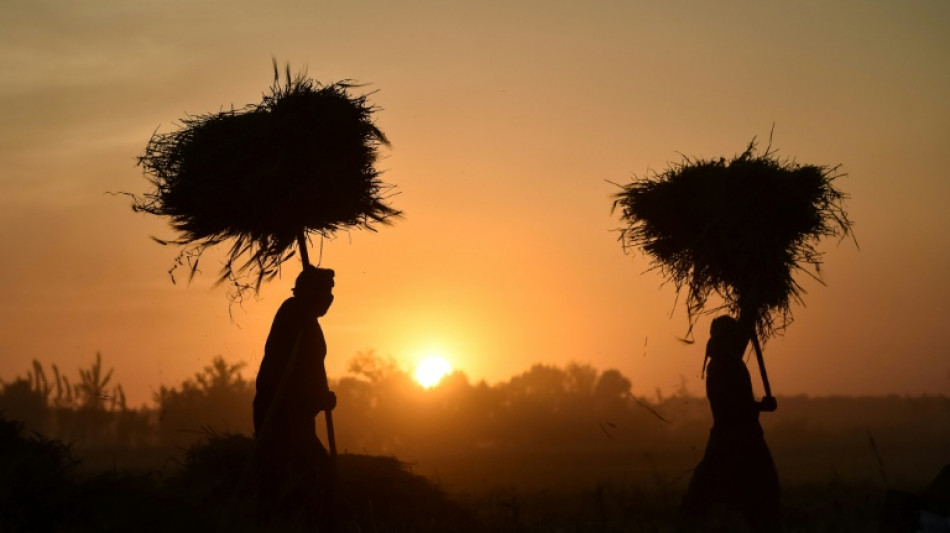
Afghanistan's water crisis worsened last year: UN report / Photo: © AFP

Afghanistan's water crisis worsened last year: UN report

Afghanistan's water crisis worsened in 2025, the United Nations said in a report, with drought nearly doubling compared to the year before.

Text size:

Most of Afghanistan's 48.6 million people depend on agriculture, and water scarcity can have devastating consequences in a country already experiencing widespread poverty, food insecurity and conflict.

"Water access deteriorated sharply," the United Nations Development Programme (UNDP) said in the report released on Wednesday, adding that drought became "the dominant environmental stressor across nearly all regions" of Afghanistan.

Drought prevalence rose to 64 percent in 2025 from 34 percent the year before, according to the UNDP.

The most affected regions range from western Afghanistan to the northeastern province of Badakhshan, "with 92 percent of households reporting drought impacts", the report said.

"In a country that depends on agriculture, that brings food insecurity," Najibullah Yusufi, a UN expert on climate change, told AFP, adding that water issues also affect the health sector.

Between 2024 and 2025, "reports of non-functional or dried-up water points tripled, and full drinking water sufficiency fell from 59 percent to 44 percent nationally", the UNDP report showed.

Studies show that the capital Kabul could run out of ground water by as early as 2030 due to climate change and rapid urbanisation.

The Afghan National Environment Protection Agency said on Thursday that "groundwater, the main source of drinking water for most of the population, is being depleted rapidly" in major cities across the country.

More than five million Afghans have returned home from Iran and Pakistan since September 2023, according to the International Organisation for Migration.

Many of them are trying to start a new life in the capital, expecting the swelling city of more than six million to offer the best prospects of work in a country where nearly half of the population needs humanitarian assistance.

"Kabul is facing a lot of issues, population has increased, the need for water has risen, and we don't have enough rain to recharge the ground water," Yusufi said.

This year's rainfalls were better than last year, Afghanistan's disaster management authority said in April, hoping it "can strengthen the underground sources of water", and improve harvests.

V.Liu--ThChM