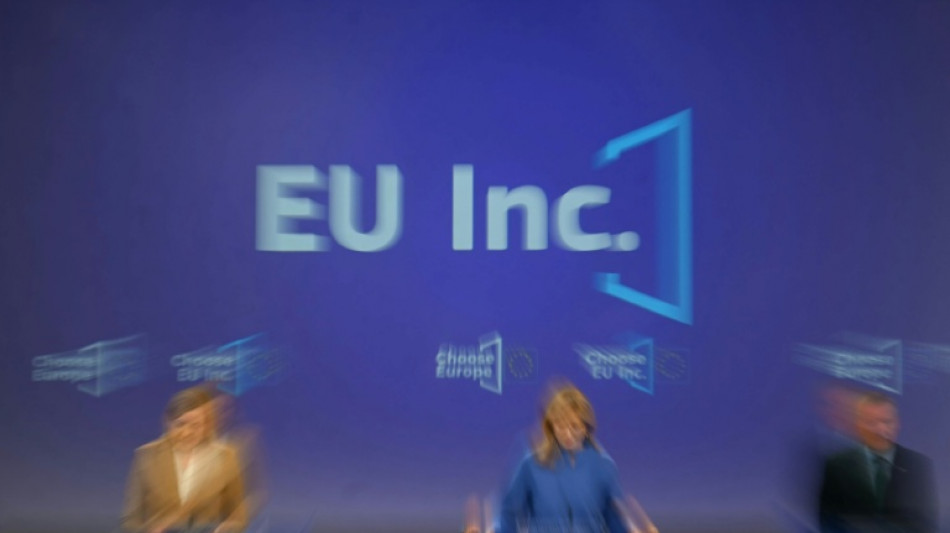
Fears new pan-European company status threatens workers' rights / Photo: © AFP/File

Europe wants to become a paradise for entrepreneurs, but unions and EU lawmakers fear a special new business rulebook known as "EU Inc" could unleash problems for workers by eroding labour rights.
The European Union has ramped up efforts to make the bloc's businesses better compete with US and Chinese rivals, fearing they will fall further behind.
A major part of the push is "EU Inc", a voluntary regime proposed in March that would allow companies to be established online in less than 48 hours -- with a special pan-European status.
That would make it easier to do business in the EU since any entrepreneur could set up a firm that can swiftly get to work across the 27 member states.
But that sounds better on paper than in practice for the proposal's critics.
"On the surface it looks like a technical company law proposal," Marcus Meyer-Erdmann, a researcher at the European Trade Union Institute (ETUI), said.
"But underneath there are a lot of core elements like pay, worker protection, individual workers' rights, also dismissal protection... that would be rendered obsolete in a sense," he added.
The EU executive, however, has repeatedly insisted the new rules would not corrode national labour and tax laws.
Not everyone is reassured by the European Commission's promises.
If the proposal becomes law as it currently stands, "the first thing that would happen is that it would weaken workers' representation rights" in corporate governance, warned Finnish radical left EU lawmaker Li Andersson.
She told AFP the proposal "clearly opens up the possibility" for companies to register where labour rights are the weakest.
"Everyone agrees that innovative companies must be fostered. The problem is that the commission has made it an unlimited scope," ETUI's Meyer-Erdmann said.
- 'Not going far enough' -
Meyer-Erdmann echoed Andersson's fears.
"Now a multinational corporation can use this new EU Inc for corporate engineering," he told AFP, which means companies could take advantage of the status to reduce their social and legal obligations as much as possible.
For example, the new rules could allow companies to create several EU Inc holdings and subsidiaries to stay below the thresholds forcing company boards to include workers' representatives.
Members of the European Parliament take such risks seriously, and have indicated they will push changes to the text during negotiations.
EU social democrat lawmaker Rene Repasi, who will spearhead negotiations with European capitals on a final version of the law, has already included a raft of worker-friendly proposals in his draft report.
The current proposal "opens the door wide open to regime shopping", Repasi said, referring to the practice where companies opt for a location with lower taxes and wages.
Repasi said he wants to ensure the rules apply to company employees where they work, not where the business is based -- and also wants to exclude sectors like catering and construction from the rules.
Lawmaker Andersson welcomed the efforts to change the rules, but said "it is not going far enough when it comes to workers' safeguards".
She said she was also concerned about Brussels' push to approve the rules by the end of the year.
Centrist French EU lawmaker Pascal Canfin said the new rulebook would not touch labour law. He has been speaking with European unions about possible protections and offering reassurances that workers' rights will be protected.
"The proposal must not have loopholes that allow abuses," Canfin, who will also take part in negotiations on behalf of the parliament, said.
Canfin also defended the proposal's push for stock options for employees, which some fear would replace wages, giving France as an example of where they are "more of a bonus to attract employees to one company rather than another".
The French model should be replicated at the European level, he said, "to make it easier for entrepreneurs to give employees a stake in their companies".
C.Smith--ThChM