Independent journalism under attack in Central America / Photo: © AFP/File

Central American journalists can pay a steep price for publishing unflattering stories about governments in the region -- one with a history of civil wars and dictatorships and where poverty, violence and corruption are rampant.
To wit, a photographer was forced to flee Nicaragua, a newspaper chief in Guatemala is under arrest, and a news website in El Salvador was hauled before the courts. Such punishment is an increasingly familiar woe in Central America.
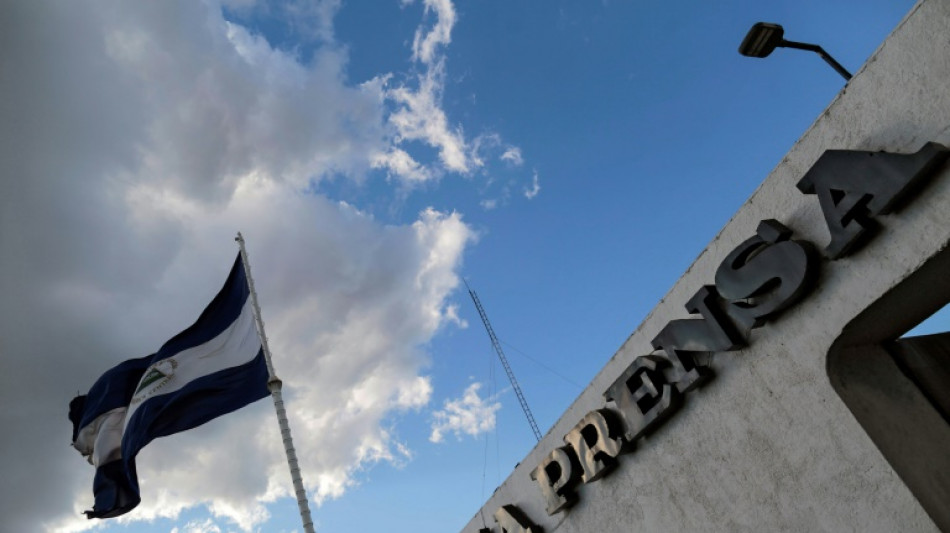
Nicaragua's La Prensa newspaper is almost 100 years old, but a year ago its offices were occupied by police, and the property was taken over by the state last week.
The newspaper's manager Juan Lorenzo Holmann was arrested in 2021 and in April this year was sentenced to nine years in jail.
A harsh critic of President Daniel Ortega's leftist government, he was accused of money laundering.
That was the same charge filed against the owner of Guatemala's El Periodico newspaper, Jose Ruben Zamora, who was detained a month ago.
"Money laundering is an increasingly frequent accusation in Central America" against those working in independent media, said Carlos Dada, director at Salvadoran website El Faro, who is also accused of asset laundering.
El Faro had claimed President Nayib Bukele was involved in secret negotiations with violent drug gangs, against whom he has launched an offensive that has seen more than 50,000 suspected gang members arrested under emergency laws.
"The concentration of power in the hands of authoritarian regimes is succeeding more and more in silencing critics and the independent press," Dada told AFP.
"Harassment is increasing."
The accused all claim they are the victims of bogus accusations aimed at silencing them.
Both Nicaragua and El Salvador accuse independent media of being financed from abroad and trying to destabilize the country.
- 'Drowning independent press' -
"The strategy of drowning independent press, which Cuba installed decades ago and which was also adopted in Venezuela and other countries in the region, has been recently perfected" by the Ortega regime, said Carlos Jornet, president of the press freedom commission at the Inter-American Press Society (SIP).
And the trend is spreading, even to traditionally stable Costa Rica.
During the electoral campaign, President Rodrigo Chaves attacked the press for discussing the sanctions he received when accused of sexual harassment while working at the World Bank, and for exposing potential irregular campaign financing.
In July, La Prensa photographer Oscar Navarrete was covering the expulsion to Costa Rica by authorities of an order of nuns, who found themselves among 1,5000 organizations deemed illegal by the government.
Angered by his coverage the government planned to arrest him and even searched his house, but Navarrete had already gone into hiding.
"They took all my equipment... they obliterated everything with such violence that my mother went into shock," said Navarrete, who lives in exile in Costa Rica.
La Prensa now operates out of the Costa Rican capital San Jose. More than 100 journalists have been forced into exile and many others were arrested over criticism of Ortega.
- 'Killing the newspaper' -
Zamora accuses Guatemalan President Alejandro Giammattei and Attorney General Consuelo Porras of fabricating a case against him to justify his detention.
The US has added Porras to a corrupt persons list for hampering and then firing an anti-mafia prosecutor.
El Periodico has published more than 100 investigations into Giammattei's presidency, including the alleged payment of bribes.
The president is "intolerant of criticism" said the newspaper's deputy chief Lucy Chay.
The government has frozen the newspaper's bank accounts.
"They want to kill the newspaper," added Chay.
"They seem to be stepping up harassment of journalists investigating corruption, human rights violations and abuses of power," Juan Pappier of Human Rights Watch (HRW) told AFP.
Several prosecutors and judges investigating corruption in Guatemala have been subjected to "spurious criminal proceedings," added Pappier.
- Threats, intimidation, harassment -
As part of its crackdown on criminal groups, El Salvador passed a law making the reproduction of gang messages punishable by up to 13 years in prison.
El Faro fell afoul of that by publishing interviews with people who claimed to be gangsters and said they had negotiated with Bukele, who denies the allegations.
Dada says his mobile phone and those of 20 El Faro colleagues were infected by the Pegasus virus, which is only sold to state agencies.
The government denies any involvement.
Beyond threats, intimidation and harassment, there are also murders.
Honduras has recorded 97 murders of journalists since 2001, the country's committee for freedom of expression says.
The committee's director Amada Ponce says the press cannot tackle subjects such as drug-trafficking and mining without major risks.
Journalists are "judicially persecuted, stigmatized or threatened" just for carrying out their work, Amada said.
R.Lin--ThChM