US sanctions on ICC: a 'test of resilience' / Photo: © ANP/AFP

Donald Trump's US administration has imposed sweeping sanctions on the International Criminal Court that threaten to cripple its operations and spark fresh transatlantic tension.
AFP breaks down the likely impact of the sanctions, possible responses, and the reasons behind Washington's unprecedented move, which the court said was an "assault on the rule of law".
- What is the ICC and what does it do? -
Based in the Dutch city of The Hague, the ICC tries individuals suspected of the world's worst offences -- war crimes, crimes against humanity, and genocide.
Established in 2002 by the Rome Statute, it currently has 125 members. Major powers such as the United States, Russia, China, India, and Israel are not members of the court.
It is governed by a strict policy of "complementarity", meaning it can only take on cases a suspect's home country is unwilling or unable to try itself.
Since its establishment, the court has convicted 15 people, with four acquitted. Critics say the court has focused too heavily on war crimes committed in Africa and failed to convict major political leaders.
However, its most high-profile current case concerns ex-Philippines president Rodrigo Duterte, the first former Asian head of state to stand in the ICC dock.
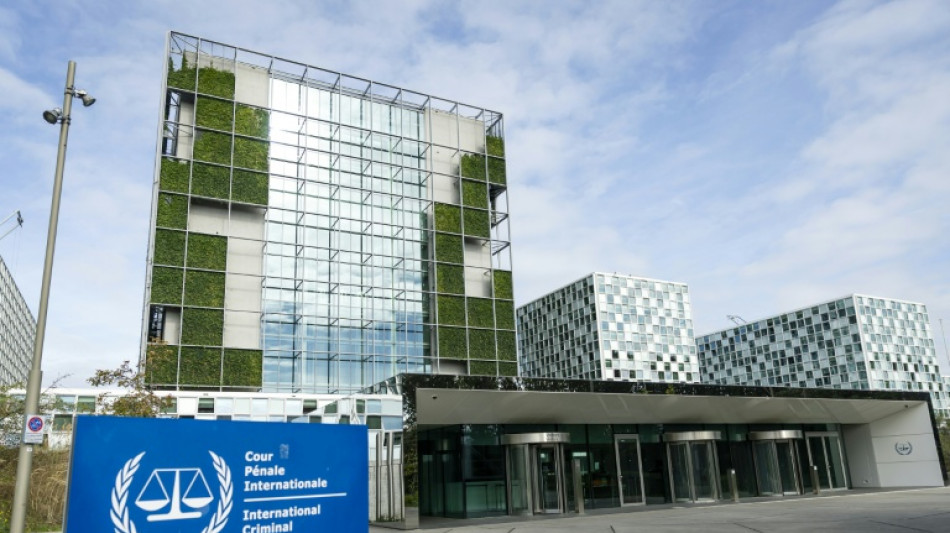
The court, housed in a shiny glass building on the outskirts of The Hague, employs around 900 staff from 100 nationalities.
It is often confused with the International Court of Justice, also based in The Hague, which settles disputes between countries.
- What impact will sanctions have? -
The Trump administration has already issued several rounds of sanctions against top ICC officials but these latest actions go further, targeting the entire court.
ICC officials are concerned about access to banking, credit card facilities, insurance, and especially technology, given a heavy reliance on US systems.
"We have been extremely dependent on US technology solutions, Microsoft or systems related to Microsoft," acting chief prosecutor Mame Mandiaye Niang told AFP in a recent interview.
"We are trying to find alternative means, maybe not as effective as the US technology, but at least to be able to maintain our independence, to be able to continue to work," said Niang.
The prosecutor, himself the target of sanctions, said they crippled daily life -- he was unable to book transport, hotels, or conduct banking operations.
But expanding them to the entire institution raises questions about the ICC's ability to pay staff, conduct investigations abroad, protect witnesses, and even operate its detention facilities.
"This is a test of our resilience," admitted Niang.
- What can the Dutch/Europeans do? -
As the host city, the Dutch have a special responsibility to the ICC under the terms of a "Headquarters Agreement" signed in 2008.
This obliges the Netherlands to protect ICC facilities and staff, provide "any means of communication" and ensure "freedom of financial assets from restrictions".
In an unusually fiery speech last month at the United Nations General Assembly, Dutch Prime Minister Rob Jetten vowed to defend the ICC "in my country, in my city".
"How can you possibly be opposed to prosecuting the very worst crimes? I believe there can be only one response: 'hands off the ICC'," said Jetten to warm applause.
Dutch Foreign Minister Tom Berendsen said the Netherlands would "do everything necessary" to ensure the ICC could continue to function.
One possibility would be for the European Commission to deploy a legal instrument known as the "blocking mechanism".
This prohibits European firms from obeying the US sanctions "actively or by deliberate omission", giving the EU a potential means of cushioning some of the impact.
The EU blocking mechanism is seen as the "nuclear option", said Berendsen, adding that the Netherlands had nevertheless asked Brussels to prepare it.
- Why is the US doing this? -
The US is furious the court issued an arrest warrant for close ally, Israeli Prime Minister Benjamin Netanyahu, over alleged crimes in Gaza.
It is also concerned an ICC investigation into Afghanistan could result in accusations against US personnel.
Trump has upped his rhetoric against what he has called a "rogue institution" and "evil group of people" and the US has vowed to dismantle the court "brick-by-brick".
But even under less pugnacious presidents, Washington has never been a fan of the ICC and never considered joining.
The US has a law dubbed the "Hague Invasion Act", allowing it to take "all means necessary and appropriate" to defend US personnel or allies detained by the ICC.
In a clear swipe at Washington, Jetten vowed to defend the ICC "brick by brick" in comments just hours before the sanctions were announced.
A.Zhang--ThChM