The China Mail - UN unveils global 'early warning' system for disasters at $3 billion

USD -
AED 3.672496
AFN 64.999934
ALL 81.612415
AMD 361.133075
ANG 1.789785
AOA 917.000203
ARS 1513.324401
AUD 1.426635
AWG 1.8025
AZN 1.75954
BAM 1.747405
BBD 2.013572
BDT 123.421934
BGN 1.747831
BHD 0.377753
BIF 2993.687766
BMD 1
BND 1.282034
BOB 11.711836
BRL 5.023781
BSD 0.999772
BTN 95.182957
BWP 13.733399
BYN 3.020865
BYR 19600
BZD 2.010641
CAD 1.421635
CDF 2312.500322
CHF 0.833445
CLF 0.024951
CLP 981.970195
CNY 6.69215
CNH 6.69424
COP 3190.04
CRC 455.660238
CUC 1
CUP 23.993531
CVE 98.516424
CZK 21.755202
DJF 178.022773
DKK 6.677195
DOP 61.224946
DZD 134.538212
EGP 53.048097
ERN 15
ETB 163.294038
EUR 0.89321
FJD 2.244698
FKP 0.754659
GBP 0.753735
GEL 2.594994
GGP 0.754659
GHS 11.661597
GIP 0.754659
GMD 73.999931
GNF 8795.13605
GTQ 7.639869
GYD 209.069102
HKD 7.84805
HNL 26.840523
HRK 6.730502
HTG 130.910423
HUF 324.425993
IDR 17950
ILS 3.07646
IMP 0.754659
INR 95.09605
IQD 1515.48045
IRR 1779859.999961
ISK 121.819942
JEP 0.754659
JMD 158.765613
JOD 0.709035
JPY 158.439498
KES 129.809807
KGS 87.450238
KHR 4061.41256
KMF 440.00029
KPW 899.999961
KRW 1337.159736
KWD 0.31178
KYD 0.833099
KZT 451.695332
LAK 22493.623218
LBP 89523.405358
LKR 330.891222
LRD 170.452667
LSL 16.481157
LTL 2.95274
LVL 0.60489
LYD 6.422994
MAD 9.847399
MDL 17.89398
MGA 4501.940954
MKD 55.018986
MMK 2100.02843
MNT 3599.679138
MOP 8.081626
MRU 40.049676
MUR 47.609907
MVR 15.459865
MWK 1733.742534
MXN 18.3651
MYR 4.084703
MZN 63.90326
NAD 16.480347
NGN 1329.949751
NIO 36.792495
NOK 9.471575
NPR 152.293053
NZD 1.78112
OMR 0.384498
PAB 0.999736
PEN 3.442394
PGK 4.53782
PHP 62.886993
PKR 276.801369
PLN 3.89939
PYG 5704.585558
QAR 3.644591
RON 4.774001
RSD 104.882027
RUB 84.12308
RWF 1475.009269
SAR 3.74887
SBD 8.078071
SCR 13.804622
SDG 601.498055
SEK 9.96562
SGD 1.28255
SHP 0.754518
SLE 24.670363
SLL 20969.504398
SOS 571.364753
SRD 37.647502
STD 20697.981008
STN 21.88956
SVC 8.747783
SYP 13001.999685
SZL 16.474351
THB 33.568999
TJS 9.227237
TMT 3.5
TND 2.988314
TOP 2.40776
TRY 49.391987
TTD 6.799166
TWD 32.088503
TZS 2629.998008
UAH 44.933885
UGX 4039.293995
UYU 40.187267
UZS 11957.007308
VES 875.701601
VND 25897
VUV 119.372685
WST 2.788609
XAF 585.907344
XAG 0.017048
XAU 0.000241194879
XCD 2.702551
XCG 1.801832
XDR 0.707052
XOF 585.907344
XPF 106.553496
YER 236.203025
ZAR 16.46825
ZMK 9001.204229
ZMW 19.868757
ZWL 321.999592
SSP 5748.524006
MXV 2.073848
  • RYCEF

    0.4000

    19.71

    +2.03%

  • CMSC

    0.0000

    20.4

    0%

  • BTI

    0.4200

    56.05

    +0.75%

  • BP

    0.2800

    44.43

    +0.63%

  • RBGPF

    1.6000

    67

    +2.39%

  • RIO

    -0.1500

    94.41

    -0.16%

  • AZN

    -0.4300

    166.15

    -0.26%

  • GSK

    0.4600

    49.7

    +0.93%

  • BCE

    -0.4100

    20.56

    -1.99%

  • NGG

    -0.2500

    75.24

    -0.33%

  • VOD

    -0.0400

    16.58

    -0.24%

  • RELX

    -0.4500

    33.07

    -1.36%

  • BCC

    -0.5500

    76.59

    -0.72%

  • CMSD

    -0.0300

    20.27

    -0.15%

  • JRI

    -0.2500

    10.77

    -2.32%

UN unveils global 'early warning' system for disasters at $3 billion
UN unveils global 'early warning' system for disasters at $3 billion / Photo: © AFP

UN unveils global 'early warning' system for disasters at $3 billion

The United Nations on Monday unveiled a five-year plan to build a global early warning system for deadly and costly extreme weather events amplified by climate change.

Text size:

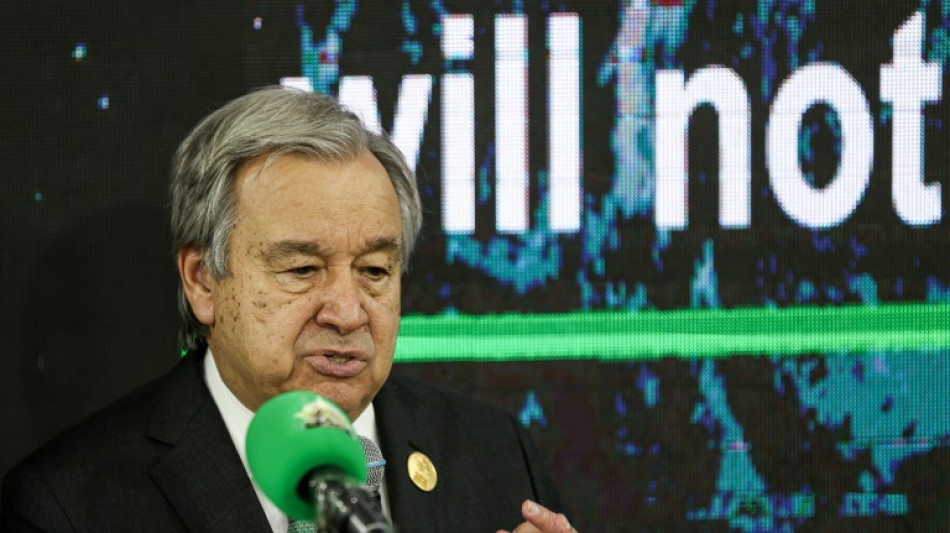
The price tag -- a relatively modest $3.1 billion, or less than 50 cents per person -- is a small price to pay for proven methods that can save thousands, if not millions, of lives, UN chief Antonio Guterres said at the COP27 climate summit in Egypt.

"I have called for every person on Earth to be protected by early warning systems within five years, with the priority to support the most vulnerable first," he said as world leaders gathered in the Red Sea resort of Sharm el-Sheikh for the 13-day talks.

Even as climate-enhanced extreme weather is multiplying, half the world's countries lack advanced early warning systems that can save lives.

Countries with inadequate infrastructure see, on average, eight times greater mortality from disasters than countries with strong measures in place, according to the UN.

Proper early warning systems for floods, droughts, heatwaves, cyclones or other disasters allow for planning that minimises adverse impacts.

And it works: the number of people affected by disasters has nearly doubled over the last two decades, but the number of people killed or missing has fallen by half.

When Cyclone Bhola hit what is present-day Bangladesh in 1970, it claimed hundreds of thousands of lives, prompting the country founded the following year to invest in weather forecasting technology, shelters and a network of volunteers along the coast.

A similarly strong Cyclone Amphan made landfall in 2020 in the same area, but left a death toll of just 26.

"Early warnings save lives and provide vast economic benefits," World Meteorological Organization chief Petteri Taalas said in a statement.

"Just 24 hours notice of an impending hazardous event can cut the ensuing damage by 30 percent."

The Global Commission on Adaptation found that spending just $800 million on such systems in developing countries would avoid losses of $3 billion to $16 billion per year.

Starting with science-based observation networks and forecasting technology, a complete early warning infrastructure also requires national and community-based response capabilities, along with ways to rapidly communicate information to a population.

U.Chen--ThChM