EU faces uphill battle to rein in big tech / Photo: © AFP/File

The EU's landmark curbs on how tech titans do business online kick in from Thursday, but just how far Brussels succeeds in bringing the giants to heel will hinge on bitter battles that still lie ahead.
Wielding a tough new legal arsenal, Brussels is determined to force a change in behaviour by the world's biggest tech firms, to create a more competitive online field that allows smaller players to flourish.
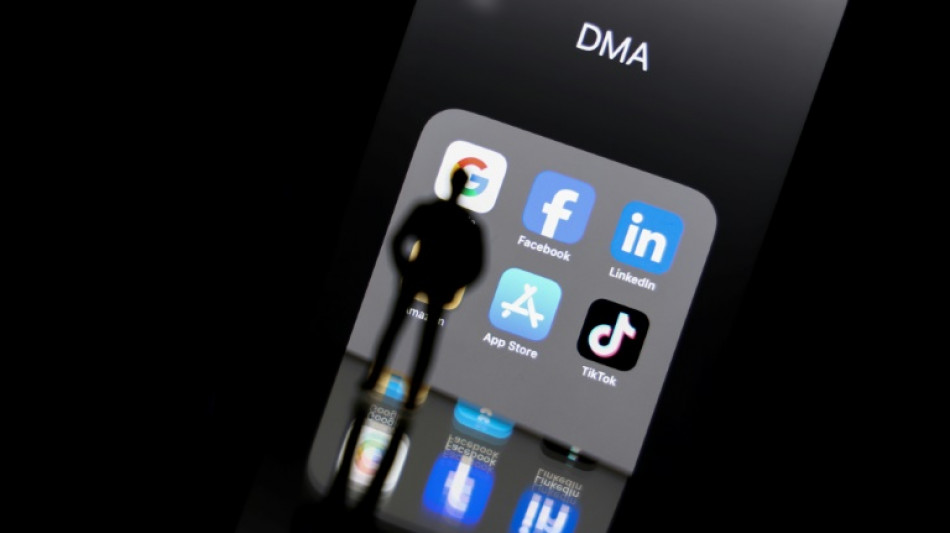
The bloc's new Digital Markets Act (DMA) will usher in a long list of do's and don'ts for six so-called "gatekeepers" designated by the European Union: Apple, Amazon, Google owner Alphabet, TikTok parent ByteDance, Meta and Microsoft.
"What we need right here from gatekeepers is changing behaviour," the bloc's competition commissioner Margrethe Vestager told AFP in an interview on the eve of the law coming into force.
The big six will have to tell Brussels about any buyout, large or small, as well as provide European users with more choices when they pick web browsers or search engines.
Users should also soon be able to send messages between apps, for example from Meta's WhatsApp to services such as Signal or Telegram.
But experts warn enforcement represents a mighty challenge, and the EU already faces legal challenges, including from Apple, Meta and TikTok.
"Getting big tech to comply with these new rules will be an enormous task," Bram Vranken, researcher at Corporate Europe Observatory, told AFP.
"Even now, almost eight years after the adoption of the GDPR" -- the EU's mammoth data protection law -- "the EU is still struggling in getting Facebook to respect the privacy of millions of people in Europe," Vranken added.
Brussels slapped a 1.2-billion-euro ($1.3 billion) fine on Meta over data privacy violations last year.
Separately, the EU on Monday hit Apple with a more than 1.8-billion-euro fine for violating the bloc's antitrust rules by preventing European users from accessing information about alternative, cheaper music streaming services.
When it comes to DMA enforcement, an EU official admitted to AFP that because of limited resources the European Commission, the bloc's powerful competition regulator would have to "pick and choose" which cases to pursue.
The commission would not comment on the claim.
- 'Underestimating' the challenge -
Senior officials acknowledge it may not be realistic to expect total and instant compliance.
"We will see some compliance, full compliance by some companies. But I do think that there will be non-compliance cases," Vestager told AFP, adding that Brussels would not shy away from tougher action if necessary.
"If you look at our history, we have sort of made it credible that we will use the tools that we have," she said.
The EU's 27 states are pushing the commission to focus resources on enforcement -- with at least nine major laws covering the digital space created since 2019.
Belgium, which holds the rotating EU presidency, "stresses" to member states in a leaked document dated February 19 that there is a "need to prioritise in the coming years effective and efficient implementation" of digital laws.
European tech businesses share this concern: industry sources said they want Brussels to make sure big tech follows the rules, not just propose new ones.
Analysts urge the EU to be realistic about the resources that will require.
"EU lawmakers are vastly underestimating the challenge of implementing and enforcing the recent swathe of digital laws," Zach Meyers, of the Centre for European Reform think tank, wrote in a February report.
- EU 'building up' -
The sheer volume of new laws, Meyers argued, "creates a risk that the Commission and national enforcers will lack the resources to implement them properly."
Vestager has said the commission is "building up" its capacity to tackle non-compliance -- but also acknowledges officials would need to prioritise between cases.
Currently, the commission has 80 staff members working on the DMA, a spokesperson said, while there are 123 full-time employees focused on enforcing the Digital Services Act (DSA), a content moderation law.
By way of contrast, Meta and TikTok said last year they each had more than 1,000 people working on DSA implementation at the time.
Google says that on the DMA alone, "thousands of engineers" are working on compliance.
But competition expert Fiona Scott Morton tempered concerns about enforcement, arguing that it is "always an issue" -- and that the DMA was created with that in mind.
"The law is set up to try to combat that -- by putting the burden on the firms themselves for both complying and explaining how they're complying and proving that they have complied," the Bruegel think tank senior fellow told AFP.
Y.Parker--ThChM