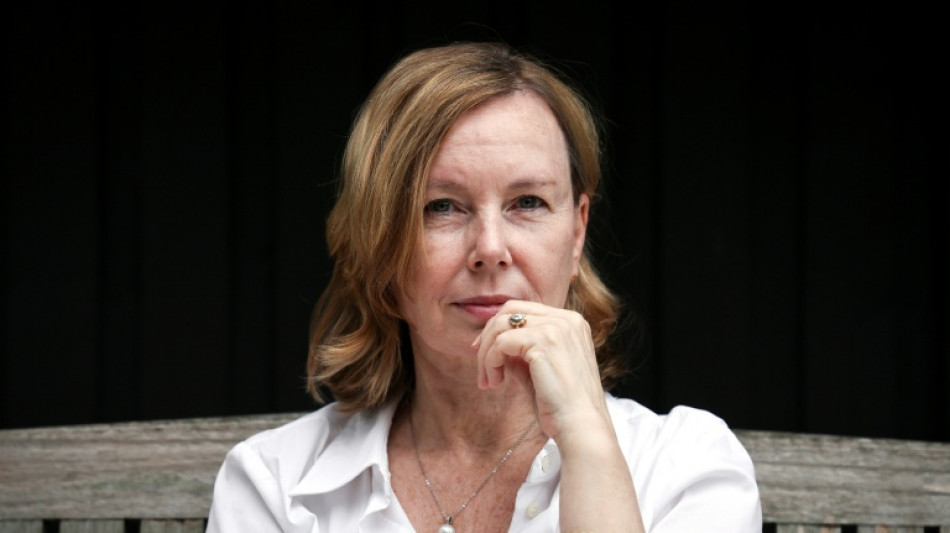
Voice coach to the stars says Aussie actors nail tricky accents / Photo: © AFP

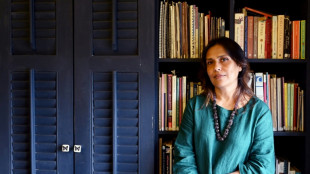
Geoffrey Rush, Rose Byrne, Cate Blanchett -- voice coach Victoria Mielewska has trained some of Australia's most famous thespians in the delicate art of the accent and says actors from Down Under have a unique talent for getting it right.
Byrne, a native of the greater Sydney area, is vying for the best actress Oscar this month for her powerhouse role as an overwhelmed mother in "If I Had Legs I'd Kick You".
So uncannily convincing is her American accent that some have expressed shock that she is in fact Australian.
"She masters that American absolutely beautiful accent that she does," Mielewska, who worked with Byrne on the 2022 comedy "Seriously Red", told AFP at her home in Sydney's leafy north.
"She's worked quietly and beautifully for many years."
For Mielewska -- whose company Creative Voice trains everyone from actors to business executives in speaking -- teaching an actor an accent is much more than just an impression.
The actor must learn to really live in the physicality of the voice.
"I work in quite a vulnerable, free way," she explained.
"The ultimate goal is not to listen to an actor at work and not to listen to the accent, but for them to be able to work with it and through it -- to get the truth of the work."
- 'Gym in your mouth' -
To go American, Mielewska said it's all about getting the Rs and the vowels right.
"It's very intricate, an American accent," she told AFP, describing it as "very muscular".
"If I'm working with an Australian who is doing an American accent, I will say, 'You have to start going to the gym in your mouth'."
It's as much about where one's tongue sits in the mouth as it is about their seating posture, Mielewska explained.
A Midwestern twang is "a very feet on the ground, back in the heels of your boots type of accent", she said.
And what about the classic English "received pronunciation", long the go-to sound of the British ruling class?
"I'd get them to sit back in the chair... you actually feel that there's a lot of space between you," she said
Australian actors can nail the US accent in part because Americans' natural way of speaking echoes the Antipodean approach to life -- more relaxed and, in some ways, "lazy", Mielewska said.
"Australians can do American pretty well by and large, because we come from a fairly neutral place," she said.
"Australians can go from something that's kind of midline and relaxed and start to work with it, and the muscles respond in time."
- Tongue twisters -
It's not always so easy the other way round.
For years, some of Hollywood's biggest stars have endured mockery for mangled attempts at accents -- from Don Cheadle as a Cockney in "Ocean's Eleven" to Leonardo DiCaprio playing a Rhodesian (modern-day Zimbabwean) in "Blood Diamond".
Some Americans, Mielewska said, are unfairly maligned.
Meryl Streep's turn as wrongfully accused mother Lindy Chamberlain in the true story 1988 film "Evil Angels" ("A Cry in the Dark" in its US release) -- and her often-misquoted line "a dingo took my baby" -- has sometimes inspired ridicule in Australia.
But Mielewska said that, contrary to popular belief, Streep got it bang on -- Chamberlain was born in New Zealand, and her accent is not typically Aussie.
Australian is also uniquely incompatible with the American lilt, she said.
That's because, Mielewska said, American actors need to "let go" and relax.
"What they're doing is surrendering their own accent and their own muscular habits of the way they speak," she said.
Some actors have shortcuts to get into a tricky voice.
Byrne has said she has a go-to phrase -- "Patty hired 24-hour security for Katie" -- when she finds herself struggling to summon the Yankee drawl.
She is now in the running to become the third Australian to win the best actress Oscar after Blanchett and Nicole Kidman.
Mielewska says the star -- known for her humble and understated style -- "comes from a very soulful, connected place".
"Of course her work is going to be truthful."
Z.Ma--ThChM