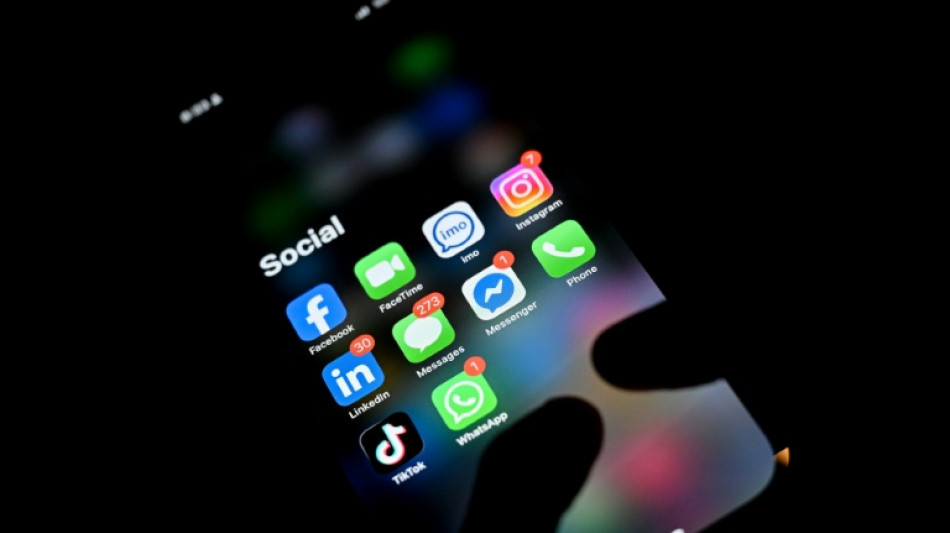
Amusing or addictive? The algorithms powering our social feeds / Photo: © AFP

Social media algorithms are a powerful feature of online life, serving up content to users based on their browsing habits or personal data.
Australia could soon give citizens the choice to opt out of them under new legislation that also threatens big tech companies with fines if they fail to protect young users from harmful content.
Here's what algorithms do, and the arguments around their effects.
- What is an algorithm? -
Open TikTok, Facebook, Instagram, YouTube or other platforms and you'll see a scrolling feed or recommendations bar showing content targeted to your interests.
These posts are selected for users based on programming rules called algorithms that predict what you will engage with -- whether it's something you like, or that riles you.
Broadly speaking, the recommendations are based on what the machine knows about you: what you've interacted with or posted about online, or information such as your age, job, location and marital status.
Social media giants usually keep the coding behind these algorithms -- the so-called "secret sauce" that drives traffic to their platforms -- closely guarded.
- Are they addictive? -
It's a familiar pattern for many -- open your phone on a break and before you know it an hour has passed and you're still scrolling.
That's by design, researchers and activists say.
"These platforms have engineered addictive features that keep children and adults online longer than they intend, often at the expense of sleep, wellbeing and real-world connection," Mark Williams, honorary professor of cognitive neuroscience at Macquarie University, said.
In a landmark trial in Los Angeles this year, tech giants were accused of creating "addiction machines".
Experts point to strategies companies use to encourage scrolling, like never-ending feeds, intermittent rewards and time-sensitive notifications.
"This unpredictability triggers the dopamine system, creating a compulsive cycle of seeking and anticipation," University of Leicester lecturer Quynh Hoang wrote.
This can create dependence similar to substance addiction, research published in online medical journal Cureus last year found.
- What are the dangers? -
By pushing people to content they respond to emotionally, many say social media can drive us into "rabbit holes" that are difficult to escape.
The recommendations "are designed to hold our attention, and too often that means privileging provocative and extreme content because outrage drives engagement and engagement drives profit", Steven Roberts at Monash University said.
Algorithms have been accused of pushing teenage boys towards the "manosphere" -- communities and influencers that promote misogyny and violence against women.
Research from Melbourne-based men's health charity Movember found that social media guided young men to that content whether they wanted it or not, a path leading from innocuous posts about working out and sports to violent, extreme content.
"We can already see the consequences in Australian schools," where "misogyny is rife", Roberts said.
"Our national survey of more than 2,600 teachers found that... 70 per cent had frequently or occasionally seen the impact of manosphere social media influencers present on student attitudes and behaviour."
- What is Australia proposing? -
Under Australia's new rules, social media giants must allow users to "opt out" of the algorithm.
It also holds the firms responsible for protecting under-18s from pornography, online bullying, and content that glorifies crime or encourages eating disorders.
The "my feed, my way" initiative aims to bring social media back to basics -- a feed focused on updates from friends, family and pages you follow.
"The government has handed Australians a switch. Whether anyone flips it is another matter," Lisa Harrison, a lecturer in communication and media at Flinders University, said.
In a 2025 survey of over 6,000 people in six countries, only one in five said they would switch off personalised recommendations if they could, she noted.
"The algorithm is good at its job, and the minority who do opt out will find a feed of friends and creators feels quieter than the one they left."
G.Fung--ThChM