The China Mail - Regions in US, China most at risk for climate damage: report

USD -
AED 3.672497
AFN 64.99979
ALL 80.742224
AMD 360.119907
ANG 1.789785
AOA 918.000449
ARS 1547.512201
AUD 1.427114
AWG 1.8
AZN 1.695151
BAM 1.737338
BBD 2.013458
BDT 124.459802
BGN 1.747831
BHD 0.37735
BIF 3010
BMD 1
BND 1.277909
BOB 12.120755
BRL 5.460101
BSD 0.999711
BTN 94.558763
BWP 13.724402
BYN 2.982914
BYR 19600
BZD 2.010562
CAD 1.39706
CDF 2315.000267
CHF 0.816503
CLF 0.02453
CLP 965.430226
CNY 6.67355
CNH 6.67376
COP 3229.36
CRC 454.091218
CUC 1
CUP 23.992112
CVE 98.896657
CZK 21.61525
DJF 177.720122
DKK 6.65239
DOP 60.604398
DZD 135.956026
EGP 54.717302
ERN 15
ETB 164.071845
EUR 0.88999
FJD 2.244198
FKP 0.745268
GBP 0.741965
GEL 2.600226
GGP 0.745268
GHS 11.631305
GIP 0.745268
GMD 74.000096
GNF 8855.000058
GTQ 7.639521
GYD 209.448686
HKD 7.84505
HNL 26.868429
HRK 6.76901
HTG 130.971046
HUF 322.693501
IDR 18110.4
ILS 3.153899
IMP 0.745268
INR 94.51575
IQD 1515.529716
IRR 1883408.502243
ISK 121.579569
JEP 0.745268
JMD 158.455068
JOD 0.709015
JPY 158.401996
KES 129.920112
KGS 87.450166
KHR 4064.827605
KMF 440.999835
KPW 899.999961
KRW 1341.484997
KWD 0.310805
KYD 0.833041
KZT 451.807175
LAK 22506.673299
LBP 89519.744527
LKR 332.641939
LRD 169.939285
LSL 16.455617
LTL 2.952739
LVL 0.60489
LYD 6.409977
MAD 9.765444
MDL 17.929301
MGA 4515.192027
MKD 54.78946
MMK 2099.52083
MNT 3598.087189
MOP 8.077598
MRU 40.663904
MUR 47.090014
MVR 15.455015
MWK 1733.399066
MXN 18.60899
MYR 4.071298
MZN 63.910474
NAD 16.455325
NGN 1346.42026
NIO 36.784529
NOK 9.29659
NPR 151.29402
NZD 1.778304
OMR 0.384501
PAB 0.999773
PEN 3.450426
PGK 4.485918
PHP 63.345497
PKR 276.534117
PLN 3.904405
PYG 6061.763543
QAR 3.644609
RON 4.754098
RSD 104.67979
RUB 81.801499
RWF 1471.012787
SAR 3.756339
SBD 8.051718
SCR 13.701544
SDG 601.500853
SEK 9.731575
SGD 1.27865
SHP 0.745545
SLE 22.909978
SLL 20969.504398
SOS 571.349894
SRD 37.563974
STD 20697.981008
STN 21.763752
SVC 8.747096
SYP 13001.999685
SZL 16.44674
THB 33.593497
TJS 9.221818
TMT 3.51
TND 2.979449
TOP 2.40776
TRY 50.043203
TTD 6.776725
TWD 32.836099
TZS 2649.998018
UAH 45.52523
UGX 4104.021853
UYU 40.19489
UZS 11886.139647
VES 890.0366
VND 25704.5
VUV 119.472328
WST 2.779309
XAF 583.794901
XAG 0.019139
XAU 0.000246069955
XCD 2.70255
XCG 1.801579
XDR 0.707052
XOF 583.794901
XPF 105.938734
YER 236.175008
ZAR 16.39546
ZMK 9001.202271
ZMW 20.274394
ZWL 321.999592
SSP 5745.96484
MXV 2.094656
  • RYCEF

    0.4000

    19.71

    +2.03%

  • CMSC

    0.0000

    20.4

    0%

  • BTI

    0.4200

    56.05

    +0.75%

  • BP

    0.2800

    44.43

    +0.63%

  • RBGPF

    1.6000

    67

    +2.39%

  • RIO

    -0.1500

    94.41

    -0.16%

  • AZN

    -0.4300

    166.15

    -0.26%

  • GSK

    0.4600

    49.7

    +0.93%

  • BCE

    -0.4100

    20.56

    -1.99%

  • NGG

    -0.2500

    75.24

    -0.33%

  • VOD

    -0.0400

    16.58

    -0.24%

  • RELX

    -0.4500

    33.07

    -1.36%

  • BCC

    -0.5500

    76.59

    -0.72%

  • CMSD

    -0.0300

    20.27

    -0.15%

  • JRI

    -0.2500

    10.77

    -2.32%

Regions in US, China most at risk for climate damage: report
Regions in US, China most at risk for climate damage: report / Photo: © AFP

Regions in US, China most at risk for climate damage: report

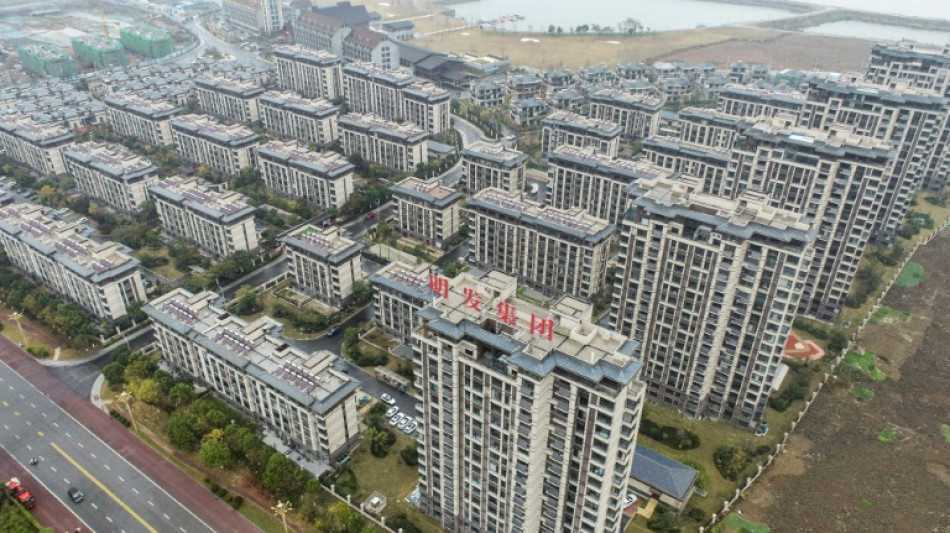
Major industrial and economic centres in China and the United States are among the most vulnerable regions in the world to the increasingly destructive power of climate change-driven weather extremes, according to a comprehensive analysis Monday.

Text size:

The new findings underscore the urgent need for governments to focus on decarbonisation and adaptation measures such as flood-proofing -- and show the economic fallout from climate change could be grave and widespread.

Nine of the top 10 most at-risk regions are in China, with two of the country's largest sub-national economies -- Jiangsu and Shandong -- leading the global ranking by The Cross Dependency Initiative (XDI).

After China, the US has the most high-risk states. Florida, number 10 in global rankings, is the US state most in jeopardy, followed by California and Texas.

China, India and the United States make up over half the states and provinces in the top 100.

"We get an extremely strong signal from countries like China, from the US and India, and we see essentially the engine rooms of the global economy where there is a lot of built infrastructure," Karl Mallon, head of science and innovation at XDI, said at a briefing.

The analysis found that both inland and coastal flooding pose the greatest risks to physical infrastructure. The report also examined the dangers of extreme heat, forest fires, soil movement, extreme wind and freeze thaw.

The analysis covers over 2,600 territories globally, modelling damage from 1990 to 2050 based on a "pessimistic" scenario of global warming of three degrees Celsius by the end of the century outlined by the UN's Intergovernmental Panel on Climate Change.

- Capital flight? -

The researchers say it is the most comprehensive data crunch of its kind and hope it will inform future climate and economic policy.

It could also impact investment decisions as companies reassess financial risks based on climate change related exposure in vulnerable areas.

"Folks who are looking to build a factory, establish a supply chain that involves those states and provinces are going to think twice about where they are," said Mallon.

He said there could be "at best, a risk pricing into those areas, at worst, maybe a capital flight as those investors seek to try and find safer havens."

Other economic hubs in the top 100 include Beijing, Buenos Aires, Ho Chi Minh City, Jakarta, Mumbai, Sao Paulo and Taiwan.

Australia, Belgium, Canada, Germany and Italy also have states and provinces in the top 100.

In Europe, Germany's Lower Saxony region is most at risk, while Italy's Veneto region -- home to the lagoon city of Venice -- is ranked number four in Europe.

Southeast Asia sees the steepest escalation in damage from 1990 to 2050, according to the modelling.

XDI said it released the analysis in response to requests from investors.

"Since extensive built infrastructure generally overlaps with high levels of economic activity and capital value, it is imperative that the physical risk of climate change is appropriately understood and priced", XDI CEO Rohan Hamden said in a press release.

E.Choi--ThChM



