The China Mail - Top oil producers likely to hold course despite Ukraine war

USD -
AED 3.672501
AFN 65.000259
ALL 81.533073
AMD 358.401722
ANG 1.789785
AOA 917.000175
ARS 1541.608602
AUD 1.42109
AWG 1.8
AZN 1.706766
BAM 1.754262
BBD 2.010754
BDT 123.994851
BGN 1.747831
BHD 0.376995
BIF 2999.094065
BMD 1
BND 1.280239
BOB 12.025456
BRL 5.346298
BSD 0.998309
BTN 95.006951
BWP 13.810517
BYN 2.942546
BYR 19600
BZD 2.007794
CAD 1.399695
CDF 2314.499647
CHF 0.827995
CLF 0.02501
CLP 987.54033
CNY 6.66605
CNH 6.65875
COP 3168.62
CRC 453.954273
CUC 1
CUP 23.960319
CVE 98.902577
CZK 21.845649
DJF 177.776183
DKK 6.70951
DOP 61.334505
DZD 135.317337
EGP 56.037016
ERN 15
ETB 163.677738
EUR 0.89773
FJD 2.243202
FKP 0.751792
GBP 0.751345
GEL 2.567495
GGP 0.751792
GHS 11.635281
GIP 0.751792
GMD 73.497916
GNF 8835.888903
GTQ 7.629042
GYD 209.205434
HKD 7.846495
HNL 26.802228
HRK 6.76901
HTG 130.803902
HUF 328.862502
IDR 18145
ILS 3.11655
IMP 0.751792
INR 95.15685
IQD 1513.526119
IRR 1864650.000464
ISK 121.889937
JEP 0.751792
JMD 158.350301
JOD 0.708942
JPY 157.880501
KES 129.950292
KGS 87.448604
KHR 4079.381097
KMF 441.999671
KPW 899.999961
KRW 1337.18005
KWD 0.31091
KYD 0.832018
KZT 454.497345
LAK 22469.582065
LBP 89401.597474
LKR 331.94455
LRD 169.711646
LSL 16.642972
LTL 2.95274
LVL 0.60489
LYD 6.423981
MAD 9.821192
MDL 17.970463
MGA 4535.934522
MKD 55.229912
MMK 2099.638249
MNT 3597.631144
MOP 8.067326
MRU 40.444177
MUR 47.470126
MVR 15.460134
MWK 1731.104723
MXN 18.717469
MYR 4.060396
MZN 63.894926
NAD 16.643047
NGN 1346.920068
NIO 36.73971
NOK 9.30349
NPR 152.022209
NZD 1.77947
OMR 0.384542
PAB 0.998309
PEN 3.443763
PGK 4.475938
PHP 63.798499
PKR 276.21656
PLN 3.948285
PYG 5843.547208
QAR 3.639535
RON 4.800699
RSD 105.512998
RUB 80.574614
RWF 1478.109555
SAR 3.750664
SBD 8.064705
SCR 13.969602
SDG 601.502199
SEK 9.893595
SGD 1.28088
SHP 0.750582
SLE 22.950031
SLL 20969.504398
SOS 570.559796
SRD 37.6155
STD 20697.981008
STN 21.976051
SVC 8.735469
SYP 13001.999685
SZL 16.638487
THB 33.761987
TJS 9.194224
TMT 3.51
TND 2.995112
TOP 2.40776
TRY 49.837199
TTD 6.776484
TWD 32.548989
TZS 2648.657993
UAH 45.526629
UGX 4347.533602
UYU 40.163236
UZS 11994.959121
VES 887.00815
VND 25826
VUV 119.133003
WST 2.76699
XAF 588.872304
XAG 0.018882
XAU 0.000247829939
XCD 2.70255
XCG 1.799297
XDR 0.707052
XOF 588.872304
XPF 106.970674
YER 236.175034
ZAR 16.6305
ZMK 9001.203101
ZMW 20.141626
ZWL 321.999592
SSP 5745.303054
MXV 2.110101
  • RYCEF

    0.4000

    19.71

    +2.03%

  • CMSC

    0.0000

    20.4

    0%

  • BTI

    0.4200

    56.05

    +0.75%

  • BP

    0.2800

    44.43

    +0.63%

  • RBGPF

    1.6000

    67

    +2.39%

  • RIO

    -0.1500

    94.41

    -0.16%

  • AZN

    -0.4300

    166.15

    -0.26%

  • GSK

    0.4600

    49.7

    +0.93%

  • BCE

    -0.4100

    20.56

    -1.99%

  • NGG

    -0.2500

    75.24

    -0.33%

  • VOD

    -0.0400

    16.58

    -0.24%

  • RELX

    -0.4500

    33.07

    -1.36%

  • BCC

    -0.5500

    76.59

    -0.72%

  • CMSD

    -0.0300

    20.27

    -0.15%

  • JRI

    -0.2500

    10.77

    -2.32%

Top oil producers likely to hold course despite Ukraine war

Top oil producers likely to hold course despite Ukraine war

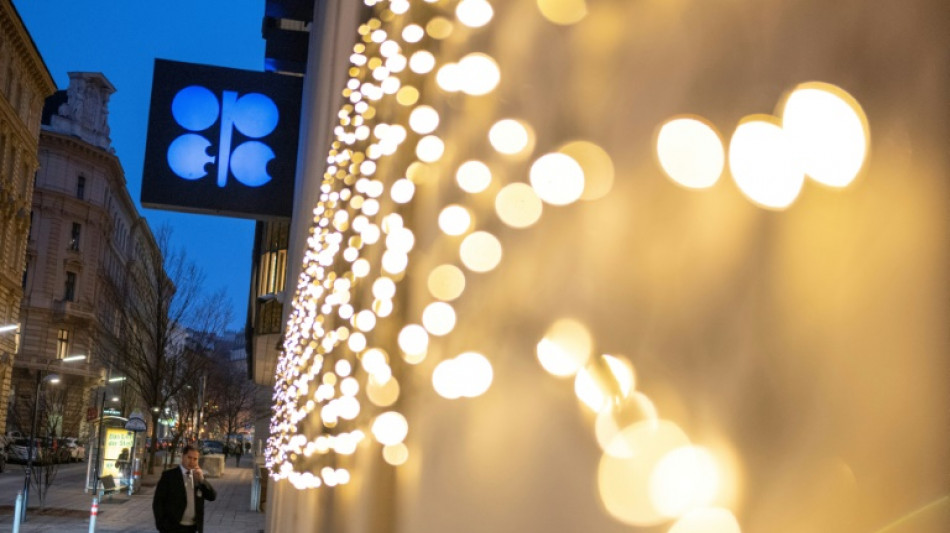
Saudi Arabia, Russia and other top oil producers are expected Wednesday to agree to hold firm on only gradually opening the taps despite Russia's assault on Ukraine sending prices spiralling.

Text size:

Both WTI crude and Brent broke above $110 a barrel Wednesday. Brent is at a high last seen in 2014, while WTI is at levels not seen since 2013.

But analysts expect the 23-member OPEC+ group at its monthly meeting Wednesday to stick to a decision from last year for an output target of 400,000 barrels per day for April as well.

On Sunday, OPEC leader Riyadh confirmed the commitment of the 13-country group to the agreement with its 10 partners, led by Moscow, which faces international criticism and sanctions over its invasion of Ukraine.

Crown Prince Mohammed bin Salman "affirmed the kingdom's keenness on the stability and balance of oil markets," according to the Saudi Press Agency.

- 'Risk for disruptions' -

The gathering starts with a technical discussion at 1:00 p.m. local Vienna time (1200 GMT) followed by a formal meeting to endorse any decision, scheduled for 1:30 p.m.

The meetings, held via video conference, come a day after International Energy Agency (IEA) countries agreed to release 60 million barrels of oil to stabilise global markets.

The United States will contribute half of the amount, President Joe Biden announced.

But the move has failed to assure markets, and analysts have low expectations that OPEC+ will take any decision to rein in surging prices.

"The war in Ukraine is getting very ugly and destructive and hostilities between the West and Russia are intensifying. High risk for disruptions to both crude and natural gas," Bjarne Schieldrop of Seb said.

"Could OPEC help? Yes, but it will probably choose not to," Ipek Ozkardeskaya of Swissquote said.

- 'Paper promise' -

OPEC+ has so far resisted pressure from major oil consumers, such as the US, to open the taps more as some of its members, including Nigeria and Angola, struggle to meet quotas.

Between December and January, OPEC members boosted their production by 64,000 barrels per day (bpd), far below their 400,000 bpd agreement, according to the organisation's last monthly report.

"The pledge from OPEC+ to increase supply is so far a paper promise... adding to the shortness in the supply market and further stoking the bullish price environment," Louise Dickson of Rystad Energy said.

The Organization of the Petroleum Exporting Countries (OPEC), whose secretariat is based in Vienna, had drastically slashed production in 2020 as the Covid-19 pandemic began to spread through the world, pummelling demand and prices.

Wednesday's meeting takes place at a key moment as negotiations to revive the 2015 Iran nuclear deal are widely expected to come to a head in the coming days.

The deal provided sanctions relief for Tehran in return for strict curbs on its nuclear programme but has been disintegrating since former US president Donald Trump withdrew from it in 2018 and reimposed sanctions, including on Iran's oil exports.

If an agreement were to be found and sanctions lifted again, it could unlock the Iranian exports.

N.Lo--ThChM