The China Mail - US inflation is 'still too high': Fed Chair Powell

USD -
AED 3.672498
AFN 65.000033
ALL 80.761235
AMD 360.982284
ANG 1.789785
AOA 916.999796
ARS 1547.435951
AUD 1.426218
AWG 1.8
AZN 1.711502
BAM 1.737655
BBD 2.013789
BDT 124.482471
BGN 1.747831
BHD 0.377511
BIF 2987.543757
BMD 1
BND 1.278142
BOB 12.12307
BRL 5.452597
BSD 0.999876
BTN 94.576825
BWP 13.727633
BYN 2.983457
BYR 19600
BZD 2.010946
CAD 1.396295
CDF 2315.000375
CHF 0.817865
CLF 0.024527
CLP 965.319821
CNY 6.669803
CNH 6.66649
COP 3229.13
CRC 454.196116
CUC 1
CUP 23.996482
CVE 97.96631
CZK 21.640991
DJF 178.04787
DKK 6.66219
DOP 60.044158
DZD 136.137727
EGP 53.944098
ERN 15
ETB 164.108289
EUR 0.89128
FJD 2.243203
FKP 0.743037
GBP 0.742305
GEL 2.604999
GGP 0.743037
GHS 11.633527
GIP 0.743037
GMD 74.488904
GNF 8859.999556
GTQ 7.640777
GYD 209.490556
HKD 7.844815
HNL 26.874159
HRK 6.76901
HTG 130.993736
HUF 323.475987
IDR 18051.6
ILS 3.16671
IMP 0.743037
INR 94.45525
IQD 1515.805747
IRR 1883408.498647
ISK 121.740028
JEP 0.743037
JMD 158.490264
JOD 0.708991
JPY 158.394499
KES 129.88984
KGS 87.449305
KHR 4065.567945
KMF 440.999862
KPW 899.999961
KRW 1344.009825
KWD 0.31085
KYD 0.8332
KZT 451.907529
LAK 22510.972511
LBP 89536.844537
LKR 332.702525
LRD 169.971747
LSL 16.458322
LTL 2.95274
LVL 0.60489
LYD 6.411145
MAD 9.767223
MDL 17.932726
MGA 4516.054516
MKD 54.86112
MMK 2099.845134
MNT 3601.453525
MOP 8.0795
MRU 40.672394
MUR 46.750138
MVR 15.454973
MWK 1733.74558
MXN 18.57415
MYR 4.046102
MZN 63.910608
NAD 16.458322
NGN 1344.919545
NIO 36.791229
NOK 9.282715
NPR 151.327626
NZD 1.77647
OMR 0.384469
PAB 0.999964
PEN 3.451055
PGK 4.486835
PHP 63.009499
PKR 276.584484
PLN 3.913615
PYG 6062.867601
QAR 3.645272
RON 4.758805
RSD 104.821031
RUB 81.626861
RWF 1471.300315
SAR 3.756339
SBD 8.051718
SCR 13.753827
SDG 601.494926
SEK 9.77764
SGD 1.276798
SHP 0.745545
SLE 22.910108
SLL 20969.504398
SOS 571.481881
SRD 37.564026
STD 20697.981008
STN 21.767813
SVC 8.74869
SYP 13001.999685
SZL 16.449882
THB 33.409965
TJS 9.223662
TMT 3.51
TND 2.979992
TOP 2.40776
TRY 50.0464
TTD 6.77808
TWD 32.916898
TZS 2647.377987
UAH 45.533522
UGX 4104.696412
UYU 40.202925
UZS 11888.515735
VES 893.768974
VND 25682.5
VUV 119.655093
WST 2.783161
XAF 584.641244
XAG 0.018961
XAU 0.000242230458
XCD 2.70255
XCG 1.801979
XDR 0.707052
XOF 584.641244
XPF 105.958029
YER 236.174989
ZAR 16.3842
ZMK 9001.198566
ZMW 20.278266
ZWL 321.999592
SSP 5745.516508
MXV 2.090199
  • RYCEF

    0.4000

    19.71

    +2.03%

  • CMSC

    0.0000

    20.4

    0%

  • BTI

    0.4200

    56.05

    +0.75%

  • BP

    0.2800

    44.43

    +0.63%

  • RBGPF

    1.6000

    67

    +2.39%

  • RIO

    -0.1500

    94.41

    -0.16%

  • AZN

    -0.4300

    166.15

    -0.26%

  • GSK

    0.4600

    49.7

    +0.93%

  • BCE

    -0.4100

    20.56

    -1.99%

  • NGG

    -0.2500

    75.24

    -0.33%

  • VOD

    -0.0400

    16.58

    -0.24%

  • RELX

    -0.4500

    33.07

    -1.36%

  • BCC

    -0.5500

    76.59

    -0.72%

  • CMSD

    -0.0300

    20.27

    -0.15%

  • JRI

    -0.2500

    10.77

    -2.32%

US inflation is 'still too high': Fed Chair Powell
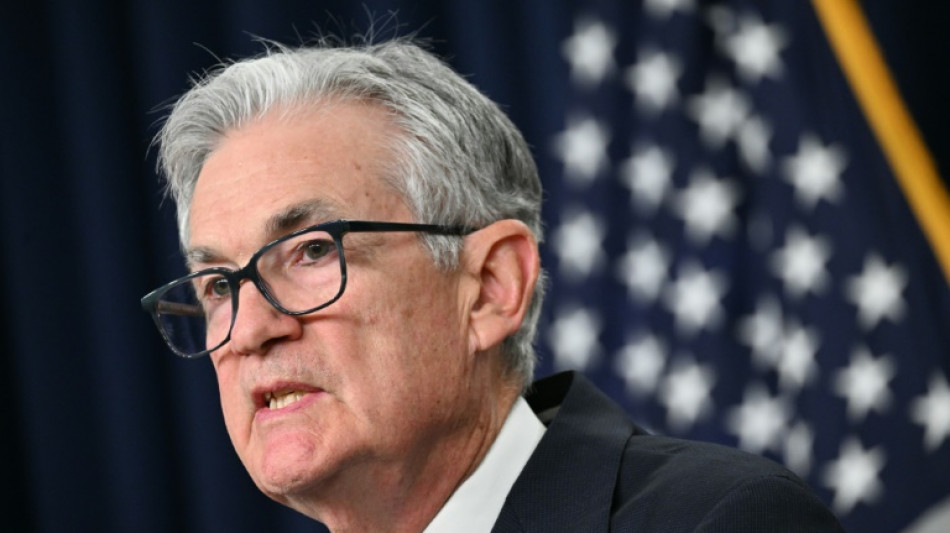
US inflation is 'still too high': Fed Chair Powell / Photo: © AFP

US inflation is 'still too high': Fed Chair Powell

US inflation is "still too high" despite a recent slowdown, Federal Reserve Chair Jerome Powell said Thursday, leaving the door open for a new interest rate hike.

Text size:

Additional evidence of "persistently above-trend growth," or a reversal of the recent decline in job openings and softening of wage growth could cause the Fed to reconsider its current rate pause, he told a conference in New York.

If the US economy develops in this way, it "could put further progress on inflation at risk and could warrant further tightening of monetary policy," he said in a speech that was briefly disrupted by climate change protesters.

The Fed recently slowed its aggressive campaign of monetary tightening which lifted its benchmark lending rate to a 22-year high, as it looks to slow down inflation without pushing the US economy into recession.

Headline inflation, as measured by the Fed's favored gauge, has more than halved since peaking in June last year, but remains stuck above its long-term target of two percent.

"Inflation is still too high, and a few months of good data are only the beginning of what it will take to build confidence that inflation is moving down sustainably toward our goal," Powell said.

"We cannot yet know how long these lower readings will persist, or where inflation will settle over coming quarters," he continued, adding that the Fed would proceed "carefully" at future interest rate meetings.

- Monetary policy is 'restrictive' -

Powell said the Fed's current policy stance is "restrictive," suggesting that monetary policy was working to put "downward pressure on economic activity and inflation."

But he warned that "a range of uncertainties, both old and new," were complicating monetary policy.

"Doing too little could allow above-target inflation to become entrenched," he said.

"Doing too much could also do unnecessary harm to the economy," he added.

Recent data points to the continued strength of the US economy supported by resilient consumer spending, while the tight labor market is showing some signs of softening.

The Fed's upcoming decisions will be "based on the totality of the incoming data, the evolving outlook, and the balance of risks," he said, echoing previous comments.

Futures traders currently assign a probability of more than 95 percent that the Fed will announce it will hold interest rates steady on November 1, following its next meeting, according to data from CME Group.

- Geopolitical tensions threaten economy-

In a highly unusual move, Powell also addressed the ongoing conflict between Israel and Hamas militants in Gaza.

"Geopolitical tensions are highly elevated and pose important risks to global economic activity," he said.

"Speaking for myself, I found the attack on Israel horrifying, as is the prospect for more loss of innocent lives," he continued.

The Fed's role is to monitor what economic implications these developments could have, he added.

Analysts have voiced concerns that the Israel-Hamas war could spread into a broader regional conflict in the crude-rich Middle East, with implications for oil production.

P.Deng--ThChM