The China Mail - Losing Russian energy would weigh on Europe's economy: IMF official

USD -
AED 3.672501
AFN 64.00048
ALL 81.504398
AMD 360.298689
ANG 1.789785
AOA 917.999713
ARS 1538.470898
AUD 1.42204
AWG 1.8025
AZN 1.697771
BAM 1.755348
BBD 2.014118
BDT 124.150744
BGN 1.747831
BHD 0.37735
BIF 3000
BMD 1
BND 1.281553
BOB 11.995315
BRL 5.383597
BSD 1.000013
BTN 95.207367
BWP 13.822349
BYN 2.947868
BYR 19600
BZD 2.01121
CAD 1.39666
CDF 2315.000407
CHF 0.82214
CLF 0.025025
CLP 988.119907
CNY 6.661101
CNH 6.650235
COP 3178.99
CRC 454.76167
CUC 1
CUP 24.000287
CVE 99.200381
CZK 21.73985
DJF 177.720056
DKK 6.67711
DOP 60.6498
DZD 135.623978
EGP 56.001699
ERN 15
ETB 161.150082
EUR 0.89339
FJD 2.23975
FKP 0.747647
GBP 0.745245
GEL 2.597895
GGP 0.747647
GHS 11.6502
GIP 0.747647
GMD 73.999729
GNF 8799.999881
GTQ 7.645879
GYD 209.614159
HKD 7.84573
HNL 27.000196
HRK 6.76901
HTG 131.054259
HUF 326.679498
IDR 18147
ILS 3.11845
IMP 0.747647
INR 95.06795
IQD 1514
IRR 1868414.999853
ISK 121.350106
JEP 0.747647
JMD 158.760361
JOD 0.708988
JPY 157.3625
KES 129.859676
KGS 87.447982
KHR 4072.999908
KMF 440.999978
KPW 899.999961
KRW 1335.419747
KWD 0.31102
KYD 0.833326
KZT 453.3167
LAK 22534.999848
LBP 89549.999477
LKR 332.450795
LRD 170.449927
LSL 16.629918
LTL 2.95274
LVL 0.60489
LYD 6.425035
MAD 9.833501
MDL 18.045072
MGA 4594.999963
MKD 55.021155
MMK 2099.909661
MNT 3597.883233
MOP 8.082337
MRU 40.239993
MUR 47.289754
MVR 15.449808
MWK 1736.000078
MXN 18.853803
MYR 4.055698
MZN 63.91004
NAD 16.629848
NGN 1346.850215
NIO 36.809636
NOK 9.203802
NPR 152.332146
NZD 1.771275
OMR 0.384477
PAB 1.000013
PEN 3.459867
PGK 4.49025
PHP 63.746027
PKR 276.601353
PLN 3.92392
PYG 5858.938516
QAR 3.645503
RON 4.775017
RSD 105.014997
RUB 80.621784
RWF 1475
SAR 3.7541
SBD 8.058206
SCR 13.76549
SDG 601.504543
SEK 9.81755
SGD 1.277545
SHP 0.748335
SLE 22.896424
SLL 20969.504398
SOS 571.513194
SRD 37.644503
STD 20697.981008
STN 22.3
SVC 8.749697
SYP 13001.999685
SZL 16.629837
THB 33.687018
TJS 9.190174
TMT 3.5
TND 3.020696
TOP 2.40776
TRY 49.945696
TTD 6.779691
TWD 32.598399
TZS 2648.258012
UAH 45.55389
UGX 4360.137679
UYU 40.22581
UZS 11994.999855
VES 887.479797
VND 25800.5
VUV 119.217464
WST 2.773901
XAF 586.025246
XAG 0.019665
XAU 0.000250560002
XCD 2.70255
XCG 1.802288
XDR 0.707052
XOF 586.025246
XPF 107.302545
YER 236.198462
ZAR 16.62641
ZMK 9001.196467
ZMW 20.200416
ZWL 321.999592
SSP 5745.199062
MXV 2.124926
  • RYCEF

    0.4000

    19.71

    +2.03%

  • CMSC

    0.0000

    20.4

    0%

  • BTI

    0.4200

    56.05

    +0.75%

  • BP

    0.2800

    44.43

    +0.63%

  • RBGPF

    1.6000

    67

    +2.39%

  • RIO

    -0.1500

    94.41

    -0.16%

  • AZN

    -0.4300

    166.15

    -0.26%

  • GSK

    0.4600

    49.7

    +0.93%

  • BCE

    -0.4100

    20.56

    -1.99%

  • NGG

    -0.2500

    75.24

    -0.33%

  • VOD

    -0.0400

    16.58

    -0.24%

  • RELX

    -0.4500

    33.07

    -1.36%

  • BCC

    -0.5500

    76.59

    -0.72%

  • CMSD

    -0.0300

    20.27

    -0.15%

  • JRI

    -0.2500

    10.77

    -2.32%

Losing Russian energy would weigh on Europe's economy: IMF official
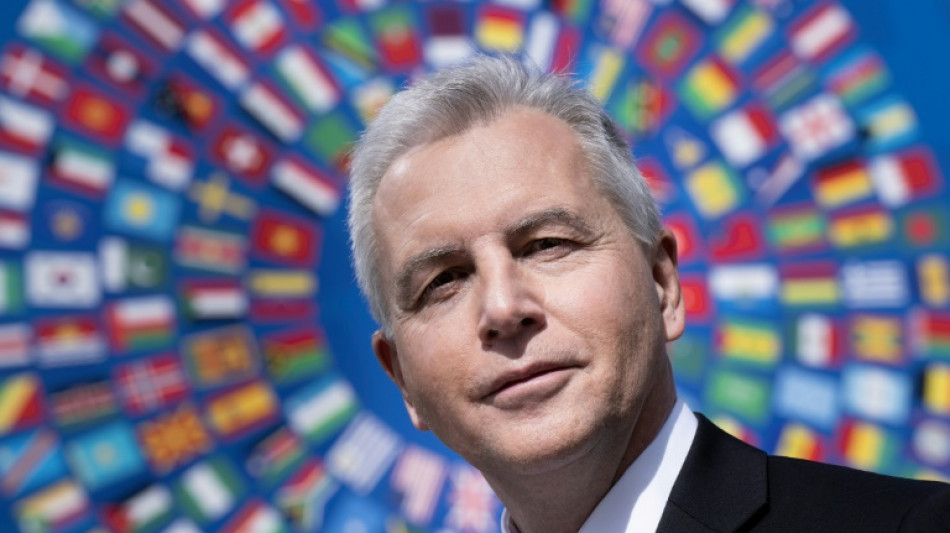
Losing Russian energy would weigh on Europe's economy: IMF official / Photo: © AFP

Losing Russian energy would weigh on Europe's economy: IMF official

Europe can get by without Russian gas for six months, but beyond that, the economic impact would be severe, a senior IMF official told AFP.

Text size:

Alfred Kammer, head of the IMF's European Department, urged countries in the region to take a series of steps to ease the blow, including reducing consumption to build up inventory.

The region relies on Russia for the vast majority of its energy needs, especially natural gas, and IMF economists looked at the economic cost of losing Moscow's supply.

"Over the first six months, Europe can deal with such a shut off (by) having alternative supplies (and) using existing storage," he said in an interview on the sidelines of the spring meetings of the IMF and World Bank.

"However, if that gas shut off were to last into the winter, and over a longer period, then that would have significant effects" on the European economy, he said.

Western countries have considered putting an embargo on Russian energy in retaliation for its invasion of Ukraine, while Moscow could also shut off exports to hit back at the damaging sanctions already imposed on the government.

The International Monetary Fund projects that a total loss of Russian gas and oil supplies could cost the European Union three percent of GDP, depending on the severity of the winter.

He called for steps to prepare for the possibility.

"There is no single option, which has a large impact, but lots of smaller measures will have a larger impact," he said, including by finding alternative suppliers, which some countries already have begun to do.

- No recession -

Consumers also have an important role to play and governments can raise awareness among their population through "public campaigns to reduce energy consumption."

"The consumer can act now," he said, and reducing consumption means more fuel can be stored in case supplies are interrupted.

Although the war in Ukraine has slowed growth sharply, Kammer said it "will not derail the recovery" and he does not expect a Europe-wide recession.

The major eurozone economies, with the exception of Spain, will be "weak in 2022" and will see a quarter or two of near-zero growth or even a technical recession with two negative quarters.

But the IMF expects these economies to recover in the second half of this year.

- 'A boon' -

The Russian attack on its neighbor also has caused a flood of about five million refugees, creating a challenge for European countries which face strains on their budgets as they deal with the influx.

Poland, which which has taken in the most Ukrainians, is particularly affected.

What happens to those people, mostly women and children, after the war remains a question.

"Some of these refugees will stay in Europe, I'm sure about that," said Kammer, who noted that could be "a boon" for countries faced with a aging populations and a lack of workers.

"But it could be a bad for Ukraine if too many of the refugees are going to stay."

K.Lam--ThChM