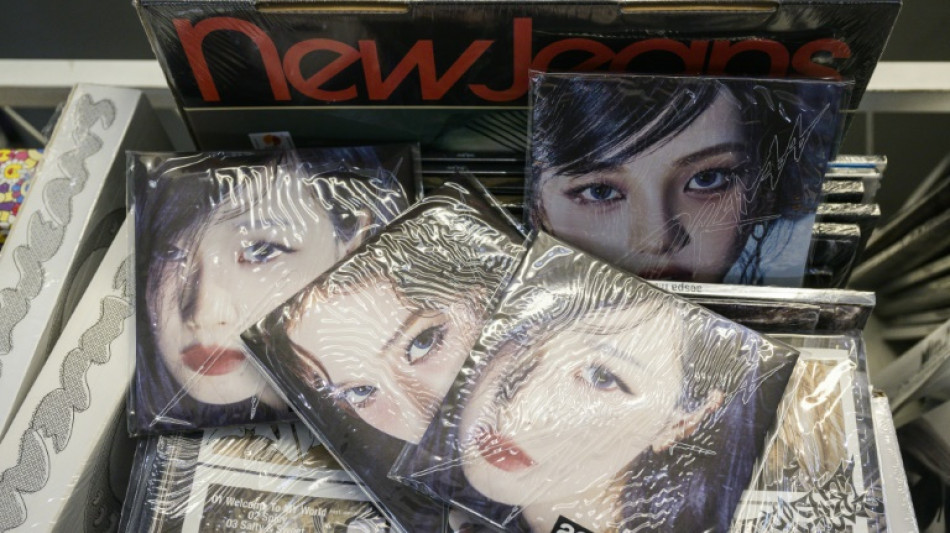
K-pop fans take aim at CD, merchandise waste / Photo: © AFP

K-pop fan Kim Na-Yeon used to buy stacks of the same album when there was a new release, hoping to find one of the rare selfies of her favourite stars tucked between the plastic covers.
Over the years, her burgeoning CD collection expanded to every inch of her shelves, prompting her to question its impact on the environment.
"These things are made from materials that are really difficult to recycle," said Kim.
"That got me thinking about how much carbon must be emitted to produce or get rid of them."
Kim's collection is part of a growing mountain of discarded CDs and merchandise waste that has swelled alongside K-pop's global popularity.
Made with polycarbonate, CDs can be recycled but only through a special treatment process that prevents toxic gases from being released into the environment.
Along with the plastic packaging, producing a CD generates about 500 grams of carbon emissions, according to an environmental impact study by Britain's Keele University.
Based on that calculation, the weekly sales of a single top K-pop group could be "equivalent to the emissions from flying around the Earth 74 times", said Kim.
The fan has joined a climate protection group called Kpop4Planet, which wants to hold the industry responsible for its impact on the environment.
- 'Manipulation' -
Started in 2020 by an Indonesian K-pop fan, the activist group has held protests outside the headquarters of music labels, urging them to stop "Plastic Album Sins".
The group has also collected signatures for petitions demanding a reduction in plastic production and other marketing schemes that fuel consumption as CD sales continue to rise significantly.
More than 115 million K-pop CDs were sold in 2023, the first time sales breached the 100 million mark for the industry.
It was a jump of 50 percent from the previous year, even though most fans are now streaming the music online rather than putting physical CDs into music players.
But K-pop fans continue to snap them up because they are attracted by the labels' marketing ideas, Kim said.
Using promotions like offering limited edition "photocards" of the stars in the albums or a chance to win a video call with the idol, the music labels tempt fans to buy more CDs.
"So each album is basically a lottery ticket," Roza De Jong, another K-pop fan, told AFP.
"The narrative is very much 'the more you buy, the bigger your chance'," she said, adding it was "common to see piles of plastic albums stacked on stairways and scattered across the streets of Seoul" after the buyers had picked through them for the promotional photo or ticket.
- Exploitative -
Albums are also sometimes released with different covers.
"We call all of these (sales techniques) exploitative marketing," said Kim, accusing the music labels of "manipulating" fans' love for their artists.
HYBE, the agency behind megastars BTS, told AFP the company has been putting effort into becoming climate friendly.
"As part of our environmental initiatives, we are using ecofriendly materials for our albums, video publications, and official merchandise, minimising plastics," the entertainment powerhouse told AFP, without offering greater specifics.
Industry figures suggest that album production skyrocketed during the pandemic, with experts saying that labels were looking to sales to make up for the lack of touring revenues.
While CD consumption is not limited to K-pop, activists say the South Korean industry has to play a part in cutting the waste.
Seventeen, a popular South Korean boyband, alone sold over 5.5 million copies of their album FML in 2023, setting the record for the highest-selling single album in K-pop history.
To discourage CD manufacturing and purchases, South Korea's environment ministry began charging a penalty in 2003, but the tiny sums involved have had little effect in the face of the huge revenues generated by album sales.
In 2023, entertainment labels were charged approximately 2.0 billion won ($143,000), said Yoon Hye-rin, deputy director of the ministry's Resource Circulation Policy Division.
While taking aim at the labels, Kim said she would not boycott the artists.
"They aren't the ones who know or decide the marketing schemes," said Kim. "Every fan wants to see their artist thrive, so boycotting isn't an option."
Y.Parker--ThChM