Leaking pipes as climate warms: Bulgaria faces water crisis / Photo: © AFP

Bulgarian villager Rumyana Tsoneva keeps opening the tap in her yard in Gorna Studena near the Danube -- and keeps finding it dry.
When water finally comes, it lasts only a few hours, and the retired agricultural expert has to choose between filling cans, running the washing machine or taking a shower.
"The problems date back 15 years, but every year the situation gets worse," the energetic 69-year-old told AFP.
"This year, we switched to rationing as early as June," she added.
Bulgaria, the EU's poorest country, has decades-old pipes -- some laid before World War II -- while water theft and poor resource management amplify the consequences of climate change.
"Every other drop is lost before reaching the tap," said Emil Gachev, a researcher at the Bulgarian Academy of Sciences.
In mid-July, water interruptions affected more than 156,000 people in the country of 6.4 million, which ranks worst in the EU for losses in supply networks.
- Systemic issue -
Gachev warns that Bulgaria is dangerously close to a lasting water crisis, with rationing periods stretching out longer and more localities affected as dry seasons extend.
Over the past four years, spring rainfall has been well below the average of the last 25 years, and some reservoirs are only filled to a fifth of capacity.
"The villages with disrupted water supplies are scattered throughout Bulgaria, indicating that this is a systemic rather than an isolated issue," Gachev said.
This week a commission set up last year to address the worsening situation recommended establishing a national fund to modernise the infrastructure, among other measures.
The water disruptions could increase political stability in the Balkan nation, which has seen seven elections in three years -- the most recent in October 2024.
Last summer, residents of Gorna Studena blocked the main road connecting two neighbouring regions in protest.
This year, the village, located about 30 kilometres (20 miles) from the Danube in a fertile plain, has been in a state of emergency since late June.
The water is rationed according to zones and hours, but some houses can go without water for more than two days.
The situation is similar in the two neighbouring villages in the region, where a saying goes: "We have water under our feet, but we are dying of thirst".
- 'Not asking for swimming pool' -
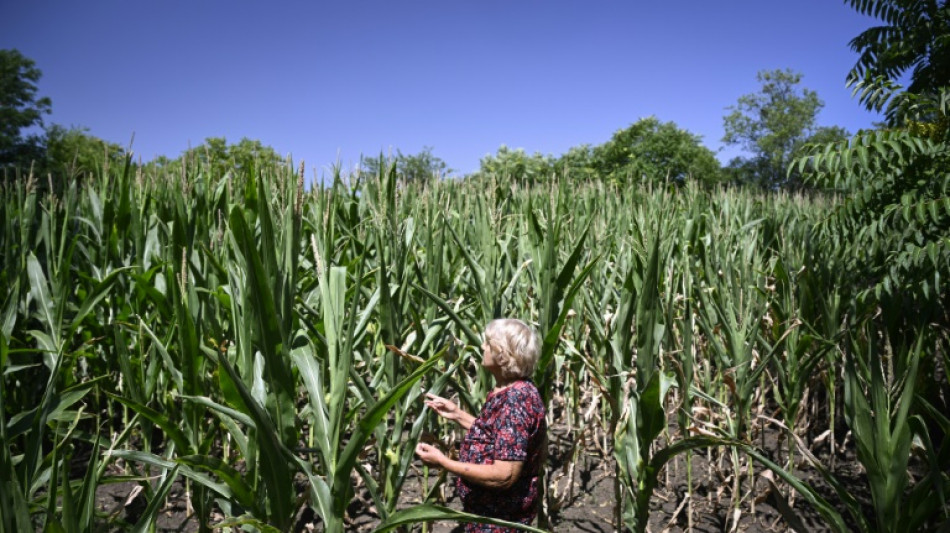
"We're not asking for a swimming pool, just a normal life," said Tsoneva, a former agronomist at the local agricultural cooperative, and now keeps a dozen chickens and grows corn.
Gorna Studena's population has dwindled from more than 2,000 in the 1960s to some 200, the vast majority of them retirees.
A clinic, a pharmacy, a school and a nursery all have closed.
These days, mayor Plamen Ivanov, 52, roams the village posting the water distribution schedules, while his phone keeps ringing.
"This rationing system needs to change; it no longer works," Ivanov told AFP in his air-conditioned office.
Ivanov explains that the situation is causing tensions, with different parts of the village receiving different amounts of water.
Not far from the mayor's office, a resident, who only gave her name as Nivyana, slowly steps out of her house with a bucket in her hand.
She's lucky: one of the blue tanks installed by the authorities is right in front of her door.
"I wanted to wash my clothes," the 83-year-old said, lowering her eyes. "But the water ran out before I could finish."
F.Brown--ThChM