US partners seek relief as Trump tariffs upend global trade / Photo: © AFP/File

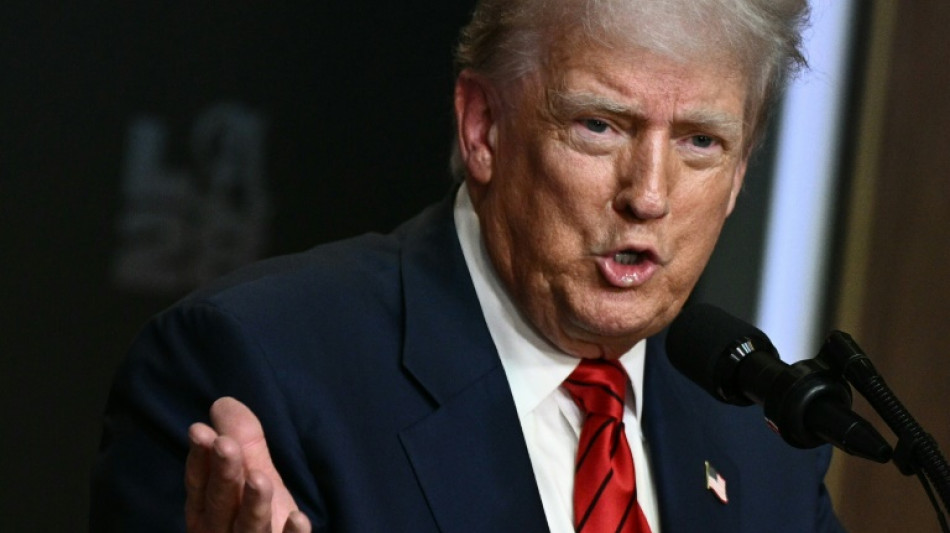
President Donald Trump's steeper global tariffs came into effect Thursday, leaving dozens of US trade partners scrambling to secure relief from soaring levies that are rewriting global trade practice.
Shortly before the new rates kicked in, Washington also announced it would double India tariffs to 50 percent and hit many semiconductor imports with a 100-percent duty.
Trump's tariff policy is a demonstration of economic power that he hopes will revive domestic manufacturing by keeping out imports, but many economists fear inflation and lower growth.
In his latest move, the president raised import duties from 10 percent to levels between 15 percent and 41 percent for a list of trading partners.
Many products from the European Union, Japan and South Korea now face a 15-percent tariff, even with deals struck with Washington to avert steeper threatened levies.
Others like India face a 25-percent duty -- to be doubled in three weeks -- while Syria, Myanmar and Laos face staggering levels of 40 percent.
Switzerland's government, which failed to convince Trump out of a stinging 39-percent tariff, said after an extraordinary meeting Thursday that it remains committed to US talks aiming to lower tariffs.
Trump's latest wave of "reciprocal" duties -- to address trade practices that Washington deems unfair -- broadens the measures imposed since he returned to the presidency.
Global financial markets largely shrugged off the higher tariffs, embracing a view that the impact has not been as bad as feared.
- 'No charge' -
The higher duties maintain exemptions on sectors that have been separately targeted like steel and autos.
Categories that could be hit later, like pharmaceuticals and semiconductors, are also spared for now.
Trump said Wednesday that he plans an "approximately 100 percent tariff" on semiconductor imports, but with no charge for companies investing in the United States or committed to doing so.
Companies and industry groups warn Trump's new levies will severely hurt smaller American businesses.
But providing some reprieve from the "reciprocal" tariff hike is a clause saying that goods already en route to the United States before Thursday -- and arriving before October 5 -- will not face the new rates.
With the dust settling, at least for now, Georgetown University professor Marc Busch expects US businesses to pass along more of the bill to consumers.
Inventories are depleting and it is unlikely firms will absorb costs indefinitely, he told AFP.
Trump is using tariffs to pursue a variety of goals -- such as doubling planned duties on India, citing its purchase of Russian oil, a key revenue source in Moscow's war in Ukraine.
The order threatened penalties on countries that "directly or indirectly" import Russian oil too.
The Federation of Indian Export Organisations called the move a "severe setback" impacting nearly 55 percent of shipments to the United States.
"We will not compromise with the interests of our farmers, our dairy sector, our fishermen," Prime Minister Narendra Modi said.
- Discrepancies -
Lingering questions remain for partners that have negotiated deals with Trump.
Tokyo and Washington appear at odds over their pact, such as when lower levies on Japanese cars will take place.
Generally, US auto imports face a 25-percent duty under a sector-specific order, weighing on Japanese automakers.
Both countries also seem to differ on whether the new 15-percent toll on Japanese goods would stack on existing levies or -- like the EU -- be capped at that level for many products.
Washington and Beijing meanwhile have a temporary truce in their tariff standoff expiring August 12.
Trump has separately targeted Brazil over the trial of his right-wing ally, former president Jair Bolsonaro, who is accused of planning a coup.
US tariffs on various Brazilian goods surged to 50 percent Wednesday, but with broad exemptions.
Commerce Secretary Howard Lutnick told Fox Business that Trump's duties could bring in $50 billion in monthly revenue.
burs-bys/bgs
T.Luo--ThChM