US tariffs deal stokes 'monster' pick-up fears in Europe / Photo: © AFP

Considered powerful, heavy-duty vehicles by their fans and dangerous gas-guzzling "monsters" by detractors -- could large pick-up trucks, long a staple on US roads, be about to roam in greater numbers across Europe?
An EU pledge to recognise US automotive standards left critics spooked it would open the door for more of the giant vehicles to be imported into the 27-nation bloc -- although the European Commission has moved to play down the possibility.
"If implemented, 20 years of safety, air pollution and CO2 progress will be killed off overnight," said James Nix, of advocacy group Transport & Environment (T&E), describing pick-ups as "monster trucks".
Popular pick-ups like the RAM and the Ford F-150 are not type-approved in Europe and can currently be imported only on an ad-hoc basis.
The system was designed to allow cars modified for disabled drivers or for use by search and rescue services, but general public interest is growing.
About 7,000 pick-ups were sold across the continent in 2024, up from a few hundred units six years ago, according to T&E.
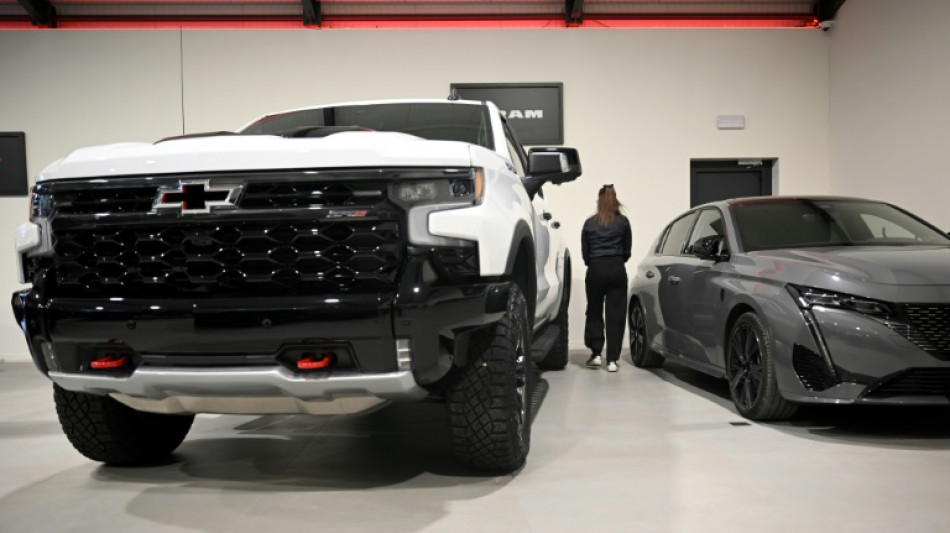
At a specialised dealership in Leopoldsburg, a small eastern Belgium town, several shiny models with the trademark high bonnet towered over a compact Peugeot, hiding it from view.
"It's truly a combination of a work vehicle and a comfortable family car," said Dogan Yilmaz, the owner of the dealership aptly named US Trucks.
Imported from the United States, often via Germany, the "powerful" large vehicles are mostly bought by self-employed professionals and small firms working in construction or farming, he said.
"There is indeed a clear demand," he said.
One of only three distributors in Belgium, US Trucks sells up to 30 a year.
- 'Cost lives' -
A joint US-EU trade statement last month raised the prospect numbers could increase.
Brussels and Washington said they intended "to accept and provide mutual recognition to each other's standards" on automobiles.
The pledge came in a non-binding text that put some flesh on the bones of a framework accord struck in July for most EU exports to face a 15-percent US tariff.
Coming after fraught negotiations, the July deal eliminated levies on US vehicles imported to Europe and staved off the threat of higher US levies on European cars and other goods.
While leaving many details to be defined, it also appeased US President Donald Trump, a vocal supporter of US-made stuff, amid heightened geopolitical tensions.
But it blindsided environmentalists and road safety advocates.
The European Transport Safety Council (ETSC), a Brussels-based non-profit, said it would "cost lives on Europe's roads" -- for vehicles in Europe have to meet certain safety requirements that their US peers do not.
These include seatbelt reminder and emergency braking systems, lane-keeping assistance and designs that limit the impact of a crash on pedestrians -- such as a ban on razor sharp edges.
- No reduction -
Campaigners credit the stricter European rules for a decline in annual pedestrian deaths per million inhabitants, which are three times higher in the United States.
Pick-up truck drivers are safer than average in a collision. But for a pedestrian or cyclist hit by them the risk of serious injury increases by 90 percent, according to ETSC.
"RAM bonnets are so high that children aged up to nine years old standing directly in front cannot be seen by the average driver," T&E said.
Large and heavy cars also tend to pollute more than the average, the group added.
The joint EU-US statement provided no details on exactly what standards would be recognised and when.
But European Commission spokesman Olof Gill Thursday ruled out lowering EU standards.
"There are areas where we can look at for cooperation, but certainly we're not going to reduce any of our own standards that we've built up over many decades," he said.
The commission had earlier said that US-EU interest in addressing "red tape that hinders trade" included "the possibility of working towards recognising some of each other's standards".
Still, any changes would have to be approved by member states and the European Parliament, which might be hard to persuade.
"We worked extremely hard to decrease the number of fatalities on roads," said Virginijus Sinkevicius, a Green lawmaker and the vice-chair of parliament's transport committee, noting European producers had invested time and money in meeting EU rules.
R.Lin--ThChM