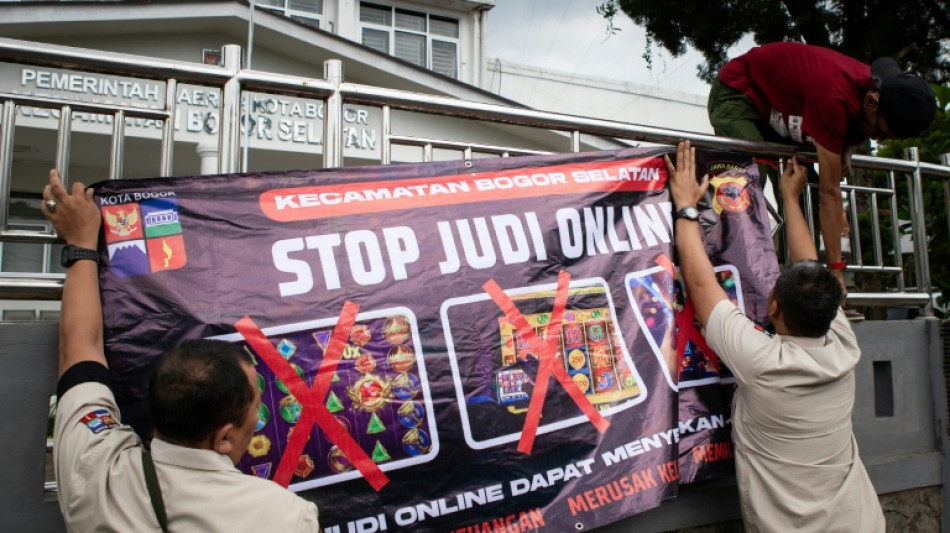
Gambling ads target Indonesian Meta users despite ban / Photo: © AFP/File

Gambling promoters are using deceptive marketing tactics to reach Indonesian users across Meta platforms, despite the company's policies and a government crackdown on the illegal practice.
An AFP investigation found dozens of paid gambling adverts disguised as innocuous content to circumvent Meta's ban on such promotions in Indonesia.
Online and offline gambling -- and publicising it -- is outlawed in the country, but billions of dollars still flow through the sector each year.
Meta could potentially face government sanctions if it does not address the violations.
The posts on Facebook, Instagram and Threads appear to promote video games or treatments for conditions such as diabetes. But they redirect users to betting websites.
"It's become really disturbing," said Zee, a 32-year-old Indonesian gamer who encountered the ads on Instagram.
"I suspect their target is people who like playing games, therefore children can also see such advertisements," said Zee, who did not provide her real name due to privacy concerns.
Another 24-year-old social media user, who wished to be identified as Moli, said she always reports such ads on Instagram, but they keep reappearing.
Meta did not respond to requests for comment, but nearly two dozen advertisements AFP shared as a sample were later removed.
- Steep penalties -
Indonesian authorities say they have taken down more than 5.7 million pieces of gambling-related online content over the past eight years.
Police have also stepped up enforcement, with at least 85 influencers arrested last year for promoting online betting.
Penalties are steep, including potential prison terms of up to 10 years, while gambling itself is punishable by up to four years in jail.
The Ministry of Communication and Digital Affairs said it regularly asks social media platforms to remove gambling-related content, and issues warning letters if those requests go unanswered.
"Continued inaction will result in a third warning letter sent to the platform, which carries additional penalties and may lead to access termination," Alexander Sabar, director general for digital space supervision, told AFP.
In October, the ministry temporarily suspended TikTok's operating license because the platform refused to provide data related to the alleged monetisation of live activities from accounts suspected of online gambling.
AFP asked Sabar if the minister will summon Meta following the findings of paid gambling ads.
He said the ministry maintains regular communication with social media platforms, and often raises the issue of gambling adverts.
The ministry "urges all digital platforms to strengthen their ad detection and moderation systems in accordance with Indonesian laws and regulations", Sabar told AFP on November 12.
"Should repeated violations be found and left unaddressed, we will take enforcement in line with the applicable regulations."
- Bait and switch -
Between September and November, AFP found dozens of active Indonesian gambling ads in the Meta Ad Library, a platform operated by the US company to maintain transparency around paid promotions.
Some offered tips for "how to lower diabetes", while others touted the health benefits of different fruits.
AFP found that one account ran 49 gambling ads under the title: "Pomegranate: The Exotic Red Fruit Rich in Benefits".
The post's Indonesian caption appeared harmless, but it redirected users to a betting website promising newly registered users they can "directly win".
The Facebook page behind the ads listed its location as Hanoi, although AFP could not independently verify where it was based. The account's transparency details showed it was run by multiple administrators.
AFP reached out to several such accounts, but responses were not forthcoming.
AFP works in 26 languages with Meta's fact-checking programme, including in Asia, Latin America and the European Union.
- Big business -
A forthcoming study from Indonesian research firm Populix, whose findings were shared with AFP, reveals 98 percent of social media users in the country have been exposed to gambling promotions -- including paid advertisements.
Of those, 32 percent say they eventually tried online gambling after seeing such promotions in their social media feeds.
Four percent of that group say they still gamble.
"The advertisements promised a win or jackpot," Populix research manager Nazmi Tamara told AFP.
Betting content on social media takes many forms, from comments under posts and small overlays on videos to content that openly promotes gambling platforms, said Vivi Zabkie, the firm's head of policy and society research.
The value of online gambling transactions in Indonesia reached 927 trillion rupiah ($55.7 billion) between 2017 and the first quarter of 2025, the Indonesian Financial Transaction Reports and Analysis Center told AFP.
It previously said 80 percent of online gambling users are students and individuals from low-income backgrounds.
D.Peng--ThChM