The China Mail - Wildlife trade body rejects new eel protections

USD -
AED 3.672499
AFN 65.504736
ALL 82.012423
AMD 377.773158
ANG 1.79008
AOA 917.000047
ARS 1442.262801
AUD 1.431516
AWG 1.8
AZN 1.698448
BAM 1.659595
BBD 2.015639
BDT 122.394949
BGN 1.67937
BHD 0.376973
BIF 2965.596535
BMD 1
BND 1.27457
BOB 6.91481
BRL 5.303402
BSD 1.000776
BTN 90.44239
BWP 13.24927
BYN 2.866659
BYR 19600
BZD 2.012669
CAD 1.36738
CDF 2229.99993
CHF 0.777898
CLF 0.021857
CLP 863.079882
CNY 6.93805
CNH 6.936665
COP 3704.17
CRC 496.14758
CUC 1
CUP 26.5
CVE 93.565043
CZK 20.54795
DJF 178.211857
DKK 6.332197
DOP 63.157627
DZD 129.926302
EGP 46.854801
ERN 15
ETB 155.932472
EUR 0.848035
FJD 2.209501
FKP 0.738005
GBP 0.73584
GEL 2.695038
GGP 0.738005
GHS 10.987836
GIP 0.738005
GMD 73.000256
GNF 8783.310776
GTQ 7.675957
GYD 209.370505
HKD 7.813225
HNL 26.434899
HRK 6.390402
HTG 131.283861
HUF 320.478501
IDR 16876.7
ILS 3.129102
IMP 0.738005
INR 90.66105
IQD 1311.010794
IRR 42125.000158
ISK 122.959832
JEP 0.738005
JMD 156.523658
JOD 0.709008
JPY 157.044949
KES 129.000287
KGS 87.449435
KHR 4038.98126
KMF 418.999668
KPW 900.002243
KRW 1467.470252
KWD 0.307361
KYD 0.833956
KZT 493.576471
LAK 21509.911072
LBP 89638.030929
LKR 309.69554
LRD 186.137286
LSL 16.167606
LTL 2.95274
LVL 0.60489
LYD 6.339495
MAD 9.185352
MDL 17.007501
MGA 4427.737424
MKD 52.293597
MMK 2100.00747
MNT 3580.70414
MOP 8.05317
MRU 39.920067
MUR 46.059462
MVR 15.45012
MWK 1735.286131
MXN 17.347575
MYR 3.947502
MZN 63.749726
NAD 16.167606
NGN 1368.195506
NIO 36.826006
NOK 9.71805
NPR 144.708438
NZD 1.668345
OMR 0.384495
PAB 1.000776
PEN 3.36398
PGK 4.350519
PHP 58.562992
PKR 280.209677
PLN 3.57626
PYG 6608.484622
QAR 3.647395
RON 4.318502
RSD 99.548986
RUB 76.997104
RWF 1460.610278
SAR 3.750238
SBD 8.058149
SCR 13.889902
SDG 601.498432
SEK 9.04498
SGD 1.273275
SHP 0.750259
SLE 24.45004
SLL 20969.499267
SOS 570.904894
SRD 37.869637
STD 20697.981008
STN 20.789492
SVC 8.756194
SYP 11059.574895
SZL 16.159799
THB 31.611501
TJS 9.366941
TMT 3.505
TND 2.899825
TOP 2.40776
TRY 43.615017
TTD 6.776526
TWD 31.678202
TZS 2585.000013
UAH 43.184356
UGX 3572.383187
UYU 38.617377
UZS 12275.134071
VES 377.985125
VND 25950
VUV 119.988021
WST 2.726314
XAF 556.612755
XAG 0.013379
XAU 0.000204
XCD 2.70255
XCG 1.803594
XDR 0.692248
XOF 556.610394
XPF 101.198154
YER 238.400271
ZAR 16.12955
ZMK 9001.195865
ZMW 18.589121
ZWL 321.999592
  • RYCEF

    0.0500

    16.67

    +0.3%

  • RBGPF

    0.1000

    82.5

    +0.12%

  • GSK

    0.1850

    59.355

    +0.31%

  • CMSC

    -0.1500

    23.4

    -0.64%

  • VOD

    0.4650

    15.085

    +3.08%

  • RELX

    -0.5590

    29.531

    -1.89%

  • NGG

    0.7300

    87.62

    +0.83%

  • RIO

    2.3000

    93.42

    +2.46%

  • BTI

    0.7100

    62.67

    +1.13%

  • SCS

    0.0200

    16.14

    +0.12%

  • BCE

    -0.0850

    25.485

    -0.33%

  • BCC

    1.3700

    90.53

    +1.51%

  • CMSD

    0.1100

    24

    +0.46%

  • JRI

    0.1200

    13

    +0.92%

  • BP

    0.9850

    39.155

    +2.52%

  • AZN

    2.1300

    189.29

    +1.13%

Wildlife trade body rejects new eel protections
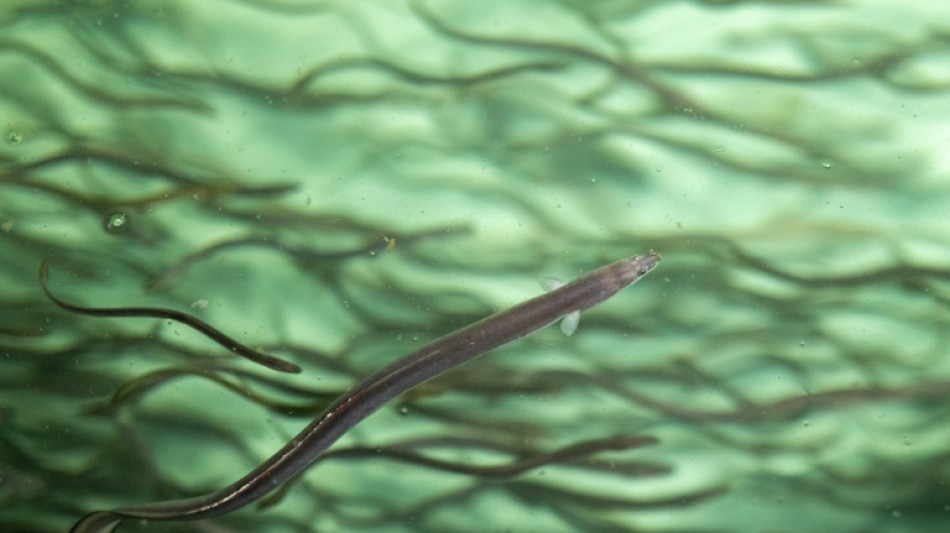
Wildlife trade body rejects new eel protections / Photo: © AFP/File

Wildlife trade body rejects new eel protections

The world's top wildlife trade body rejected new protections for eels on Thursday in a secret ballot at talks in Uzbekistan.

Text size:

The proposal had been fiercely opposed by top eel consumers, particularly Japan, but also failed to win backing from countries worried about new trade regulations.

The vote came at a meeting of signatories to the Convention of International Trade in Endangered Species of Wild Fauna and Flora (CITES), a 50-year agreement protecting the world's most endangered animals and plants, and regulating trade in 36,000 species.

Eel populations are falling worldwide, scientists say, largely due to factors linked to human activity such as the pollution of waterways, destruction of wetlands, hydroelectric dams, and fishing.

European eels are considered critically endangered and their trade has been restricted by CITES since 2009.

But because eels cannot be bred in captivity, much of the trade is in wild-caught baby eels, with one species virtually indistinguishable from another.

The European Union and Panama sought to bring all 17 eel species under CITES Appendix II, placing new restrictions on trade.

"Every eel we eat comes from the wild, making them vulnerable to overfishing and illegal trade," the EU's representative warned.

The "harvest for international trade is a major cause of international decline."

The proposal was rejected out of hand by Japan, which called it unscientific and "excessive," backed by multiple countries including African nations who warned it would place undue administrative burdens on their authorities.

In a sign of the pressures around the issue, the proposal was voted on by secret ballot, a relatively uncommon procedure at the gathering, with nearly 75 percent of votes against.

The result was "not very surprising," said Oliver Tallowin, senior programme officer for wildlife use and trade at the International Union for the Conservation of Nature.

Japan's opposition had been made clear early on in a submission running over 100 pages.

There are also differing views on the pressures other eel species face, said Tallowin.

"International trade has to be a threat to the species and... that was something we couldn't say with any sense of certainty," he told AFP.

For Andrew Kerr of the Sustainable Eel Group, "the short-term commercial and financial side won the debate massively."

Kerr, who has called eel trafficking the "greatest wildlife crime" on the planet, said the vote was a "real pity," but there were some silver linings.

A separate resolution proposing measures including more data gathering on eels and conservation capacity-building will be debated later Thursday at the talks in Samarkand.

"We've had a missed opportunity this morning, but then the fact that everyone's talking about eel, that's a huge victory too," Kerr said.

The resolution could gather data that would allow more protection of all eel species in the future, added Tallowin.

"Once something has been rejected... that doesn't mean its going to go away."

Votes are finalised later in the meeting, though it is unusual for them to be revised.

H.Ng--ThChM