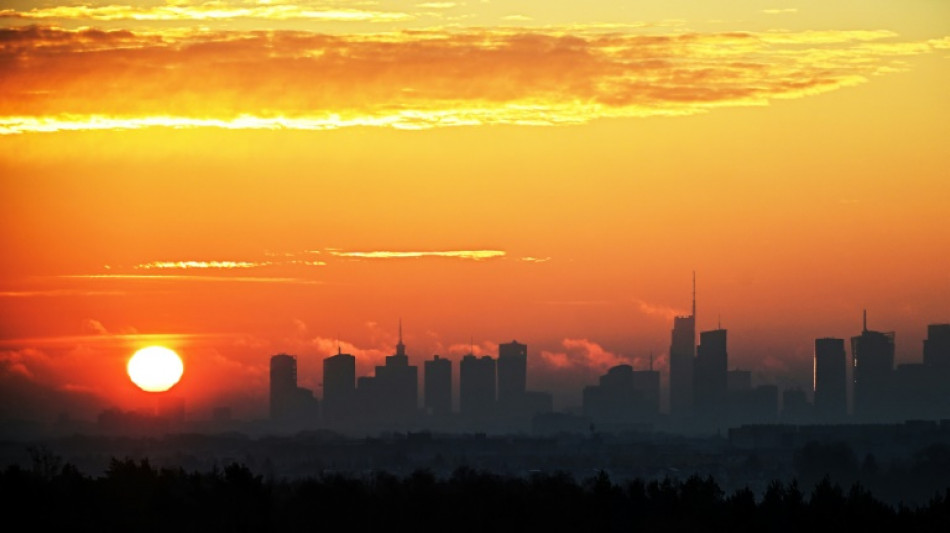
Polish migrants return home to a changed country / Photo: © AFP

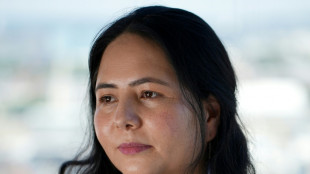
Unemployment was soaring and the country was in economic turmoil when Monika Pudlik first left Poland to find a job in Ireland just over two decades ago.
Now, Poland is thriving and, like tens of thousands of her fellow citizens, she is planning to return to her home in the central city of Plock.
"Poland looks completely different than it did over 20 years ago," said Pudlik, a 48-year-old machine operator. "I see many more opportunities for myself."
Since leaving in 2004 -- the same year Poland became a member of the European Union -- the country has become the world's 20th largest economy, and its GDP per capita has more than tripled.
There has been heavy investment in infrastructure, transportation and defence, resulting in a reversal of migration trends for the first time.
"That is exceptional in our postwar Polish history, because throughout that period -- with brief interruptions when leaving was not possible -- we were a country of emigration," Dominika Pszczolkowska, a researcher from the Centre of Migration Research at the University of Warsaw, told AFP.
"It completely closes the previous chapter in our development story, when we were a country with double‑digit unemployment... that exported workers to others," added Marcin Klucznik, a senior advisor at the Polish Institute of Economics.
"Not only has that ended, it has essentially reversed."
- 'Always the guest' -
Several people told AFP they returned to Poland for family reasons, which experts point to as a trend.
"When it comes to Europe-related migration... a simple pattern emerges: people mostly left for economic reasons, but they return for personal ones," said Izabela Grabowska, a social sciences professor at Warsaw's Kozminski University.
These include caring for ageing parents, being closer to family, wanting to raise children within Polish culture, or inheriting land or property.
Paulina Sacha, a 42-year-old midwife and sound director, moved to Germany with her husband and children to work in a hospital.
While she says she was "absolutely thrilled" with her career in Germany, she came back to be closer to family and raise her children in Poland.
"I've always felt that everywhere is good, but Poland is the best," she told AFP.
"In Berlin... you're always the guest."
Pszczolkowska said economic factors "undoubtedly" play a key role, combining with family circumstances to encourage returns.
But the transition to life back home is not always easy: administrative barriers and reverse culture shocks surprise many returnees.
Returning Poles "often encounter reintegration barriers", especially in the workplace, despite the narrative of the country as a "success story", said Pszczolkowska.
"Many of the skills and qualifications migrants acquired abroad cannot be directly applied upon return, even in centres like Warsaw," added Magdalena Gawronska, head of the "Returning Talent to Warsaw" programme.
But Poland is still seen as a better payoff than abroad, where there are high living costs and rising taxes.
"(People) are working just to survive and pay the bills," said Radek H., who returned to Poland two years ago after 20 years in Ireland.
"There's no saving," said Radek, 47, who works in sales.
- 'Poles still emigrate' -
Despite the recent reversals of migration trends, not everyone is opting to return, even if the post-2004 "brain drain" to countries such as Ireland and the UK has ended.
"Emigration has returned to the socio-demographic structure from before (EU) enlargement," said Grabowska.
Beata Szewczyk, a 47-year-old special education support worker, said she does not plan to return to Poland from Norway, where she moved in 2007.
"I feel like I've put down roots here," she added. "I suspect I wouldn't be able to find my footing in Poland again."
While challenges remain, Poland's government has made efforts to reach out to prospective returnees, and to help them re-integrate upon their return.
These include a government website with information on the return process, and a planned helpline to help both arriving migrants and returning Poles.
Pudlik, who plans to move in the next two years, is preparing her return by opening a Polish bank account, job-hunting and building a network of friends.
Current trends show emigration reversals in the UK, Germany, and the Netherlands but Pszczolkowska expects it could also be seen in other European countries.
"Poland has become attractive enough that we're genuinely, seriously drawing in workers from around the world," said Klucznik.
This includes "bringing back Poles who once couldn't find a place for themselves here".
S.Davis--ThChM