The China Mail - Japan restarts world's biggest nuclear plant again

USD -
AED 3.672504
AFN 61.999888
ALL 81.335434
AMD 370.651109
ANG 1.789884
AOA 917.999769
ARS 1398.511897
AUD 1.39083
AWG 1.8
AZN 1.698512
BAM 1.665716
BBD 2.014904
BDT 123.076268
BGN 1.668102
BHD 0.377484
BIF 2973.214666
BMD 1
BND 1.273687
BOB 6.913086
BRL 4.969695
BSD 1.000383
BTN 94.177916
BWP 13.469318
BYN 2.809522
BYR 19600
BZD 2.014053
CAD 1.36034
CDF 2314.999629
CHF 0.784015
CLF 0.022711
CLP 893.770081
CNY 6.836299
CNH 6.82271
COP 3554.51
CRC 454.541583
CUC 1
CUP 26.5
CVE 93.910488
CZK 20.7338
DJF 178.145893
DKK 6.36078
DOP 59.47281
DZD 132.367207
EGP 52.568501
ERN 15
ETB 156.205085
EUR 0.85124
FJD 2.198802
FKP 0.740868
GBP 0.736965
GEL 2.680124
GGP 0.740868
GHS 11.099093
GIP 0.740868
GMD 73.498703
GNF 8779.968488
GTQ 7.648086
GYD 209.300345
HKD 7.837335
HNL 26.586893
HRK 6.416097
HTG 130.979858
HUF 309.608503
IDR 17207
ILS 2.97875
IMP 0.740868
INR 94.127901
IQD 1310.56509
IRR 1316999.999971
ISK 122.41003
JEP 0.740868
JMD 157.927011
JOD 0.709006
JPY 159.221962
KES 129.300235
KGS 87.430697
KHR 4003.747392
KMF 420.000447
KPW 899.999995
KRW 1471.149647
KWD 0.30776
KYD 0.833709
KZT 458.331559
LAK 21922.241622
LBP 89586.253886
LKR 318.383511
LRD 183.571094
LSL 16.486991
LTL 2.95274
LVL 0.60489
LYD 6.345867
MAD 9.244304
MDL 17.317208
MGA 4157.901461
MKD 52.492645
MMK 2099.922997
MNT 3576.490722
MOP 8.075714
MRU 39.946344
MUR 46.710636
MVR 15.449807
MWK 1734.701699
MXN 17.356804
MYR 3.952502
MZN 63.909914
NAD 16.486991
NGN 1358.679928
NIO 36.818124
NOK 9.26355
NPR 150.684325
NZD 1.690095
OMR 0.384506
PAB 1.000383
PEN 3.488396
PGK 4.344419
PHP 60.788499
PKR 278.837798
PLN 3.61281
PYG 6302.431546
QAR 3.656943
RON 4.337399
RSD 99.949787
RUB 74.897453
RWF 1466.081846
SAR 3.750825
SBD 8.045307
SCR 13.833692
SDG 600.497935
SEK 9.183799
SGD 1.272902
SHP 0.746601
SLE 24.625031
SLL 20969.496166
SOS 571.732743
SRD 37.4635
STD 20697.981008
STN 20.866158
SVC 8.753566
SYP 110.524981
SZL 16.473193
THB 32.309788
TJS 9.396329
TMT 3.505
TND 2.910446
TOP 2.40776
TRY 45.0114
TTD 6.792999
TWD 31.426506
TZS 2602.501415
UAH 44.119984
UGX 3721.841332
UYU 39.790487
UZS 12078.52489
VES 483.16466
VND 26359
VUV 118.189547
WST 2.728507
XAF 558.665418
XAG 0.013209
XAU 0.000213
XCD 2.70255
XCG 1.803006
XDR 0.695927
XOF 558.66066
XPF 101.571349
YER 238.650188
ZAR 16.48238
ZMK 9001.190663
ZMW 18.932845
ZWL 321.999592
  • JRI

    0.0850

    12.975

    +0.66%

  • BCE

    0.0250

    23.895

    +0.1%

  • NGG

    0.2390

    87.649

    +0.27%

  • GSK

    0.2400

    54.67

    +0.44%

  • RBGPF

    0.0000

    64.94

    0%

  • CMSD

    0.0149

    23.295

    +0.06%

  • RIO

    0.0450

    99.665

    +0.05%

  • AZN

    0.6250

    190.305

    +0.33%

  • RYCEF

    -0.0700

    15.35

    -0.46%

  • BTI

    -0.1850

    57.91

    -0.32%

  • CMSC

    0.0400

    22.95

    +0.17%

  • BCC

    0.2900

    84.36

    +0.34%

  • BP

    0.5400

    46.78

    +1.15%

  • VOD

    0.0100

    15.64

    +0.06%

  • RELX

    -0.0650

    36.47

    -0.18%

Japan restarts world's biggest nuclear plant again
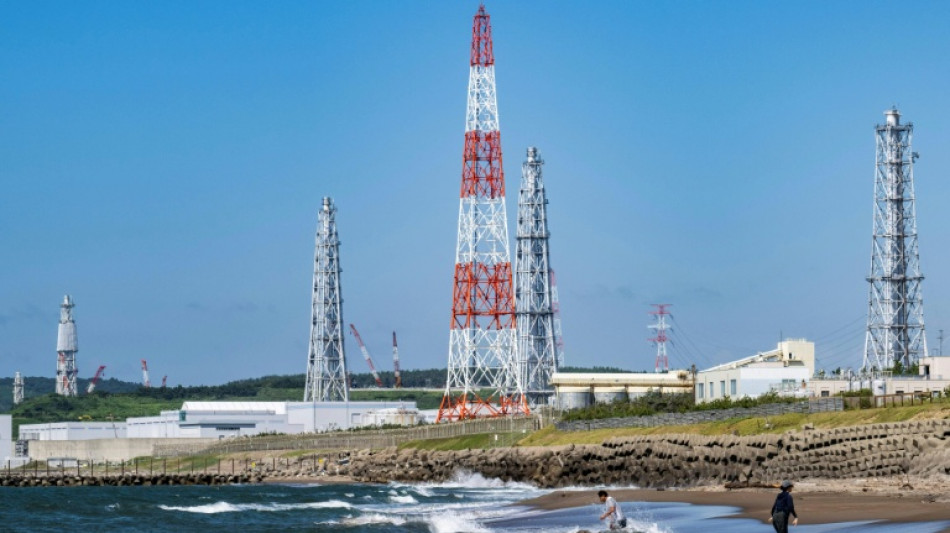
Japan restarts world's biggest nuclear plant again / Photo: © AFP/File

Japan restarts world's biggest nuclear plant again

Japan switched on the world's biggest nuclear power plant again on Monday, its operator said, after an earlier attempt was quickly suspended due to a minor glitch.

Text size:

A problem with a monitoring alarm in January forced the suspension of its first restart since the 2011 Fukushima disaster.

The Kashiwazaki-Kariwa plant in the Niigata region restarted at 2:00 pm (0500 GMT), the Tokyo Electric Power Company (TEPCO) said in a statement.

The facility had been offline since Japan pulled the plug on nuclear power after a colossal earthquake and tsunami sent three reactors at the Fukushima atomic plant into meltdown.

But now Japan is turning to atomic energy to reduce its reliance on fossil fuels, achieve carbon neutrality by 2050 and meet growing energy needs from artificial intelligence.

Conservative Prime Minister Sanae Takaichi, who pulled off a thumping election victory on Sunday, has promoted nuclear power to energise the Asian economic giant.

TEPCO initially moved to start one of seven reactors at the Kashiwazaki-Kariwa plant on January 21 but shut it off the following day after a monitoring system alarm sounded.

The alarm had picked up slight changes to the electrical current in one cable even though these were still within a range considered safe, TEPCO officials told a news conference last week.

The firm has changed the alarm's settings as the reactor is safe to operate.

Commercial operations will commence on or after March 18 after another comprehensive inspection, according to TEPCO officials.

Kashiwazaki-Kariwa is the world's biggest nuclear power plant by potential capacity, although just one reactor of seven was restarted.

Fourteen reactors, mostly in western and southern Japan, have resumed operation since the post-Fukushima shutdown under strict safety rules, with 13 running as of mid January.

Kashiwazaki-Kariwa is the first TEPCO-run unit to restart since 2011. The company also operates the stricken Fukushima Daiichi plant, now being decommissioned.

The vast Kashiwazaki-Kariwa complex has been fitted with a 15-metre-high (50-foot) tsunami wall, elevated emergency power systems and other safety upgrades.

But public opinion in the area around the plant is deeply divided: Around 60 percent of residents oppose the restart, while 37 percent support it, according to a survey conducted by Niigata prefecture in September.

Residents have raised concerns about the risk of a serious accident, citing frequent cover-up scandals, minor accidents and evacuation plans they say are inadequate.

On January 8, seven groups opposing the restart submitted a petition signed by nearly 40,000 people to TEPCO and Japan's Nuclear Regulation Authority.

"We will continue to demonstrate our commitment to safety as our priority at the Kashiwazaki-Kariwa Nuclear Power Station through our actions and results," TEPCO said in a statement Monday.

S.Davis--ThChM