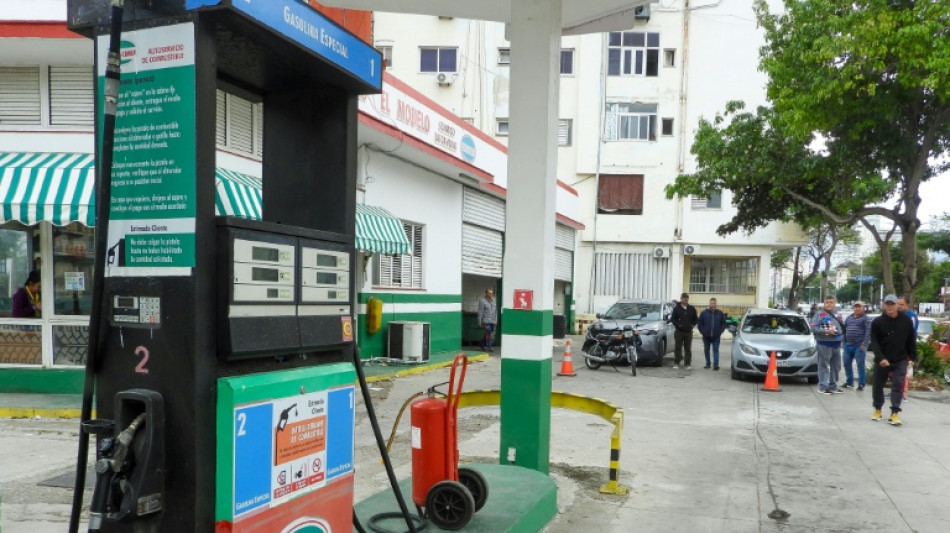
Private companies seek to import fuel amid Cuban energy crisis / Photo: © AFP/File

Faced with a severe energy crisis exacerbated by US sanctions, private companies in Cuba are attempting to import fuel after the island's government agreed to end its monopoly on the sector.
The fuel crisis, already chronic due to the communist government's lack of foreign currency, has worsened significantly since the halt of Venezuelan oil deliveries and Washington's threats to impose tariffs on any country selling Cuba oil.
On the island of about 9.6 million people, diesel sales are now suspended and gasoline sales are drastically rationed.
"We bought an isotank... through a state-owned importer," the owner of a private company planning to import nearly 25,000 liters of diesel from the United States told AFP on the condition of anonymity, referencing a container used to transport diesel.
"They should deliver it this week."
The operation is being carried out under a license issued by the US Office of Foreign Assets Control (OFAC), a branch of the Treasury Department, which allows private businesses on the island to import certain products, including fuel.
A source close to the matter confirmed to AFP that Cuban private entrepreneurs were also seeking to import diesel from countries neighboring Cuba, as well as from Europe.
This type of OFAC license was granted several years ago, but the Cuban government only recently authorized private fuel imports in response to the severity of the crisis.
While the crude oil produced in Cuba powers the country's power plants, the island is dependent on imports for diesel and liquefied petroleum gas.
"Diesel has an impact on decentralized (electricity) production through generators," and also on "transportation, agriculture and the water sector," Jorge Pinon, a researcher at the Energy Institute at the University of Texas, told AFP.
- Security checks -
When announcing a series of emergency measures to conserve electricity and fuel this month, Deputy Prime Minister Oscar Perez-Oliva Fraga also mentioned a new provision allowing companies to purchase fuel, though he provided few details.
The businessman interviewed by AFP said authorities have "not set any limits" on his fuel purchases, though he noted he cannot sell it to third parties.
The state previously had a monopoly on fuel sales in Cuba, but the government, caught between the US embargo, the structural weaknesses of its centralized economy and social discontent, opened certain sectors to small and medium-sized enterprises in 2021.
Currently, however, authorities have provided no details on the conditions that private companies wishing to import fuel must meet.
Safety controls, validated by the fire department, must be implemented for the storage of this fuel, the businessman told AFP, but "the institutions themselves are not able to clearly outline all the steps."
According to Oniel Diaz, a consultant for private businesses, some entrepreneurs are already "at a very advanced stage in the import process."
He said the possibility to import fuel opened up new opportunities for the private sector, but he noted there are still obstacles in the process, including companies' abilities to make foreign payments and transport the fuel.
Another main concern, Diaz noted, is the risk of clashing with the Trump administration's push to cut off fuel sales to the island.
V.Fan--ThChM