G7 'not there yet' on release of oil reserves: French minister / Photo: © AFP/File

France's finance minister said Monday the G7 was "not there yet" in terms of any release of strategic oil reserves as the world's leading industrialised nations held crisis talks on the economic fallout of the Middle East war.
Earlier Monday, French President Emmanuel Macron, whose country holds the rotating presidency of the Group of Seven advanced economies, said the G7 would this week discuss a possible release of strategic oil reserves.
A possible meeting of G7 leaders on the energy issue could take place this week, Macron told journalists on his way to Cyprus.
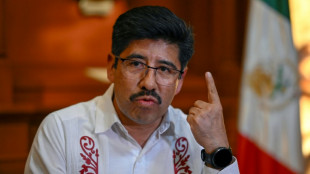
However, speaking to reporters after chairing a video meeting of G7 finance ministers, French Finance Minister Roland Lescure said the group was "not there yet".
Asked if they had agreed on releasing stockpiles to lower prices, Lescure said from Brussels: "What we've agreed upon is to use any necessary tools, if need be, to stabilise the market, including the potential release of necessary stockpiles."
Such a measure can only be effective if it is implemented in a "coordinated" manner, Lescure added.
The war triggered by US-Israeli strikes on Iran is fuelling fears for the global economy, with global stock markets sinking and oil rocketing above $100 a barrel for the first time since Russia's invasion of Ukraine in 2022.
The Financial Times reported earlier Monday that the finance ministers of the G7, which also includes Canada, Germany, Italy, Japan, the United Kingdom and the United States, were scheduled to discuss a joint release of strategic oil reserves coordinated by the International Energy Agency (IEA).
The report said three G7 countries, including the United States, had so far backed the idea.
France is also seeking to put together a meeting of G7 energy ministers that would take place on the sidelines of a nuclear energy summit in Paris on Tuesday.
"I wanted us to be able to mobilise close coordination at G7 level to better manage energy issues," said Macron.
- 'No imminent shortage' -
The European Union insisted there was "no imminent oil supply" shortage in Europe.
"Per our rules, all member states must have the 90 days emergency stocks," said European Commission spokeswoman Anna-Kaisa Itkonen.
Oil has continued its surge as the US-Israeli war against Iran stretches into a second week and Tehran carries out retaliatory strikes against crude-producing Gulf nations, leaving governments scrambling to respond.
The Nikkei daily reported that the Japanese government had instructed domestic oil reserve bases to prepare to make releases. Tokyo said no decision had been taken.
Japan's strategic oil reserves were more than 400 million barrels as of December, and are among the world's largest. Prime Minister Sanae Takaichi said last week the reserves were equivalent to 254 days of domestic consumption.
Investors are concerned about the Iranian blockade of the Strait of Hormuz, a key route for maritime trade.
Around 20 percent of the world's crude oil and liquefied natural gas (LNG) usually transit through the strait.
Macron said France and its allies were working to put together a "purely defensive" mission to reopen the Strait of Hormuz.
He said the mission would be aimed at escorting container ships and tankers in order to gradually reopen the strait "after the end of the hottest phase of the conflict".
The EU said it was ready to bolster its maritime operations in the Middle East to protect shipping routes after holding talks with regional leaders.
- 'Temporary fix' -
A G7 release of strategic oil reserves "would offset around 2 to 3 weeks of normal Strait of Hormuz flows", said Lee Hardman, a senior currency analyst at Japanese bank MUFG.
"It would be a temporary fix to help prevent an even more disruptive surge in the price of oil in the coming weeks," he added.
The IEA was created to coordinate responses to major supply disruptions after the 1973 oil crisis.
In order to ensure energy security, the IEA imposes on its members an obligation to hold emergency oil stocks equivalent to at least 90 days of net oil imports.
The war in the Middle East is unlikely to trigger a collapse of the world economy on the scale of the 2008 global financial crisis, Nobel prize-winning economist Philippe Aghion said Monday.
"I see a possible slowdown," he said on RTL radio. "I don't see a collapse."
slb-od-vl-nal-jul-fpo-raz-as/cc/jhb
U.Chen--ThChM