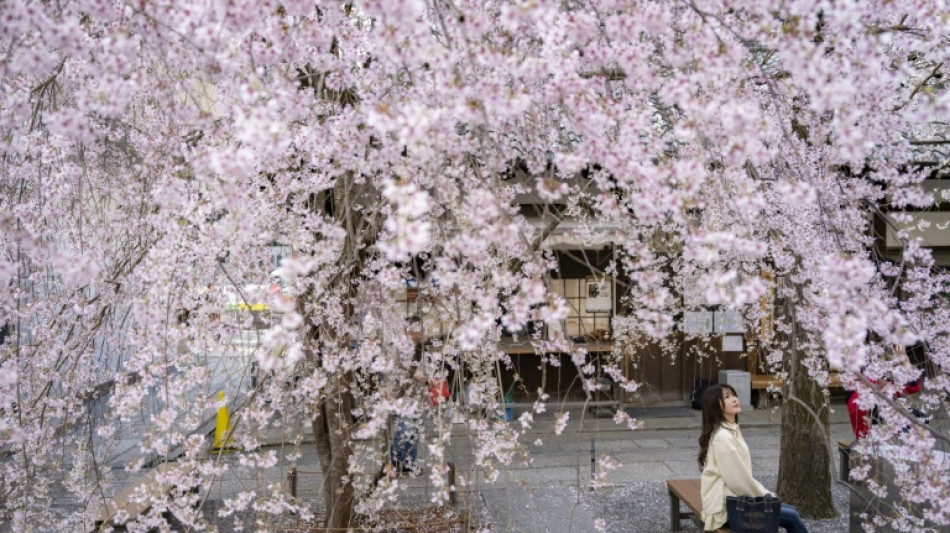
Japan's cherry blossom season dazzles locals and tourists / Photo: © AFP

Japanese locals and tourists packed the country's most stunning cherry blossom spots on Monday to enjoy the dazzling flowers at full bloom.
The tiny white and pink petals of cherry flowers, known as sakura, herald the start of spring in Japan, and full bloom ushers in a brief period of boisterous outdoor parties held by residents.
Across the nation families and friends rolled out blankets and tarpaulins at parks, temples and even cemeteries over the weekend to eat and drink under cherry trees for traditional "hanami" or flower viewing gatherings.
Japanese people hold "very special feelings for sakura", said Tokyo resident Akiko Nyman, 48, as she admired flowers in crowded Ueno park in the centre of the capital.
"We love it, because it is so short... it doesn't last long, it comes every year, something very special," she said.
At this time of the year, weather forecasters are laser focused on when the blossom will peak in each city, and they advise excited residents on the best weather days for picnics and how long the flowers might last.
In the ancient capital of Kyoto, officials on Monday declared full bloom after examining a sample tree within the grounds of Nijo-jo Castle, a world heritage site.
- 'Good photo opportunity' -
"We observed the cherry blossoms in full bloom on March 30," Kyoto Local Meteorological Office said.
Cherry flowers at ancient temples and shrines in Kyoto are particularly popular among visitors and locals.
Australian tourist Olivia Martell-Groves went all in for the seasonal experience, and donned a flower-printed kimono while marvelling at the flowers.
"We wanted to see them because they're really pretty, good photo opportunities and something you can only see in certain times of the year... and also it just feels so peaceful and nice," she said.
In Tokyo, the flowers reached full bloom during the weekend, entering a brief period of stunning beauty, before the petals will fall like flurries of snow.
The flowers symbolise both the youthful energy and the fragility of life in Japanese culture as full blooms only last about a week.
The season marks the start of the new business year when university graduates join the work force.
It is also a time of farewells, when school graduates leave their hometown while many corporate professionals receive assignments in new cities.
R.Yeung--ThChM