The China Mail - Africa faces 86 mn tonne fuel shortfall by 2040: report

USD -
AED 3.672498
AFN 65.504849
ALL 80.577087
AMD 365.860278
ANG 1.789783
AOA 917.000424
ARS 1491.75645
AUD 1.415397
AWG 1.80125
AZN 1.702571
BAM 1.696734
BBD 2.015728
BDT 122.843622
BGN 1.696366
BHD 0.377075
BIF 2998
BMD 1
BND 1.280933
BOB 11.734342
BRL 5.200393
BSD 1.000794
BTN 95.468406
BWP 13.472141
BYN 3.009929
BYR 19600
BZD 2.012779
CAD 1.392425
CDF 2273.00005
CHF 0.814065
CLF 0.023236
CLP 914.499139
CNY 6.743201
CNH 6.74428
COP 3125.59
CRC 449.393362
CUC 1
CUP 26.5
CVE 96.097355
CZK 20.9984
DJF 178.218681
DKK 6.480598
DOP 58.500592
DZD 132.925576
EGP 50.179799
ERN 15
ETB 161.890385
EUR 0.86692
FJD 2.212449
FKP 0.740201
GBP 0.74105
GEL 2.60983
GGP 0.740201
GHS 11.075014
GIP 0.740201
GMD 73.503608
GNF 8774.999769
GTQ 7.628599
GYD 209.38434
HKD 7.84725
HNL 26.830633
HRK 6.532499
HTG 130.904201
HUF 315.099503
IDR 17869
ILS 2.962965
IMP 0.740201
INR 95.40155
IQD 1311.025996
IRR 1374587.502337
ISK 123.279732
JEP 0.740201
JMD 158.336044
JOD 0.708973
JPY 159.484505
KES 129.380111
KGS 87.450258
KHR 4047.501402
KMF 426.999701
KPW 900.000294
KRW 1419.350245
KWD 0.30881
KYD 0.834053
KZT 465.738688
LAK 22565.000186
LBP 89549.999911
LKR 333.612392
LRD 181.649675
LSL 16.20377
LTL 2.95274
LVL 0.60489
LYD 6.359924
MAD 9.308499
MDL 17.373275
MGA 4310.91697
MKD 53.362649
MMK 2099.846019
MNT 3597.969266
MOP 8.08894
MRU 40.104973
MUR 47.149409
MVR 15.450173
MWK 1736.000212
MXN 17.03136
MYR 4.0864
MZN 63.910212
NAD 16.201257
NGN 1360.610236
NIO 36.82706
NOK 9.503797
NPR 152.752101
NZD 1.70711
OMR 0.384494
PAB 1.000794
PEN 3.377159
PGK 4.42879
PHP 61.353982
PKR 277.795321
PLN 3.73725
PYG 5973.01084
QAR 3.635016
RON 4.540599
RSD 101.711976
RUB 83.066008
RWF 1474.223003
SAR 3.743113
SBD 8.064941
SCR 13.765481
SDG 600.502424
SEK 9.557505
SGD 1.280275
SHP 0.740866
SLE 24.549828
SLL 20969.499227
SOS 571.973887
SRD 37.722501
STD 20697.981008
STN 21.254723
SVC 8.756946
SYP 13001.999906
SZL 16.149252
THB 33.180338
TJS 9.247366
TMT 3.51
TND 2.934571
TOP 2.40776
TRY 47.869903
TTD 6.786763
TWD 32.139098
TZS 2645.502973
UAH 44.737671
UGX 3715.737009
UYU 40.062929
UZS 11954.697077
VES 765.39797
VND 26075
VUV 118.594628
WST 2.730779
XAF 569.073676
XAG 0.015471
XAU 0.000229
XCD 2.70255
XCG 1.803702
XDR 0.707757
XOF 569.06874
XPF 103.462785
YER 237.149534
ZAR 16.183898
ZMK 9001.195179
ZMW 18.815201
ZWL 321.999592
  • RBGPF

    0.0000

    72.16

    0%

  • CMSC

    0.0250

    21.475

    +0.12%

  • CMSD

    0.0000

    21.59

    0%

  • BCC

    -0.1200

    84.13

    -0.14%

  • NGG

    0.5200

    81.2

    +0.64%

  • RYCEF

    0.1700

    20.71

    +0.82%

  • RIO

    -3.0200

    98.2

    -3.08%

  • RELX

    0.1200

    34.67

    +0.35%

  • VOD

    0.1300

    16.22

    +0.8%

  • JRI

    -0.0300

    12.68

    -0.24%

  • BCE

    0.1900

    23.32

    +0.81%

  • BTI

    1.5100

    57.35

    +2.63%

  • GSK

    0.1500

    50.45

    +0.3%

  • AZN

    -1.2600

    157.24

    -0.8%

  • BP

    -0.1000

    42.83

    -0.23%

Africa faces 86 mn tonne fuel shortfall by 2040: report
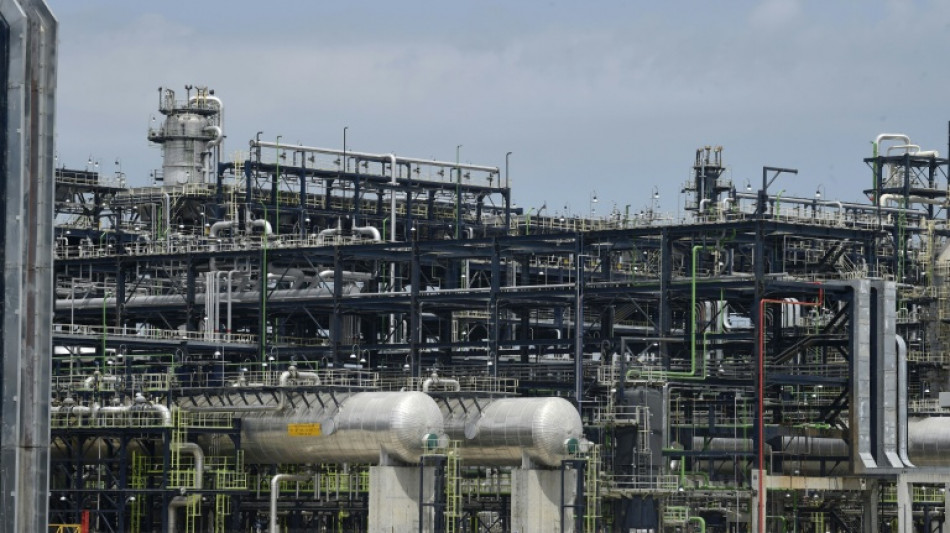
Africa faces 86 mn tonne fuel shortfall by 2040: report / Photo: © AFP

Africa faces 86 mn tonne fuel shortfall by 2040: report

The Iran war has exposed Africa's vulnerability to fuel chokepoints and is heading for an 86 million tonne fuel shortfall by 2040, the Africa Finance Corporation (AFC) said Thursday.

Text size:

Africa imports more than 70 percent of its refined fuel and some $230 billion worth of essential goods, including food, plastics, steel, and fertiliser each year, the AFC said in a report released at a Nairobi summit.

One possible part of the solution was announced at the summit where Africa's richest man, Aliko Dangote, told Kenya's William Ruto and Uganda's Yoweri Museveni that he would build a refinery in east Africa similar to his huge complex in Nigeria.

"I can give commitment to the two presidents that are here: If they will support the refinery, we'll build the identical one that we have in Nigeria -- 650,000 barrels," Dangote told the audience.

Africa's dependence on fuel imports will continue to rise from 74 million tonnes in 2023 to 86 million tonnes in 2040, the AFC, a Pan-African organisation that helps fund and develop infrastructure, said in its report.

That is equivalent to almost three of Dangote's Nigeria refinery -- by far the biggest in Africa.

East Africa's vulnerability to supply shocks has been particularly exposed by the conflict in the Middle East and the resulting block on oil traffic through the Strait of Hormuz.

Ruto told the summit that the war showed the need for Africa to stop relying on outsiders.

"Our ambitions will remain unrealised if we continue to depend on external capital whose primary interest is securing raw materials for their own industries," said the Kenyan president.

"We cannot continue to export raw materials and import finished products made from them," he added.

- Infrastructure -

Kenya last year announced an infrastructure splurge, including 50 new hydroelectric dams and 10,000 megawatts of additional power generation within seven years, as well as plans to revamp roads, rail and airports.

"While historical injustices from colonialism to inequities in the global economic order are real, we must also acknowledge that other regions have faced similar challenges, but they have risen above them," Ruto said.

"We are constrained only by the extent that we accept the status quo through acquiescence, complacency, and limited ambition."

Fixing Africa's energy shortfall requires new hubs and better performance from existing assets, the AFC report said.

AFC's chief economist Rita Babihuga-Nsanze highlighted the example of Zambian dams that were not designed to cope with new drought conditions, and two gigawatts of Angolan hydropower that was not connected to the regional grid and therefore went to waste.

She also spoke of the fertiliser shortages caused by the war, since a high proportion comes from the Gulf.

Such vulnerabilities are "strange", said Babihuga-Nsanze: Africa has 80 percent of the world's phosphate reserves -- a key fertiliser source -- yet only produces 20 percent of the global stock.

"There's a real opportunity for Africa to step in the gap here," she said.

R.Yeung--ThChM