The China Mail - Recovery of ship traffic in Hormuz limited, but signs emerge

USD -
AED 3.67295
AFN 65.551421
ALL 81.18496
AMD 365.910292
AOA 917.000139
ARS 1492.402971
AUD 1.41594
AWG 1.8
AZN 1.732138
BAM 1.695366
BBD 2.013843
BDT 123.135735
BHD 0.37705
BIF 2990.5
BMD 1
BND 1.279359
BOB 11.793465
BRL 5.191975
BSD 0.9999
BTN 95.268311
BWP 13.46018
BYN 2.986239
BYR 19600
BZD 2.011
CAD 1.394125
CDF 2275.00005
CHF 0.813302
CLF 0.023239
CLP 914.619982
CNY 6.74385
CNH 6.745755
COP 3148.92
CRC 454.22433
CUC 1
CUP 26.5
CVE 95.999853
CZK 21.026947
DJF 177.720024
DKK 6.48672
DOP 58.380219
DZD 132.885825
EGP 50.216605
ERN 15
ETB 159.975026
EUR 0.86774
FJD 2.233198
FKP 0.740048
GBP 0.74105
GEL 2.609808
GGP 0.740048
GHS 11.40389
GIP 0.740048
GMD 74.000094
GNF 8777.493911
GTQ 7.628996
GYD 209.231063
HKD 7.84686
HNL 26.875047
HRK 6.537496
HTG 130.787734
HUF 315.984031
IDR 17859
ILS 2.9791
IMP 0.740048
INR 95.34365
IQD 1310.5
IRR 1374624.999886
ISK 123.209803
JEP 0.740048
JMD 158.295084
JOD 0.708977
JPY 159.422981
KES 129.250272
KGS 87.449705
KHR 4055.999947
KMF 428.000283
KRW 1417.270271
KWD 0.30916
KYD 0.833286
KZT 465.567234
LAK 22552.558187
LBP 89683.569293
LKR 334.236292
LRD 181.62497
LSL 16.159983
LTL 2.952741
LVL 0.60489
LYD 6.364985
MAD 9.306495
MDL 17.333189
MGA 4307.509472
MKD 53.336685
MMK 2099.936813
MNT 3596.665371
MOP 8.081969
MRU 40.109774
MUR 47.069617
MVR 15.460212
MWK 1736.999954
MXN 17.054983
MYR 4.085501
MZN 63.905413
NAD 16.159847
NGN 1363.469878
NIO 36.797691
NOK 9.498102
NPR 152.426482
NZD 1.706575
OMR 0.384668
PAB 0.999909
PEN 3.359498
PGK 4.405005
PHP 61.244976
PKR 277.791011
PLN 3.73605
PYG 5966.513668
QAR 3.64575
RON 4.542497
RSD 101.88203
RUB 82.889419
RWF 1468
SAR 3.748756
SBD 8.064941
SCR 13.922777
SDG 600.500451
SEK 9.580097
SGD 1.280502
SLE 24.550142
SOS 571.504833
SRD 37.669798
STD 20697.981008
STN 21.5
SVC 8.749095
SZL 16.150178
THB 33.110057
TJS 9.249093
TMT 3.5
TND 2.936991
TRY 47.757085
TTD 6.781351
TWD 32.2328
TZS 2649.493026
UAH 44.67795
UGX 3709.209745
UYU 40.247745
UZS 11957.999919
VES 765.401052
VND 26049.5
VUV 118.442804
WST 2.72999
XAF 568.605049
XAG 0.015308
XAU 0.000227
XCD 2.70255
XCG 1.802074
XDR 0.706905
XOF 567.999764
XPF 103.874977
YER 237.149852
ZAR 16.12757
ZMK 9001.20327
ZMW 18.8184
ZWL 321.999592
  • RBGPF

    2.2800

    72.16

    +3.16%

  • RYCEF

    -0.0200

    20.55

    -0.1%

  • CMSC

    0.0100

    21.45

    +0.05%

  • VOD

    0.1900

    16.09

    +1.18%

  • RELX

    -0.8200

    34.55

    -2.37%

  • GSK

    -0.6000

    50.3

    -1.19%

  • RIO

    0.2300

    101.22

    +0.23%

  • BCC

    -1.2800

    84.25

    -1.52%

  • BTI

    -0.9700

    55.84

    -1.74%

  • NGG

    0.4100

    80.68

    +0.51%

  • BP

    -0.2300

    42.93

    -0.54%

  • BCE

    -0.2400

    23.13

    -1.04%

  • CMSD

    -0.0400

    21.59

    -0.19%

  • JRI

    -0.0200

    12.71

    -0.16%

  • AZN

    -0.2500

    158.5

    -0.16%

Recovery of ship traffic in Hormuz limited, but signs emerge
Recovery of ship traffic in Hormuz limited, but signs emerge / Photo: © AFP

Recovery of ship traffic in Hormuz limited, but signs emerge

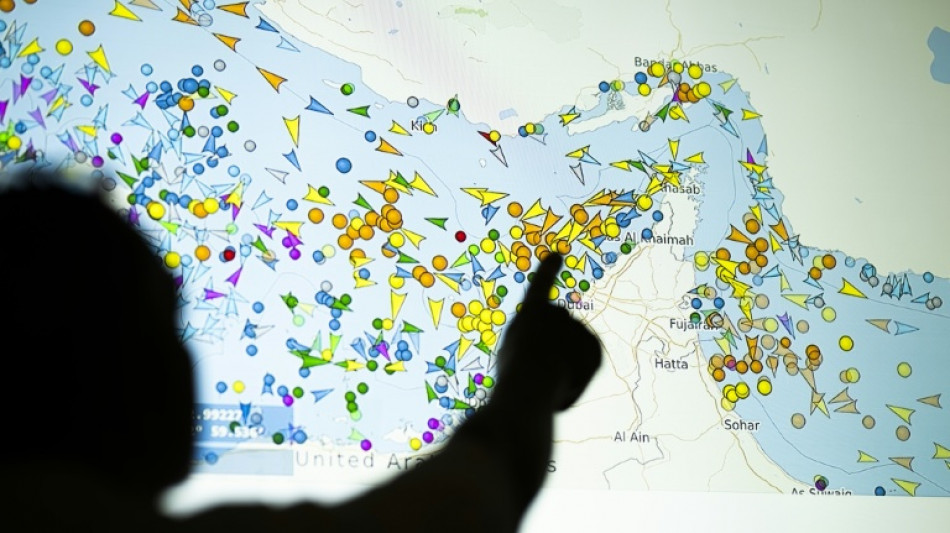
Maritime traffic in the Strait of Hormuz remains at levels before the Iran-US agreement, says the Kpler maritime tracking platform, but there are signs of recovery ahead of Friday's official reopening.

Text size:

Eight ships carrying raw materials transited the strait on Monday, and six on Tuesday, according to Kpler data updated Wednesday. The agreement was reached overnight Sunday.

This rate is comparable to the previous week, which saw an average of eight transits per day.

That is well down on the rate of approximately 120 transits per day before the war, according to the maritime information website Lloyd's List.

A fifth of global hydrocarbon exports passed through the strait, as well as other essential raw materials.

In a sign of a less hostile climate in the area, several oil tankers in Iran's shadow fleet, all under international sanctions, reactivated their transponders on Tuesday and Wednesday.

They had been switched off for months to evade maritime surveillance.

The Amber, Diona, Sonia I, Starla, Tour 2 and Hero II, were among the vessels to have turned off the transponders, according to the MarineTraffic platform.

These ships had loaded oil on Kharg Island and left the Gulf through the Strait of Hormuz during the conflict, with their transponders switched off, according to Kpler.

Most of them have resumed transmitting AIS signals from the Iranian port of Chabahar, located at the mouth of the Gulf of Oman, about 500 km east of the Strait of Hormuz, near the Afghan border.

- Normal traffic will take time -

While the legal framework of the deal remains unclear, the almost simultaneous reactivation of the transponders on these vessels suggested that their operators were acting in concert, MarineTraffic said Wednesday.

Some of these tankers had crossed the perimeter of the US blockade, imposed in mid-April in response to Iran's de facto blocking of the Strait of Hormuz, according to the maritime tracking website TankerTrackers.

Tehran claimed on Tuesday that the US blockade had been lifted, but there has been no confirmation from Washington at this stage.

The US and Iran will sign their memorandum of understanding in Switzerland on Friday to end the war in the Middle East, marking the start of two months of negotiations, with the long-awaited reopening of the Strait of Hormuz agreed as the first step.

US President Donald Trump announced a full reopening of the strait following the signing.

But it will take time for maritime traffic to return to normal, according to a European maritime industry source.

"Ports will be congested... and everyone will have to wait one's turn," he warned.

"The whole logistical chain has to be reorganised."

D.Peng--ThChM