US Federal Reserve holds rates steady as inflation hawks call for hike / Photo: © AFP

The US Federal Reserve held interest rates steady on Wednesday, with surging inflation fueled by President Donald Trump's war on Iran seeing three of the committee's 12 policymakers calling for a quarter-percentage-point rate hike.
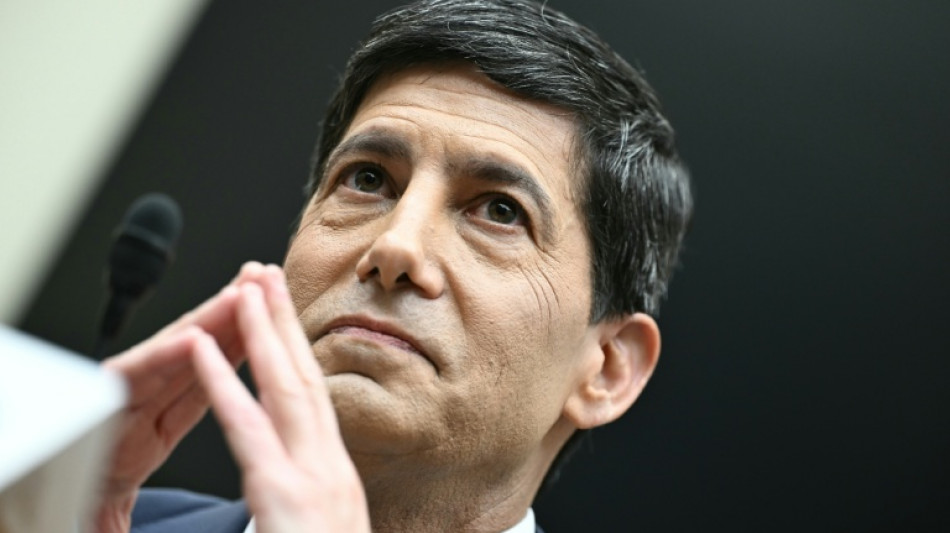
The Fed's open market committee (FOMC) held rates at 3.50-3.75 percent for the fifth straight meeting, with its chairman Kevin Warsh due to address a press conference at 2:30 pm local time (1830 GMT).
Most investors expected the Fed to hold rates steady, according to CME's FedWatch monitoring tool, but bets on a rate-hike rose significantly in the days leading up to the meeting.
Consumer inflation eased to 3.5 percent year-on-year last month, but is expected to rise again on the back of seesawing oil prices from Trump's war on Iran, which has seen renewed fighting in recent weeks.
The Fed has a dual mandate to keep inflation to its long-term, two-percent target while ensuring maximum employment in the world's largest economy.
Its main tool to achieve this is setting the key interest rate. Raising it tends to constrain economic activity, while lowering it can spur employment but also lead to higher inflation.
Wednesday's decision leaves rates unchanged, meaning nine policymakers see the current rate as having the appropriate effect on economic activity.
- 'Patience running thin' -
In his few public appearances since taking office, Warsh has said the committee is committed to delivering price stability, but has not elaborated on how it would do so or when it may intervene.
But other policymakers have been vocal in recent weeks about their concern regarding high inflation -- which has been above target for more than five years -- and the potential need for rate hikes to combat it.
"(Other policymakers') patience is running thin when it comes to inflation, and most, if not all, stand ready to act if inflation does not soon move back towards two percent," Gregory Daco, chief economist at EY-Parthenon, told AFP.
Since March, inflation surged to three-year highs in the wake of Trump's war on Iran, which has sent global energy and fertilizer prices skyrocketing and seen some of those price increases bleed into other goods.
- Dissents -
Since taking over, Warsh has called for policymakers to engage in a "good family fight" when deciding interest rates.
At this week's meeting, he may have gotten what he asked for.
Regional Fed presidents Lorie Logan, Beth Hammack and Neel Kashkari were the three voting policymakers to dissent from the majority decision.
It is rare for that many FOMC members to differ from the majority's vote.
They are not the only ones flagging the potential need to address inflation using rate hikes, with Fed Governors Christopher Waller and Lisa Cook also signalling their concern in recent weeks.
"We may have a new chairman, but the old guard is now worried about where the economy has moved since the beginning of the year," said Diane Swonk, chief economist at KPMG, ahead of the decision.
The lower consumer inflation figure for June gave policymakers enough "room to breathe" for now, but with further price rises expected Swonk was penciling in two rate hikes for later this year.
She highlighted how "corrosive" inflation can be, affecting lower-income households much harder than those with higher incomes, whose consumption has remained robust despite the surging inflation.
"It hits those who can afford it least the most," she said. "And it's moving up the food chain."
V.Fan--ThChM