The China Mail - US Fed dissenters call for rate hikes over sustained inflation

USD -
AED 3.672502
AFN 64.999754
ALL 81.289144
AMD 366.196279
AOA 918.000172
ARS 1489.357573
AUD 1.42412
AWG 1.80125
AZN 1.699154
BAM 1.701287
BBD 2.015136
BDT 123.520459
BHD 0.377257
BIF 2969.019794
BMD 1
BND 1.284093
BOB 11.880034
BRL 5.0948
BSD 1.000304
BTN 95.379758
BWP 13.642136
BYN 2.910478
BYR 19600
BZD 2.01216
CAD 1.402525
CDF 2274.99978
CHF 0.809145
CLF 0.023558
CLP 927.200085
CNY 6.75525
CNH 6.753105
COP 3145.09
CRC 454.416952
CUC 1
CUP 26.5
CVE 95.915136
CZK 21.036982
DJF 178.165544
DKK 6.499905
DOP 58.046025
DZD 132.992959
EGP 51.15907
ERN 15
ETB 159.875354
EUR 0.86958
FJD 2.216401
FKP 0.742931
GBP 0.743025
GEL 2.614998
GGP 0.742931
GHS 11.695632
GIP 0.742931
GMD 73.999981
GNF 8783.054976
GTQ 7.633926
GYD 209.289278
HKD 7.84165
HNL 26.808222
HRK 6.5523
HTG 130.818846
HUF 316.804995
IDR 18048
ILS 3.06295
IMP 0.742931
INR 95.437402
IQD 1310.71107
IRR 1374999.999732
ISK 123.640366
JEP 0.742931
JMD 158.394224
JOD 0.708979
JPY 159.182022
KES 129.220356
KGS 87.450217
KHR 4048.364649
KMF 430.499511
KRW 1437.999491
KWD 0.30946
KYD 0.833768
KZT 474.089152
LAK 22657.133413
LBP 89594.575788
LKR 335.873347
LRD 180.591679
LSL 16.548902
LTL 2.95274
LVL 0.60489
LYD 6.401357
MAD 9.346468
MDL 17.484342
MGA 4278.656298
MKD 53.522732
MMK 2099.790892
MNT 3596.021226
MOP 8.082654
MRU 40.210333
MUR 47.000462
MVR 15.460206
MWK 1734.841664
MXN 17.347325
MYR 4.085402
MZN 63.91016
NAD 16.54883
NGN 1364.990105
NIO 36.813497
NOK 9.49307
NPR 152.60894
NZD 1.702405
OMR 0.384521
PAB 1.00047
PEN 3.390007
PGK 4.47978
PHP 61.158045
PKR 277.86691
PLN 3.744735
PYG 5965.501344
QAR 3.657446
RON 4.561401
RSD 102.055015
RUB 79.24621
RWF 1468.771747
SAR 3.731137
SBD 8.081105
SCR 13.483058
SDG 599.999981
SEK 9.54515
SGD 1.28374
SLE 24.698247
SOS 571.761605
SRD 37.781502
STD 20697.981008
STN 21.307127
SVC 8.754349
SZL 16.546553
THB 33.434501
TJS 9.23465
TMT 3.51
TND 2.941284
TRY 47.525028
TTD 6.793638
TWD 32.284601
TZS 2642.003019
UAH 44.655492
UGX 3756.942602
UYU 40.257131
UZS 11976.287507
VES 745.696402
VND 26300.5
VUV 120.032154
WST 2.748029
XAF 570.595859
XAG 0.017383
XAU 0.000247
XCD 2.70255
XCG 1.803141
XDR 0.708212
XOF 570.590896
XPF 103.717876
YER 238.278011
ZAR 16.54848
ZMK 9001.201804
ZMW 18.793382
ZWL 321.999592
  • CMSC

    -0.0280

    21.782

    -0.13%

  • RELX

    -1.2450

    35.365

    -3.52%

  • NGG

    -0.3900

    80

    -0.49%

  • BP

    0.7000

    44.92

    +1.56%

  • AZN

    -1.0300

    170.31

    -0.6%

  • RBGPF

    0.0000

    69.21

    0%

  • RIO

    -0.1100

    97.07

    -0.11%

  • BCE

    -0.1800

    21.52

    -0.84%

  • GSK

    -0.2400

    51.83

    -0.46%

  • CMSD

    0.0450

    22.065

    +0.2%

  • RYCEF

    -0.1300

    19.5

    -0.67%

  • VOD

    -0.2950

    15.845

    -1.86%

  • JRI

    -0.0400

    12.83

    -0.31%

  • BCC

    0.5700

    75.95

    +0.75%

  • BTI

    -0.7400

    60.95

    -1.21%

US Fed dissenters call for rate hikes over sustained inflation
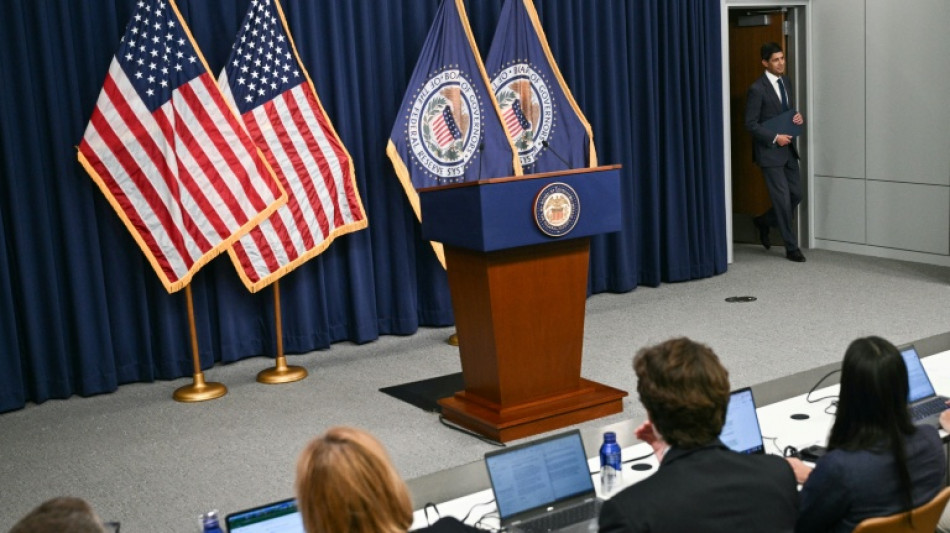
US Fed dissenters call for rate hikes over sustained inflation / Photo: © AFP

US Fed dissenters call for rate hikes over sustained inflation

All three US Federal Reserve policymakers who dissented from the central bank's decision to keep interest rates steady earlier this week said Friday that rate hikes were needed now in order to avoid entrenched inflation.

Text size:

The Fed held rates at 3.50-3.75 percent for its fifth straight meeting on Wednesday, with three of the committee's 12 members dissenting in favor of a quarter-percentage-point rate hike.

That number of dissents is unusual and illustrative of the challenge the Fed faces in bringing inflation back down to its two-percent target -- a level it hasn't hit in more than five years.

"Inflation has been too high for too long," said one of the dissenters, president of the regional Cleveland Fed, Beth Hammack. "The longer that high inflation persists, the more challenging and costly it can be to bring it back down."

US households have been battered by the high prices, and inflation spiked to three-year highs on the back of President Donald Trump's war on Iran since March, with skyrocketing energy prices bleeding through into other products.

Neel Kashkari, president of the Minneapolis Fed, dissented alongside Hammack, and in a statement on Friday said he thought it was necessary to "tighten policy incrementally as we gather more data on the path of inflation and employment."

"If inflation remains elevated, in my view, a potential series of small policy moves would be better than waiting and eventually concluding that even bolder actions were necessary," he said.

- Warsh staying tight-lipped -

Lorie Logan, the third dissenting vote and president of the Dallas Fed, also issued a statement on Friday, agreeing with the need for "modest action" now to reduce the need for potentially sharper hikes later.

Logan said that current interest rates were not sufficiently restrictive on economic activity, and that barring an "unanticipated shock" inflation was likely to continue to trend above target.

"The FOMC cannot count on unanticipated shocks to achieve its goals and can always adjust policy if unanticipated shocks occur," she said.

New Fed Chairman Kevin Warsh has, before taking office, expressed support for lowering interest rates in the world's largest economy, in line with the views of Trump, who nominated him.

Since taking over in May, Warsh has said he is committed to the Fed's two-percent inflation target, but has shared no details on how he believes the central bank should achieve it.

Markets have reacted with concern to Warsh's tight-lipped policy, with 30-year Treasury bond yields -- which generally track inflation expectations -- rising to their highest levels since 2007 following this week's meeting.

Trump has imposed unprecedented pressure on the independent central bank in his second term as president, pursuing a criminal probe against Warsh's predecessor and trying to fire another Fed governor.

The Republican billionaire has demanded the Fed lower rates in a bid to turbocharge the economy, despite the inflationary effect doing so would likely have.

L.Johnson--ThChM