The China Mail - Six months into Iran war, Hormuz traffic way down, sailors stranded

USD -
AED 3.672499
AFN 65.502406
ALL 79.163542
AMD 364.819005
ANG 1.789783
AOA 918.000057
ARS 1509.502502
AUD 1.397468
AWG 1.795
AZN 1.703542
BAM 1.676086
BBD 2.013404
BDT 122.75417
BGN 1.696366
BHD 0.37692
BIF 2981.509652
BMD 1
BND 1.27037
BOB 11.500754
BRL 5.156697
BSD 0.999636
BTN 95.661079
BWP 13.394468
BYN 2.995445
BYR 19600
BZD 2.01049
CAD 1.385101
CDF 2277.498403
CHF 0.80333
CLF 0.023206
CLP 913.330267
CNY 6.72215
CNH 6.723385
COP 3067.59
CRC 452.93853
CUC 1
CUP 26.5
CVE 94.495578
CZK 20.659401
DJF 178.005356
DKK 6.409925
DOP 58.792021
DZD 133.059018
EGP 50.804301
ERN 15
ETB 163.294924
EUR 0.857501
FJD 2.216399
FKP 0.732895
GBP 0.733515
GEL 2.604961
GGP 0.732895
GHS 11.121109
GIP 0.732895
GMD 73.99961
GNF 8783.665074
GTQ 7.628034
GYD 209.1389
HKD 7.83826
HNL 26.810361
HRK 6.461297
HTG 130.776087
HUF 311.240499
IDR 17738.4
ILS 3.001504
IMP 0.732895
INR 95.74135
IQD 1309.560538
IRR 1374574.99986
ISK 120.91025
JEP 0.732895
JMD 158.148902
JOD 0.708972
JPY 159.348505
KES 129.409561
KGS 87.450068
KHR 4045.831619
KMF 423.000139
KPW 900.000294
KRW 1382.650104
KWD 0.30862
KYD 0.832994
KZT 457.315479
LAK 22458.179076
LBP 89525.413415
LKR 328.799877
LRD 181.432538
LSL 16.021613
LTL 2.95274
LVL 0.60489
LYD 6.331441
MAD 9.272333
MDL 17.273561
MGA 4303.987316
MKD 52.725847
MMK 2099.738633
MNT 3594.266195
MOP 8.068268
MRU 40.02314
MUR 46.279974
MVR 15.459664
MWK 1733.421893
MXN 16.94771
MYR 4.047021
MZN 63.904968
NAD 16.021682
NGN 1347.230285
NIO 36.790258
NOK 9.303028
NPR 153.055759
NZD 1.67711
OMR 0.384498
PAB 0.999589
PEN 3.356115
PGK 4.498262
PHP 61.745503
PKR 277.382812
PLN 3.692675
PYG 6007.730346
QAR 3.643991
RON 4.503802
RSD 100.595004
RUB 83.854294
RWF 1473.422603
SAR 3.751891
SBD 8.019375
SCR 13.874751
SDG 601.487686
SEK 9.499649
SGD 1.27065
SHP 0.740866
SLE 24.649662
SLL 20969.499227
SOS 571.269416
SRD 37.7715
STD 20697.981008
STN 20.995891
SVC 8.746438
SYP 13001.999906
SZL 16.016969
THB 32.761044
TJS 9.236511
TMT 3.51
TND 2.910753
TOP 2.40776
TRY 48.100099
TTD 6.786502
TWD 31.887505
TZS 2649.998037
UAH 44.714932
UGX 3723.604827
UYU 40.064103
UZS 11815.268065
VES 783.68245
VND 26144
VUV 118.52355
WST 2.715906
XAF 562.148473
XAG 0.014754
XAU 0.000216
XCD 2.70255
XCG 1.801564
XDR 0.707052
XOF 562.148473
XPF 102.204168
YER 237.096871
ZAR 16.01495
ZMK 9001.254127
ZMW 18.968487
ZWL 321.999592
  • CMSC

    0.1264

    21.228

    +0.6%

  • RBGPF

    2.5700

    71.13

    +3.61%

  • CMSD

    0.0800

    21.06

    +0.38%

  • NGG

    0.6600

    80.42

    +0.82%

  • RIO

    -0.5000

    104.8

    -0.48%

  • BCC

    -0.2300

    82.24

    -0.28%

  • GSK

    -0.6300

    51.78

    -1.22%

  • RELX

    0.4800

    36.39

    +1.32%

  • BCE

    0.1400

    23.85

    +0.59%

  • JRI

    -0.0100

    12.37

    -0.08%

  • BTI

    0.5000

    56.71

    +0.88%

  • BP

    -1.0200

    43.74

    -2.33%

  • RYCEF

    0.1900

    20.44

    +0.93%

  • VOD

    0.0200

    15.98

    +0.13%

  • AZN

    0.7300

    166.71

    +0.44%

Six months into Iran war, Hormuz traffic way down, sailors stranded
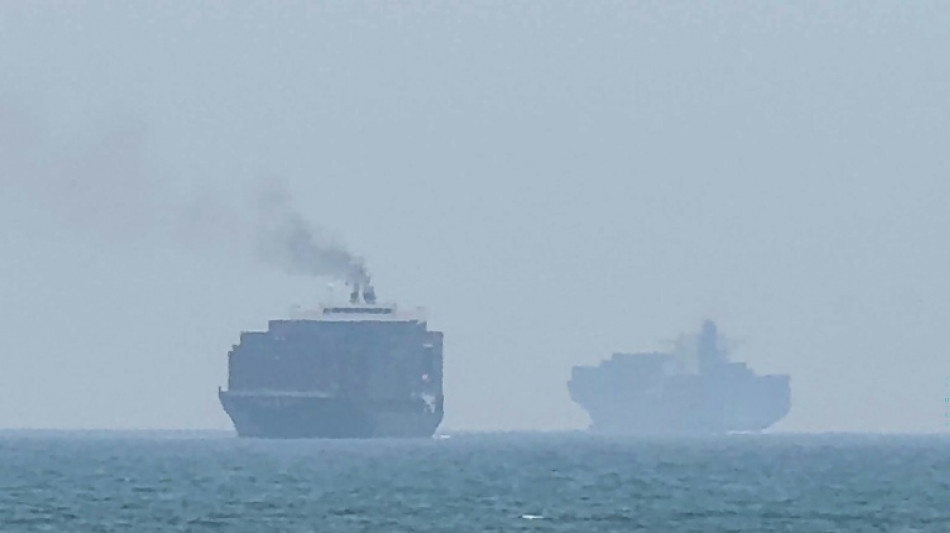
Six months into Iran war, Hormuz traffic way down, sailors stranded / Photo: © AFP/File

Six months into Iran war, Hormuz traffic way down, sailors stranded

Six months since the start of the Middle East war, the strategic Strait of Hormuz remains largely paralysed, with thousands of sailors still stranded in the Gulf and commodity carrier traffic way below its normal level.

Text size:

- Only a few transits per day -

Before Iran blocked the strait in response to joint US-Israeli strikes in February, around one fifth of the world's oil and liquefied natural gas exports passed through the waterway.

Iran's Guards have also warned of a "danger zone" covering 1,400 square kilometres where mines may be present.

After Iran closed the strait on March 1, commodity carrier traffic plummeted to an average of 10 transits per day, compared with a daily average of 95 in February, according to an AFP analysis of data from maritime tracker Kpler.

An agreement signed by the United States and Iran in June led to a temporary rebound to 36 transits per day, before they dropped back to an average of 15 between the resumption of hostilities on July 8 and August 22.

- New routes, 'dark' transits -

Before the war, vessels crossed the strait freely via a route through the centre of the waterway adopted by the International Maritime Organization (IMO).

There are now two distinct routes: one to the north, near the Iranian coast -- the only one approved by Tehran -- and another to the south, between the Omani coast and potentially mined areas.

During the relatively calm period between June 17 and July 7, an average of nine ships per day used the Iranian route and eight the Omani one. The rest transited via unidentified routes or the traditional IMO corridor.

Ever since the ceasefire collapsed on July 8, two-thirds of transits have become "dark", or unknown, compared with less than one percent before the war, according to Kpler.

These transits involve vessels whose exact route cannot be confirmed due to insufficient data stemming from disabled transponders, jammed signals or missing satellite imagery.

- Thousands of sailors stranded -

Some 6,000 sailors and 500 ships have remained stuck in the Gulf since the beginning of the conflict, the IMO told AFP.

The organisation said there were "ongoing discussions" to ensure a secure maritime route, adding that their outcome "depends on de-escalation in the region".

The IMO had begun an initiative in June to evacuate more than 11,000 seafarers stuck in the Gulf, but the effort was soon suspended following an attack on a vessel.

Over the past six months, at least 20 sailors and dockworkers have been killed in incidents or attacks in the region, according to the IMO.

W.Cheng--ThChM