Alberta Oil Drilling Forecast Drops in 2027 Despite Record Activity

Canada’s oil and gas drilling sector is on track for its most active year since 2018, but new industry projections indicate a significant downturn ahead. The Canadian Association of Energy Contractors forecasts a 13 percent decline in Alberta wells by 2027, driven by technological efficiency and shifting investor demands rather than falling demand.
Canada’s oil and gas drilling sector is on track for its busiest year since 2018, yet new industry projections indicate a significant downturn in activity ahead. The Canadian Association of Energy Contractors (CAOEC) forecasts that Alberta will see approximately 613 fewer wells drilled next year compared to this year, marking a decline of about 13 percent from its 2026 estimate.
The association expects 4,575 wells to be drilled in Alberta this year, compared with 3,962 in 2027. Across Western Canada, drilling is forecast to decline from 6,559 wells to 5,900. Alberta accounts for more than 90 percent of that projected decrease.
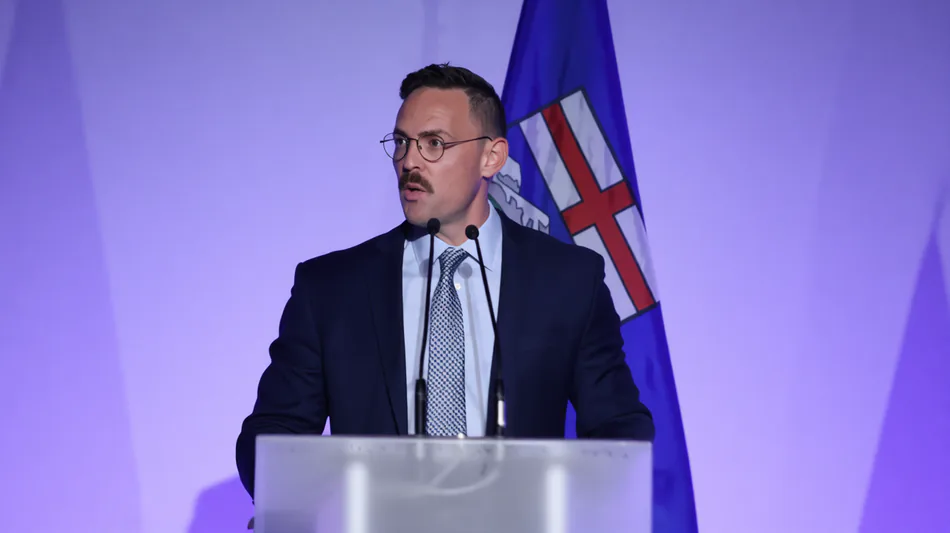
The projections, presented Friday in Calgary, come as Alberta Premier Danielle Smith and industry leaders push to expand energy production. The data highlights a complex dynamic where growth in oil and gas output does not necessarily translate into increased drilling jobs or rig activity.
Mark Scholz, CAOEC’s president and chief executive officer, described the current market conditions as "very healthy" despite the downward trajectory for well counts. He noted that some types of drilling rigs are already in short supply heading into winter, while finding enough workers could become another obstacle if the industry expands further.
The association’s projections are based on a mid-case scenario for oil and gas prices, investment levels, and other economic conditions. Scholz emphasized that actual drilling activity could be higher or lower depending on how these variables evolve.
Peter Tertzakian, an economist whose firm Studio.Energy helped develop the forecast, told the Calgary gathering that technology has fundamentally changed how the industry operates. Horizontal drilling and longer wells have allowed companies to reach more oil and gas with less drilling activity than in the past.
Tertzakian said the industry’s financial priorities have also shifted. Producers once reinvested much of their available cash into drilling, while investors increasingly expect companies to pay down debt or return profits.
"In other words, the investors started basically saying, ‘Give me my money back, and I’ll decide with you whether or not to put the money back in the ground,’" Tertzakian said.
This shift helps explain how production could increase without a corresponding rise in drilling activity. It also clarifies why stronger industry earnings do not automatically mean more drilling jobs.
CAOEC estimates that drilling and well-servicing activity will support 86,326 direct and indirect jobs across Canada in 2026, compared with a projected 79,504 in 2029. That represents approximately 6,800 fewer jobs supported annually by 2029.
The forecast does not mean 6,800 people are expected to be laid off. The figures estimate employment supported by rig activity, including jobs with suppliers and other businesses. CAOEC does not project layoffs.
Smith, who addressed Friday’s industry luncheon, pointed to proposed pipelines, expanded natural gas exports, and government efforts to encourage investment as opportunities for future growth. She acknowledged that years of changing expectations have left some companies cautious about expanding.
"I understand there’s a little skepticism, because of the whipsaw effect that you suffered over the past 10 years," Smith said.
The premier stressed that companies had spent years paying down debt and returning money to shareholders after being told demand for fossil fuels would decline. Now, she said, governments are encouraging them to increase production. She pointed to efforts to help producers recover certain investment costs sooner as one way to encourage additional production.
Scholz remains optimistic about what comes next. Under the association’s high-case scenario, Western Canada could drill nearly 8,000 wells in 2029, compared with approximately 5,800 under its mid-case forecast. That stronger outcome depends on favorable market conditions, investment, and new infrastructure.
"But buckle up. It’s going to get very busy in this sector," Scholz told reporters.
For now, though, CAOEC’s central forecast points to fewer wells being drilled in Alberta next year and fewer jobs supported by drilling and well-servicing activity nationally by 2029.
J.Liv--ThChM