BoE intervenes as IMF criticises UK budget / Photo: © AFP

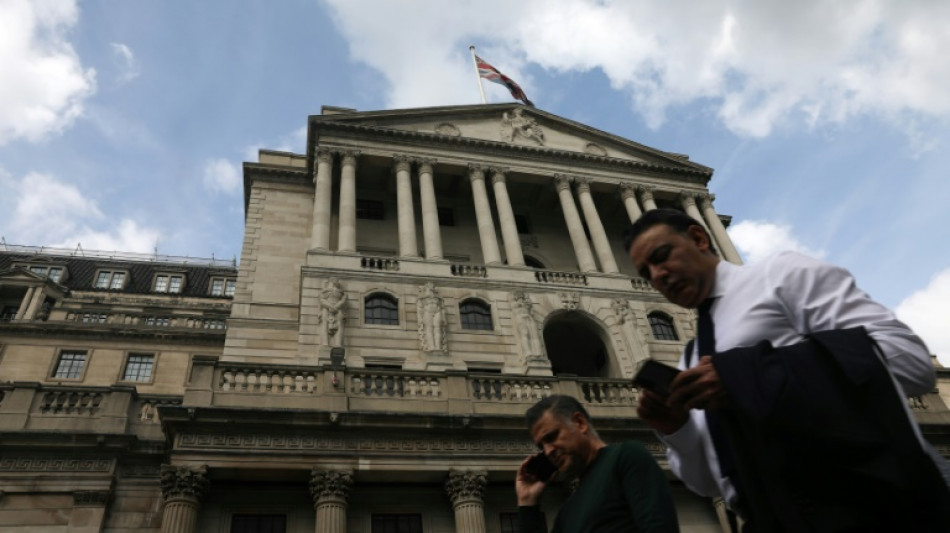
The Bank of England stepped in Wednesday to shore up market confidence after the International Monetary Fund criticised Britain's inflation-fighting budget.
Reacting to markets turmoil, the BoE announced it was temporarily buying up long-dated UK government bonds "to restore orderly market conditions".
However, the pound promptly slumped 1.7 percent to $1.0552.
The BoE intervention followed criticism Tuesday from the IMF, which argued that Britain's budget could increase inequality and worsen inflation.
Credit ratings agency Moody's also waded in overnight with a warning about soaring debt.
Finance minister Kwasi Kwarteng's big tax cuts and energy price freeze, aimed at boosting the UK's recession-threatened economy, appeared to have had the opposite effect as traders warn of ballooning debt to pay for the incentives.
Following last Friday's budget, UK government bond yields have soared and the pound hit a record low at $1.0350.
Critics added that Kwarteng's measures would benefit the rich more than the poorest, as millions of Britons suffer from a cost-of-living crisis.
"We have acted at speed to protect households and businesses through this winter and the next, following the unprecedented energy price rise," the Treasury said as it sought to defend itself.
"We are focused on growing the economy to raise living standards for everyone," it added, blaming sky-high oil, gas and electricity prices on Russia's invasion of Ukraine.
- IMF advice -
In a highly unusual intervention, the IMF late Tuesday said it was "closely monitoring" developments and urged the government in London led by new Prime Minister Liz Truss to change tack.
The Fund added: "We understand that the sizable fiscal package announced aims at helping families and businesses deal with the energy shock and at boosting growth via tax cuts and supply measures.
"However, given elevated inflation pressures in many countries... we do not recommend large and untargeted fiscal packages at this juncture."
The IMF said the "UK measures will likely increase inequality" and stressed the importance of fiscal policy not working "at cross purposes to monetary policy".
Analysts warned that Britain's controversial measures could force the Bank of England to hike interest rates far higher than forecast.
"Expectations that there will be a super-size interest rate hike coming from the Bank of England to try and counter the government splurge on tax cuts and spending have increased," Hargreaves Lansdown analyst Susannah Streeter noted Wednesday.
Many central banks, including the BoE, are aggressively hiking interest rates in a bid to cool decades-high inflation.
- Tax cuts -
In his budget, Chancellor of the Exchequer Kwarteng cut the highest rate of income tax and scrapped a cap of banker bonuses.
He also, however, announced a plan to lower income tax for all workers.
Conservative party head Truss appointed Kwarteng to replace Rishi Sunak, who reached the final two in the race to be prime minister.
Sunak had hit out strongly at Truss's promise of tax cuts, arguing that the UK priority was to first bring down the nation's inflation rate that stands at a near 40-year high of 9.9 percent.
Moody's called Britain's new fiscal policy regime "credit negative", adding that a sustained confidence shock could "permanently" weaken its debt affordability.
Kwarteng has said he would wait until November 23 to outline plans on controlling government debt.
E.Lau--ThChM