The China Mail - Fourth leak detected at Russian gas pipeline to Europe

USD -
AED 3.673008
AFN 65.000388
ALL 81.123148
AMD 360.499098
ANG 1.789785
AOA 918.000573
ARS 1545.153474
AUD 1.42573
AWG 1.8
AZN 1.703383
BAM 1.744435
BBD 2.013263
BDT 124.343874
BGN 1.747831
BHD 0.377375
BIF 3005.17765
BMD 1
BND 1.278581
BOB 12.140484
BRL 5.438198
BSD 0.999585
BTN 94.811201
BWP 13.808328
BYN 2.953267
BYR 19600
BZD 2.01032
CAD 1.397865
CDF 2314.999949
CHF 0.818165
CLF 0.024845
CLP 977.539697
CNY 6.661102
CNH 6.646095
COP 3211.12
CRC 454.527211
CUC 1
CUP 23.989333
CVE 98.348593
CZK 21.710221
DJF 177.71951
DKK 6.669295
DOP 60.740391
DZD 135.769837
EGP 55.347613
ERN 15
ETB 162.433359
EUR 0.89241
FJD 2.255897
FKP 0.746765
GBP 0.745305
GEL 2.603468
GGP 0.746765
GHS 11.650194
GIP 0.746765
GMD 73.999981
GNF 8847.047491
GTQ 7.642051
GYD 209.539525
HKD 7.846535
HNL 26.869372
HRK 6.76901
HTG 131.015506
HUF 324.890979
IDR 18104
ILS 3.14045
IMP 0.746765
INR 94.68585
IQD 1515.298819
IRR 1868415.000233
ISK 121.560427
JEP 0.746765
JMD 158.843703
JOD 0.709048
JPY 157.796502
KES 129.939665
KGS 87.449799
KHR 4088.71367
KMF 440.999789
KPW 899.999961
KRW 1344.05006
KWD 0.31134
KYD 0.832995
KZT 452.368741
LAK 22506.053971
LBP 89514.01494
LKR 332.306128
LRD 169.921466
LSL 16.636267
LTL 2.95274
LVL 0.60489
LYD 6.414756
MAD 9.828437
MDL 18.057593
MGA 4514.054577
MKD 54.922696
MMK 2099.693878
MNT 3599.326016
MOP 8.078026
MRU 40.503405
MUR 47.319961
MVR 15.449534
MWK 1733.348199
MXN 18.54454
MYR 4.071701
MZN 63.910175
NAD 16.636267
NGN 1344.509612
NIO 36.783168
NOK 9.2871
NPR 151.697565
NZD 1.77704
OMR 0.384522
PAB 0.999799
PEN 3.467019
PGK 4.482837
PHP 63.334501
PKR 276.504083
PLN 3.9413
PYG 5917.059487
QAR 3.653878
RON 4.762008
RSD 104.930981
RUB 81.250045
RWF 1478.412502
SAR 3.764439
SBD 8.058206
SCR 13.832645
SDG 601.502778
SEK 9.77118
SGD 1.278615
SHP 0.748335
SLE 22.916689
SLL 20969.504398
SOS 571.280766
SRD 37.579505
STD 20697.981008
STN 21.85227
SVC 8.746259
SYP 13001.999685
SZL 16.630915
THB 33.692963
TJS 9.191303
TMT 3.5
TND 2.987517
TOP 2.40776
TRY 49.969601
TTD 6.761717
TWD 32.594499
TZS 2645.00802
UAH 45.650373
UGX 4277.693292
UYU 40.190338
UZS 11944.718217
VES 887.479798
VND 25764
VUV 118.915185
WST 2.776217
XAF 585.382302
XAG 0.019623
XAU 0.000252232255
XCD 2.70255
XCG 1.80143
XDR 0.707052
XOF 585.382302
XPF 106.371498
YER 236.202866
ZAR 16.56895
ZMK 9001.206005
ZMW 20.242167
ZWL 321.999592
SSP 5745.217636
MXV 2.088469
  • RYCEF

    0.4000

    19.71

    +2.03%

  • CMSC

    0.0000

    20.4

    0%

  • BTI

    0.4200

    56.05

    +0.75%

  • BP

    0.2800

    44.43

    +0.63%

  • RBGPF

    1.6000

    67

    +2.39%

  • RIO

    -0.1500

    94.41

    -0.16%

  • AZN

    -0.4300

    166.15

    -0.26%

  • GSK

    0.4600

    49.7

    +0.93%

  • BCE

    -0.4100

    20.56

    -1.99%

  • NGG

    -0.2500

    75.24

    -0.33%

  • VOD

    -0.0400

    16.58

    -0.24%

  • RELX

    -0.4500

    33.07

    -1.36%

  • BCC

    -0.5500

    76.59

    -0.72%

  • CMSD

    -0.0300

    20.27

    -0.15%

  • JRI

    -0.2500

    10.77

    -2.32%

Fourth leak detected at Russian gas pipeline to Europe
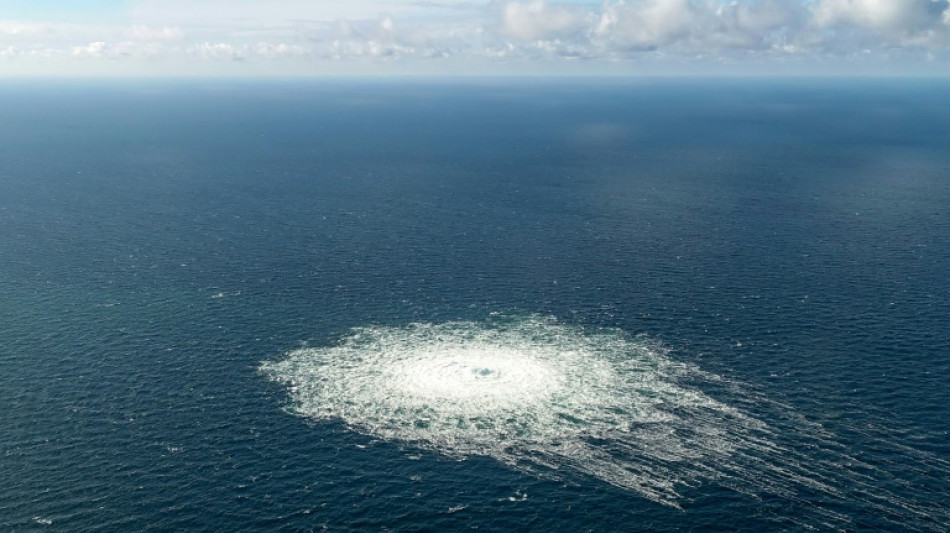
Fourth leak detected at Russian gas pipeline to Europe / Photo: © DANISH DEFENCE/AFP

Fourth leak detected at Russian gas pipeline to Europe

A fourth leak has been detected in undersea gas pipelines linking Russia to Europe, the Swedish Coast Guard said Thursday, after explosions were reported earlier this week in what NATO called "reckless" sabotage.

Text size:

The Nord Stream 1 and 2 pipelines link Russia to Germany, and have been at the centre of geopolitical tensions as Russia cut gas supplies to Europe in suspected retaliation against Western sanctions following Moscow's invasion of Ukraine.

The Swedish Coast Guard confirmed Thursday there were four leaks in total on the pipeline in the Baltic Sea -- two on the Swedish side and two on the Danish side. Three leaks were previously reported.

While the pipelines -- operated by a consortium majority-owned by Russian gas giant Gazprom -- are not currently in operation, they both still contained gas.

On Thursday, NATO declared that the damage was "the result of deliberate, reckless and irresponsible acts of sabotage".

"These leaks are causing risks to shipping and substantial environmental damage," the Western military alliance said in a statement.

Russia has denied it was behind the explosions -- as did the United States, saying Moscow's suggestion it would damage the pipeline was "ridiculous".

Russia's security service launched an "international terrorism" investigation into the gas leaks, saying the damage had caused "significant economic damage to the Russian Federation".

It said Thursday suspects a foreign state of being behind the leaks.

The UN Security Council will meet Friday to discuss the matter.

- 'Constant' gas flow -

The vast leaks have caused underwater gas plumes, with significant bubbling at the surface of the sea several hundred metres wide, making it impossible to immediately inspect the structures.

Seismic institutes on Tuesday reported they had recorded "in all likelihood" explosions in the area, prior to the leaks being detected.

A Swedish Coast Guard search and rescue vessel was patrolling the area.

"The crew reports that the flow of gas visible on the surface is constant," the agency said in a statement.

Danish authorities said the leaks will continue until the gas in the pipelines is exhausted, which is expected to occur on Sunday.

Fatih Birol, executive director of the International Energy Agency (IEA), said at a symposium in Paris that to him it was "very obvious" who was behind the leaks.

He said natural gas shortages in the wake of the war in Ukraine could make for a tough winter in Europe.

"In the absence of a major negative surprise, I think Europe, in terms of natural gas, can survive this winter with a lot of bruises in our bodies in terms of prices, economy and social issues, but we can go through that," Birol said.

According to climate groups, Nord Stream 1 and 2 contained some 350,000 tonnes of natural gas -- methane.

Greenpeace says the leaks could have the effect of almost 30 million tonnes of CO2, or more than two-thirds of the annual emissions of Denmark.

K.Leung--ThChM