The China Mail - Antibiotic taken after sex drastically reduces STDs: study

USD -
AED 3.672502
AFN 63.000105
ALL 83.264562
AMD 376.524145
ANG 1.790083
AOA 917.000481
ARS 1391.725901
AUD 1.45518
AWG 1.8025
AZN 1.697181
BAM 1.699144
BBD 2.014422
BDT 122.722731
BGN 1.709309
BHD 0.377512
BIF 2971.637059
BMD 1
BND 1.288204
BOB 6.911051
BRL 5.180302
BSD 1.00013
BTN 93.154671
BWP 13.721325
BYN 2.963529
BYR 19600
BZD 2.011459
CAD 1.390925
CDF 2294.999858
CHF 0.79938
CLF 0.023221
CLP 916.84998
CNY 6.871992
CNH 6.901865
COP 3672.91
CRC 465.397112
CUC 1
CUP 26.5
CVE 95.795144
CZK 21.292103
DJF 178.082787
DKK 6.48327
DOP 60.45758
DZD 133.139857
EGP 54.335897
ERN 15
ETB 156.178462
EUR 0.86768
FJD 2.253803
FKP 0.750158
GBP 0.757025
GEL 2.689975
GGP 0.750158
GHS 10.996868
GIP 0.750158
GMD 73.502059
GNF 8773.728335
GTQ 7.651242
GYD 209.312427
HKD 7.837305
HNL 26.568554
HRK 6.541802
HTG 131.271448
HUF 333.106497
IDR 17011
ILS 3.153375
IMP 0.750158
INR 93.059197
IQD 1310.270533
IRR 1318874.99973
ISK 125.279709
JEP 0.750158
JMD 157.682116
JOD 0.709043
JPY 159.621502
KES 130.110108
KGS 87.448796
KHR 3999.808871
KMF 426.750567
KPW 899.994443
KRW 1516.88021
KWD 0.30935
KYD 0.833496
KZT 473.939125
LAK 22022.405532
LBP 89563.226779
LKR 315.52795
LRD 183.51214
LSL 16.99507
LTL 2.95274
LVL 0.60489
LYD 6.395899
MAD 9.396551
MDL 17.597769
MGA 4181.381428
MKD 53.537077
MMK 2099.621061
MNT 3572.314592
MOP 8.074419
MRU 39.732424
MUR 46.949895
MVR 15.449745
MWK 1734.091995
MXN 17.93909
MYR 4.03903
MZN 63.960023
NAD 16.995291
NGN 1380.969786
NIO 36.800862
NOK 9.742199
NPR 149.047474
NZD 1.75197
OMR 0.384502
PAB 1.000126
PEN 3.460232
PGK 4.326485
PHP 60.635996
PKR 279.065036
PLN 3.718201
PYG 6469.6045
QAR 3.646726
RON 4.423297
RSD 101.827536
RUB 80.198241
RWF 1460.74688
SAR 3.753892
SBD 8.009975
SCR 13.924759
SDG 600.999732
SEK 9.498797
SGD 1.287075
SHP 0.750259
SLE 24.567524
SLL 20969.510825
SOS 571.515441
SRD 37.363973
STD 20697.981008
STN 21.284914
SVC 8.75114
SYP 110.548921
SZL 16.98736
THB 32.760996
TJS 9.585632
TMT 3.5
TND 2.948525
TOP 2.40776
TRY 44.494002
TTD 6.78508
TWD 31.977989
TZS 2604.999815
UAH 43.803484
UGX 3752.226228
UYU 40.501271
UZS 12151.249919
VES 473.325201
VND 26336
VUV 120.132513
WST 2.770875
XAF 569.874593
XAG 0.01416
XAU 0.000217
XCD 2.70255
XCG 1.80252
XDR 0.703479
XOF 569.877069
XPF 103.609748
YER 238.624984
ZAR 17.01166
ZMK 9001.208457
ZMW 19.327487
ZWL 321.999592
  • CMSD

    0.0500

    22.15

    +0.23%

  • BCC

    -0.7700

    75.08

    -1.03%

  • JRI

    0.2200

    12.52

    +1.76%

  • CMSC

    0.0900

    21.99

    +0.41%

  • GSK

    0.8000

    55.99

    +1.43%

  • NGG

    2.2400

    86.84

    +2.58%

  • AZN

    3.5100

    200.73

    +1.75%

  • BCE

    0.1400

    25.38

    +0.55%

  • RIO

    1.5200

    94.81

    +1.6%

  • RBGPF

    -13.5000

    69

    -19.57%

  • BTI

    -0.5800

    57.89

    -1%

  • RYCEF

    0.5500

    15.64

    +3.52%

  • VOD

    0.1100

    15.13

    +0.73%

  • BP

    -0.8300

    46.17

    -1.8%

  • RELX

    0.0800

    33.23

    +0.24%

Antibiotic taken after sex drastically reduces STDs: study
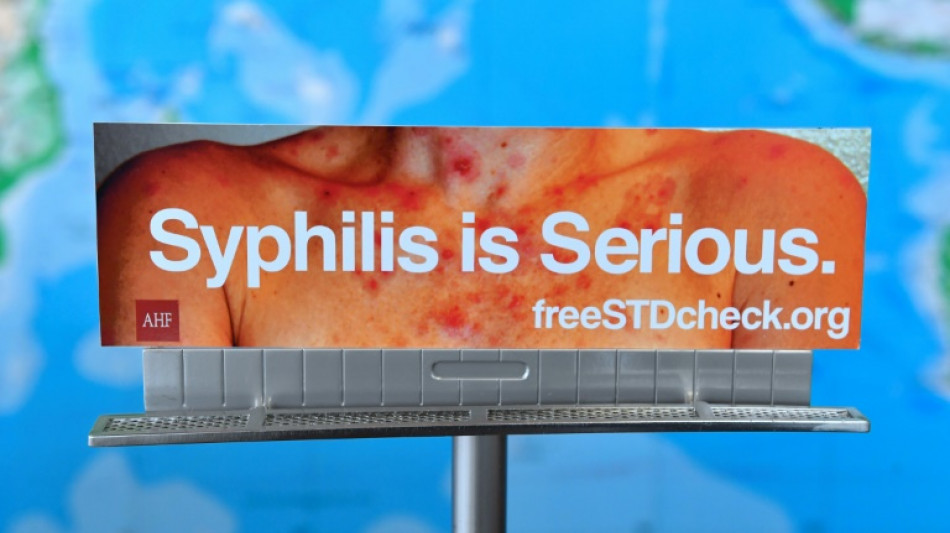
Antibiotic taken after sex drastically reduces STDs: study / Photo: © AFP/File

Antibiotic taken after sex drastically reduces STDs: study

An antibiotic taken after sex without a condom can drastically reduce the rate of three bacterial STDs among high-risk groups, data from a clinical study showed Wednesday.

Text size:

The research was presented at the 24th International AIDS conference in Montreal, where it was hailed as a major development.

"This has the capacity to change the guidelines" on clinical practice, Steven Deeks, an HIV expert at the University of California, San Francisco (UCSF), who was not involved in the study, told AFP.

Doxycycline reduced rates of gonorrhea and chlamydia by more than 60 percent among men who have sex with men (MSM), and also appeared highly effective against syphilis, but there weren't enough cases to reach statistical significance.

The trial was halted early because researchers found the drug was undeniably working and it would have been unethical to continue testing.

The study comes amid rising rates of these diseases, particularly among MSM, whose use of condoms has declined since the advent of effective HIV pre-exposure prophylaxis (PrEP) pills.

A previous trial by French researchers, which used doxycycline as a post-exposure prophylaxis (PEP), showed it was effective against syphilis and chlamydia among MSM, but not for gonorrhea.

For the new study, researchers recruited around 500 people, mostly MSM but also some transgender women and gender diverse people, at sites in San Francisco and Seattle.

Some were taking HIV PrEP, while others were living with HIV.

In both of the groups, around two-thirds received doxycycline, while a third did not. They were followed to monitor their outcomes every three months.

The pill, dosed at 200 milligrams, was given within three days of exposure. Participants could continue to take it as needed depending on how much sexual contact they were having.

The intervention reduced the incidence of STDs by 62 percent in the group living with HIV, and 66 percent in the group on HIV PrEP.

Side effects were mild and adherence levels remained high.

"We now have two studies that support the use of doxycycline as PEP in men who have sex with men," study lead Annie Luetkemeyer of UCSF told reporters at the AIDS conference.

"I really think we're at a place where we need to think very strongly about rolling this out and how to incorporate this into guidelines."

She stressed, however, that right now the data supports the treatment as targeted intervention among high risk groups that have a high prevalence of STDs -- not everyone.

More study is also needed to better understand the potential impacts on antibiotic resistance, the authors said.

Researchers want to know if it could increase resistance from STDs -- which is thought more possible for gonorrhea than chlamydia and syphilis -- from so-called "bystander" bacteria that live on the body and in the throat.

They also want to probe the potentially disruptive impact on the gut microbiome.

F.Jackson--ThChM