The China Mail - Dangerous livestock pest case confirmed in Texas

USD -
AED 3.673102
AFN 63.503721
ALL 81.923198
AMD 368.554977
ANG 1.79046
AOA 917.999741
ARS 1437.060203
AUD 1.40135
AWG 1.8
AZN 1.702342
BAM 1.68037
BBD 2.012569
BDT 122.655532
BGN 1.66992
BHD 0.377096
BIF 2982.5
BMD 1
BND 1.282493
BOB 6.91972
BRL 5.064896
BSD 0.999283
BTN 95.769505
BWP 13.433342
BYN 2.827207
BYR 19600
BZD 2.009657
CAD 1.39026
CDF 2315.000381
CHF 0.789303
CLF 0.022768
CLP 896.070206
CNY 6.77385
CNH 6.775696
COP 3578.91
CRC 459.65161
CUC 1
CUP 26.5
CVE 95.349695
CZK 20.838993
DJF 177.719893
DKK 6.4344
DOP 58.296392
DZD 133.364984
EGP 51.815951
ERN 15
ETB 161.100505
EUR 0.860975
FJD 2.204151
FKP 0.744358
GBP 0.74475
GEL 2.659819
GGP 0.744358
GHS 11.809908
GIP 0.744358
GMD 72.501059
GNF 8775.000108
GTQ 7.619146
GYD 209.032679
HKD 7.83483
HNL 26.598789
HRK 6.486794
HTG 130.654432
HUF 304.686026
IDR 17998
ILS 2.892155
IMP 0.744358
INR 96.024988
IQD 1309.013429
IRR 1375000.000267
ISK 123.629919
JEP 0.744358
JMD 158.093021
JOD 0.70899
JPY 160.026978
KES 129.350278
KGS 87.449798
KHR 4009.999772
KMF 423.99988
KPW 899.855249
KRW 1533.659704
KWD 0.3089
KYD 0.832703
KZT 485.36424
LAK 21949.999848
LBP 89549.999964
LKR 336.999106
LRD 182.499588
LSL 16.309814
LTL 2.95274
LVL 0.60489
LYD 6.360451
MAD 9.192642
MDL 17.307031
MGA 4204.720215
MKD 53.080312
MMK 2099.645417
MNT 3577.711271
MOP 8.063424
MRU 40.00502
MUR 47.560237
MVR 15.46005
MWK 1735.99952
MXN 17.289502
MYR 4.012902
MZN 63.904991
NAD 16.310249
NGN 1361.069913
NIO 36.772287
NOK 9.327297
NPR 153.235472
NZD 1.704159
OMR 0.384502
PAB 0.999201
PEN 3.401866
PGK 4.367998
PHP 61.544997
PKR 278.216888
PLN 3.648331
PYG 6087.240422
QAR 3.652688
RON 4.526498
RSD 101.055967
RUB 73.40353
RWF 1462.90123
SAR 3.755268
SBD 8.032647
SCR 13.274953
SDG 600.498067
SEK 9.379098
SGD 1.284025
SHP 0.746601
SLE 24.599098
SLL 20969.502105
SOS 571.099627
SRD 37.317504
STD 20697.981008
STN 21.049285
SVC 8.743615
SYP 110.532098
SZL 16.309883
THB 32.630213
TJS 9.293358
TMT 3.5
TND 2.927116
TOP 2.40776
TRY 46.05121
TTD 6.769307
TWD 31.488983
TZS 2605.017992
UAH 44.351722
UGX 3762.512351
UYU 40.251562
UZS 11993.848427
VES 558.045295
VND 26335
VUV 118.357403
WST 2.707727
XAF 563.592623
XAG 0.013535
XAU 0.000223
XCD 2.70255
XCG 1.800897
XDR 0.702903
XOF 563.570833
XPF 102.464967
YER 238.598816
ZAR 16.295026
ZMK 9001.200301
ZMW 17.511513
ZWL 321.999592
  • CMSC

    0.0080

    22.608

    +0.04%

  • BCC

    -0.2000

    68.48

    -0.29%

  • GSK

    1.5500

    51.27

    +3.02%

  • AZN

    5.5200

    181.8

    +3.04%

  • NGG

    1.1500

    81.38

    +1.41%

  • RBGPF

    0.0000

    60.01

    0%

  • BCE

    -0.4300

    24.08

    -1.79%

  • BTI

    -0.7700

    57.85

    -1.33%

  • RIO

    -2.4600

    105.4

    -2.33%

  • CMSD

    0.0500

    22.65

    +0.22%

  • RYCEF

    0.1400

    17.34

    +0.81%

  • JRI

    0.0600

    12.81

    +0.47%

  • RELX

    1.5600

    34.46

    +4.53%

  • VOD

    0.0500

    15.1

    +0.33%

  • BP

    0.3600

    44.04

    +0.82%

Dangerous livestock pest case confirmed in Texas
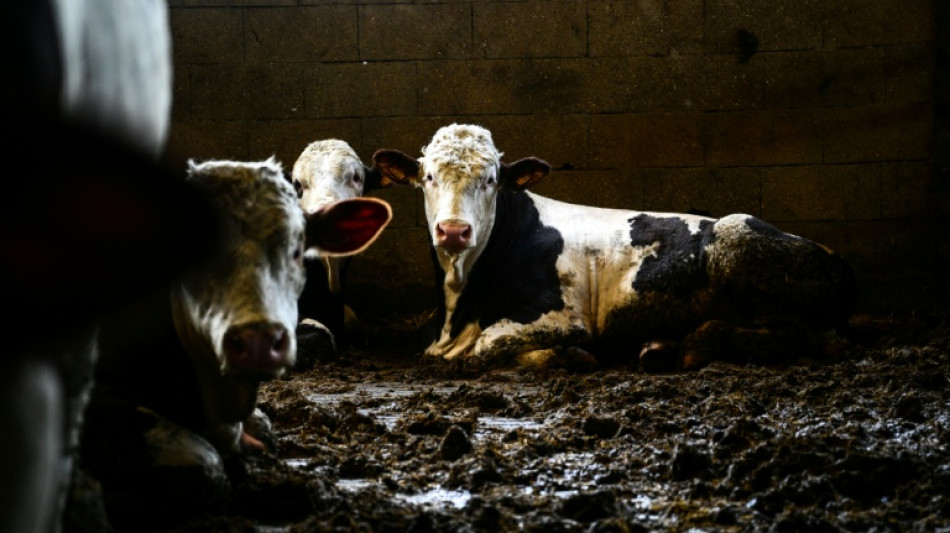
Dangerous livestock pest case confirmed in Texas / Photo: © AFP

Dangerous livestock pest case confirmed in Texas

The United States said on Thursday that the New World screwworm (NWS) fly, a dangerous livestock pest whose flesh-eating larvae can kill cattle, has been detected in a calf in south Texas.

Text size:

"We have a confirmed positive detection of New World screwworm in a three-week-old calf," US Agriculture Secretary Brooke Rollins said in a briefing.

She said "immediate action" to contain and eradicate the parasite that has raised fears over the beef supply was underway.

The NWS fly was eradicated in the United States in 1966.

But Florida experienced an outbreak in 2016 that primarily impacted deer, and was eliminated the following year, according to the US Department of Agriculture.

It has remained present in South America, and in recent years has moved northward, triggering alarm.

The impacted calf this time around had larvae in its umbilical area, the USDA said.

Michael Schmoyer -- the associate administrator for the country's Animal and Plant Health Inspection Service and head of the NWS Directorate -- said the infested beef calf "is not a danger to the food supply."

"The screw worm can be detected easily, and it can be treated," he told journalists.

Officials added that the calf was undergoing treatment and improving, and emphasized that the worms do not infest food sources like meat, fruit or vegetables.

The flies lay their eggs in open wounds or mucous membranes of warm-blooded animals, where they hatch into larvae and feed on flesh. Left untreated, the infestation can be deadly, and the parasites can quickly spread.

Texas has established a 12-mile (20-kilometer) quarantine zone, meaning all warm-blooded animals including pets must be inspected before leaving the zone.

- Sterilization by ground and sky -

The fly had been eradicated in the US thanks in large part by dropping millions of sterile flies to mate with wild females.

US officials said some four million sterile flies were already being released weekly from the sky, and that some four million more in the pupae stage were being deployed in ground release chambers.

Infections in humans are not common, the USDA said, but added that individuals who detect signs like suspicious lesions should immediately seek medical attention.

Jennifer Bloodgood, an assistant professor of practice and wildlife veterinarian at Cornell University, said to AFP in a statement that the detection in Texas "underscores the need for continued vigilance and collaboration among livestock, wildlife, and public health communities."

"The good news is that we have successfully eradicated New World screwworm from the United States before," Bloodgood said. "This detection should not cause panic, but it should reinforce the importance of awareness."

Feeder cattle futures at the Chicago Mercantile Exchange rose Thursday as the market feared an eventual decline in available supply.

A USDA study last year estimated a screwworm resurgence in Texas could cost the state's economy $1.8 billion.

U.Feng--ThChM