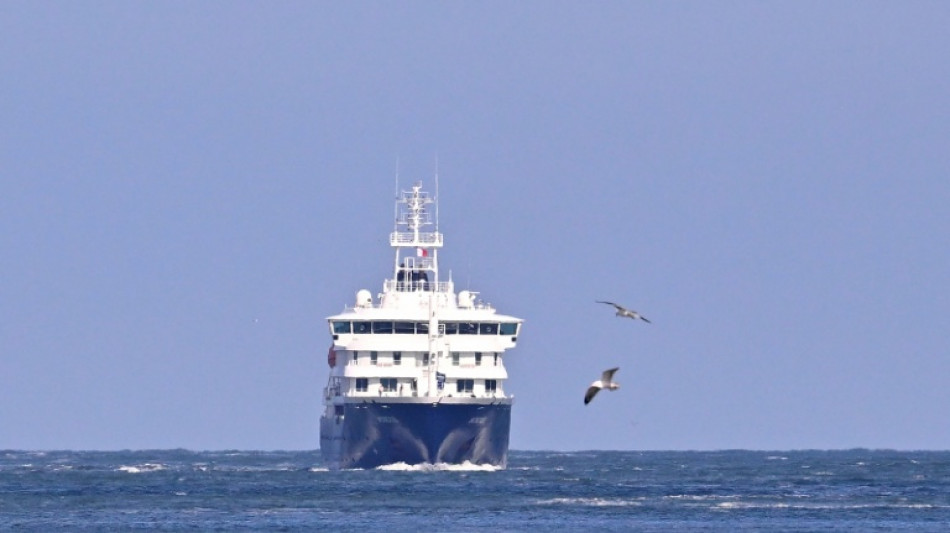
What did we learn from the hantavirus cruise ship scare? / Photo: © AFP/File

As the hantavirus scare comes to an end with the last cruise ship passengers set to leave quarantine, what did the world learn from this sudden outbreak of a previously little-known virus?
The deaths of three people who had been onboard the MV Hondius sparked a global health alert in early May, prompting fears the ship's many international passengers could spread the rodent-borne disease across the world.
Many nations responded by putting the passengers and contact cases in quarantine or isolation for the disease's six-week incubation period.
There were no further deaths during the outbreak -- and all 12 confirmed hantavirus cases were passengers on the ship.
With the last remaining passengers soon to leave quarantine, AFP answers key questions about an episode that again highlighted the risk viruses in animals pose to humans.
- Is it over? -
Almost all the passengers of the Dutch-flagged ship quarantined in the Netherlands have been allowed to return home, the World Health Organization said on Thursday.
In France, four people quarantined in hospital are set to be released on Sunday. A fifth passenger who became seriously ill will stay in intensive care, however her condition has improved, according to French health authorities.
In other countries, people are also set to leave quarantine -- in Australia, six passengers are scheduled to be set free on Tuesday.
There have been no new cases reported in the outbreak for more than three weeks.
Given the incubation period for the virus has passed, "the episode can likely be considered over," Nicole Tischler, president of the International Society of Hantaviruses, told AFP.
- What did we learn? -
The 12 confirmed cases -- and another considered likely -- pale in comparison to the tens of thousands of hantavirus infections recorded worldwide every year.
However, most of those cases involve humans getting infected while in close contact with a rodent.
The concerning factor about the cruise ship outbreak was that the virus was transmitted between humans.
The Andes strain that spread on the ship is the only form of hantavirus known to do this, however documented outbreaks have been very rare.
This raised the spectre that the nearly 150 people on the ship could spread the disease in their home countries.
This did not happen. The only instances of human-to-human transmission were in the tight confines of the ship -- and even then appear to have been limited.
"The conditions were really an accelerator for virus particles," French infectious disease specialist Xavier Lescure told a press briefing on Thursday.
This was evidence that the risk of transmitting hantavirus between humans remains "low," he added.
The cases also did not show any "particular novelty" compared to the infections regularly recorded in parts of the Americas, Lescure said.
- What remains unknown? -
The sudden global spotlight on hantavirus has however spurred some progress in understanding the virus, for which there is no treatment.
"The event highlighted how little is known about the precise timing of infectiousness; specifically whether transmission occurs only after symptom onset or may begin in the days beforehand," Tischler said.
She hoped more would be revealed about how the infected people came in contact on the ship.
Perhaps the most important piece of the puzzle still missing is how the first person became infected.
It had been thought that a passenger on the ship caught the virus while travelling in regions of Argentina where it is endemic.
However the country's health ministry announced last week that an investigation in a second Argentine province had failed to find any virus-carrying rodents.
- The right response? -
With memories lingering of the Covid-19 pandemic, some countries swiftly enforced a strict six-week quarantine for the ship's passengers and contact cases.
Other nations, such as the UK, allowed passengers to isolate at home.
Some of those placed in mandatory quarantine have spoken out.
In the United States, passenger Angela Perryman told CNN this week she felt like a "hostage" after Health Secretary Robert F. Kennedy overruled an expert's recommendation to release her.
Experts have observed that this episode has again illustrated the risks of zoonotic diseases, which are transmitted from animals to humans.
Some other examples include Covid and mpox, as well as mosquito-borne scourges such as malaria, chikungunya and dengue.
A.Zhang--ThChM