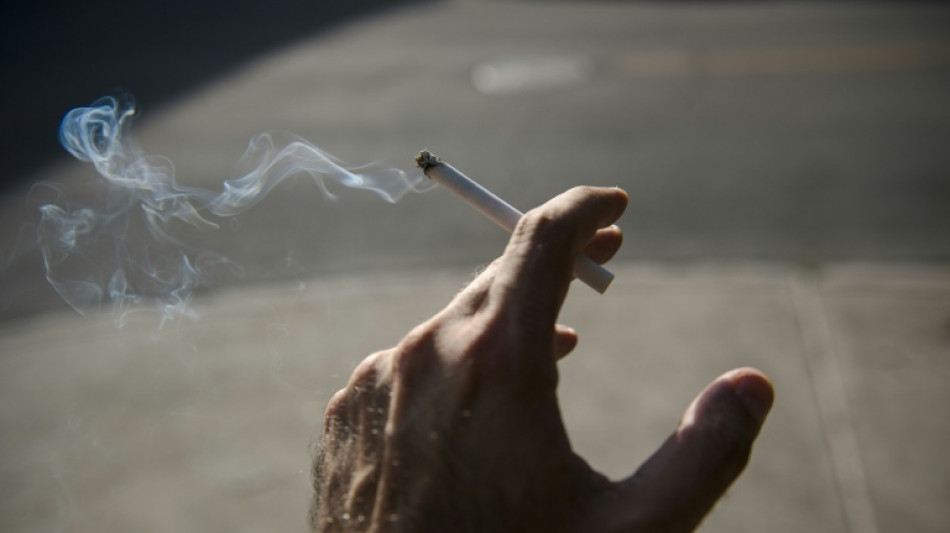
Make smoking cool again? Pop culture reboots the vice / Photo: © AFP

From beauty mogul Kylie Jenner lighting up on the cover of Vanity Fair to cigarette trays at singer Dua Lipa's wedding, the pop culture-verse has rebooted cigarettes as the accessory du jour, health risks be damned.
Smoking rates are at a six-decade low among American adults and the lowest in a quarter-century among youth.
And yet, searches for the term "smoking pose" on the image-sharing platform Pinterest have soared 70 percent among 18- to 24-year-olds, according to Style Analytics, a fashion world data tracker.
On Instagram, the account "Cigfluencers" shares images of celebrities smoking -- "your favorite smoker's favorite smokers," reads the tagline.
The posts included a number of shots snapped in May at the Met Gala, the annual gathering of A-listers in New York.
Even though current US smoking statistics don't show an increase in the actual habit, making cigarettes chic again has triggered concern among anti-smoking advocates.
"Pop culture's glamorization of smoking is just reigniting the addiction among young people and discouraging those trying to quit," Jessica Rath, vice president at the anti-tobacco advocacy group Truth Initiative, told AFP.
- 'Highly concerning' -
The organization noted that eight of the 10 feature films nominated for this year's best picture Oscar contained images of tobacco use.
This type of exposure makes young people two to three times more likely to use tobacco products, Rath said.
Brian King, head of US programs at the Campaign for Tobacco-Free Kids, said the trend is "highly concerning from a public health perspective."
One explanation for the resurgence is the return of aesthetics from the 1990s and early 2000s -- an era when smoking was still quite common in the United States.
The look was all over the recent popular series "Love Story," a show that detailed the storied relationship of the late John F. Kennedy Jr and Carolyn Bessette -- the latter was a regular smoker and was portrayed as such on the show.
The brand strategy newsletter On Brand has dubbed the smoker's aesthetic an act of rebellion against the social media pressures of "self-optimization."
And it's all set, of course, against a backdrop of economic and geopolitical uncertainty.
"Right now, we're also having kind of a colliding mental health crisis with young people," said Rath.
"And so young people are thinking that using nicotine is helping their feelings of anxiety, depression, and stress -- when really it could be making it worse."
King noted that public attention has shifted away from the risks associated with conventional cigarettes, as e-cigarettes, heated tobacco products and nicotine pouches grow in popularity.
"In some cases, we as society have been recalcitrant in terms of remembering those risks, and also importantly implementing policies that we know work to prevent the use of these products," King said.
- 'De-normalize smoking' -
US President Donald Trump's administration has made significant cuts to smoking prevention and cessation support programs.
And the previous administration under Joe Biden backed off its plan to ban menthol cigarettes, which are popular among young people.
King said that in the US, the tobacco industry spends the equivalent of approximately $1 million an hour on marketing and promotion.
Nonprofits and anti-smoking organizations lack data on how tobacco companies might be pushing the "cigfluencer" phenomenon.
But it's critical, King said, that the United States works to "de-normalize smoking" in the face of such trends.
Society must "not be doing anything that could potentially reverse the considerable progress that we've made in reducing smoking over many decades," he said.
Along with traditional methods of discouraging smoking -- public service messaging, cessation support, price hikes, and smoking bans -- Rath recommends working with platforms and Hollywood to discourage the habit.
She suggests displaying on-screen messages directing viewers to support services, similar to those already in use to prevent suicide or assist those suffering sexual violence.
"Shows also have the power to reduce tobacco depictions and incorporate realistic quitting examples into storylines," said Truth Initiative, noting recent depictions in "The Bear" of the main character working to quit smoking using nicotine replacement therapy.
L.Johnson--ThChM