The China Mail - Medical AI paper predicts autonomous systems could outperform doctors in core clinical tasks by 2030

USD -
AED 3.672984
AFN 63.999698
ALL 80.977186
AMD 362.830125
ANG 1.790365
AOA 917.99975
ARS 1522.824962
AUD 1.439232
AWG 1.8025
AZN 1.700271
BAM 1.722428
BBD 2.015086
BDT 123.012972
BGN 1.683441
BHD 0.377003
BIF 2995
BMD 1
BND 1.277405
BOB 12.040458
BRL 5.1702
BSD 1.000454
BTN 95.892522
BWP 14.09417
BYN 3.010995
BYR 19600
BZD 2.012171
CAD 1.422375
CDF 2309.999922
CHF 0.83543
CLF 0.024662
CLP 973.780211
CNY 6.70475
CNH 6.709205
COP 3319.17
CRC 456.985341
CUC 1
CUP 24.01166
CVE 97.750209
CZK 21.552505
DJF 177.720292
DKK 6.594725
DOP 59.48895
DZD 133.867992
EGP 51.941799
ERN 15
ETB 163.421342
EUR 0.882129
FJD 2.24725
FKP 0.756991
GBP 0.75395
GEL 2.605011
GGP 0.756991
GHS 11.743978
GIP 0.756991
GMD 73.501138
GNF 8798.844552
GTQ 7.643396
GYD 209.328131
HKD 7.84715
HNL 26.859007
HRK 6.646198
HTG 130.939066
HUF 323.268496
IDR 17933
ILS 3.07365
IMP 0.756991
INR 95.98395
IQD 1310.606294
IRR 1693792.497294
ISK 120.849935
JEP 0.756991
JMD 158.336929
JOD 0.70903
JPY 157.34008
KES 129.6597
KGS 87.448702
KHR 4057.22564
KMF 434.999712
KPW 900.000318
KRW 1355.549791
KWD 0.30888
KYD 0.833726
KZT 440.074329
LAK 22455.503791
LBP 89592.031739
LKR 330.60617
LRD 171.583824
LSL 16.385613
LTL 2.95274
LVL 0.60489
LYD 6.399
MAD 9.713019
MDL 17.763022
MGA 4394.578552
MKD 54.223526
MMK 2099.600314
MNT 3599.1704
MOP 8.086624
MRU 40.069045
MUR 47.690165
MVR 15.449751
MWK 1734.754084
MXN 18.069545
MYR 4.080597
MZN 63.909822
NAD 16.385685
NGN 1327.250239
NIO 36.821108
NOK 9.61761
NPR 153.428035
NZD 1.77502
OMR 0.384501
PAB 1.000449
PEN 3.44424
PGK 4.528402
PHP 62.7685
PKR 277.158584
PLN 3.84925
PYG 5852.979771
QAR 3.647324
RON 4.651102
RSD 103.696974
RUB 83.375398
RWF 1477.228194
SAR 3.755513
SBD 8.032647
SCR 13.837787
SDG 601.499865
SEK 10.00663
SGD 1.277635
SHP 0.755829
SLE 24.650049
SLL 20969.491881
SOS 571.727998
SRD 37.621498
STD 20697.981008
STN 21.576683
SVC 8.75393
SYP 13002.000254
SZL 16.377071
THB 33.6035
TJS 9.214436
TMT 3.51
TND 2.978697
TOP 2.40776
TRY 49.015799
TTD 6.787408
TWD 31.877403
TZS 2640.002997
UAH 44.690709
UGX 3921.672237
UYU 40.308767
UZS 11835.41907
VES 857.98905
VND 25962
VUV 119.008285
WST 2.76852
XAF 578.638992
XAG 0.016618
XAU 0.000240947889
XCD 2.70255
XCG 1.803098
XDR 0.707052
XOF 578.638992
XPF 105.029547
YER 236.39594
ZAR 16.42399
ZMK 9001.19938
ZMW 19.559579
ZWL 321.999592
SSP 5712.591899
MXV 2.045433
  • RYCEF

    0.4000

    19.71

    +2.03%

  • CMSC

    0.0000

    20.4

    0%

  • BTI

    0.4200

    56.05

    +0.75%

  • BP

    0.2800

    44.43

    +0.63%

  • RBGPF

    1.6000

    67

    +2.39%

  • RIO

    -0.1500

    94.41

    -0.16%

  • AZN

    -0.4300

    166.15

    -0.26%

  • GSK

    0.4600

    49.7

    +0.93%

  • BCE

    -0.4100

    20.56

    -1.99%

  • NGG

    -0.2500

    75.24

    -0.33%

  • VOD

    -0.0400

    16.58

    -0.24%

  • RELX

    -0.4500

    33.07

    -1.36%

  • BCC

    -0.5500

    76.59

    -0.72%

  • CMSD

    -0.0300

    20.27

    -0.15%

  • JRI

    -0.2500

    10.77

    -2.32%

Medical AI paper predicts autonomous systems could outperform doctors in core clinical tasks by 2030

Medical AI paper predicts autonomous systems could outperform doctors in core clinical tasks by 2030

A JAMA article argues that autonomous AI could surpass both doctors and doctor-AI teams in several core medical tasks by 2030, a forecast disputed by medical leaders.

Text size:

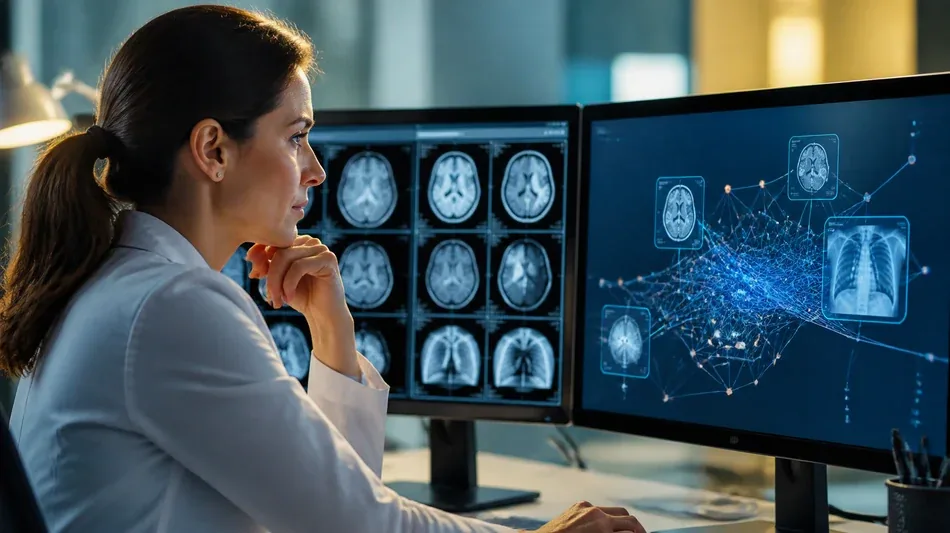
A paper published in the Journal of the American Medical Association has intensified debate over how far artificial intelligence could replace physicians in routine clinical work. The authors, including medical ethicist and oncologist Ezekiel Emanuel and investor Vinod Khosla, argue that autonomous AI is approaching a point where it could outperform both doctors and physicians working with AI on five fundamental tasks: taking medical histories, diagnosing disease, choosing tests, prescribing treatment and managing chronic conditions.The authors reviewed medical-AI studies published since January 1, 2024, and concluded that in many cases a superior autonomous system could surpass human-AI combinations by 2030. The paper discloses relevant financial interests and professional relationships, including Vinod Khosla's investments and the role of his son Neal Khosla, who runs the AI-enabled health service Curai Health.The conclusion is contested. American Medical Association chief executive John Whyte said some of the evidence is based on simulations rather than blinded real-world trials and does not uniformly support the paper's forecast. A Nature study published in February 2026 also found that many patients had difficulty interacting effectively with large language models in real-life settings.Robert Wachter, chair of medicine at the University of California, San Francisco, said the assumption that human-AI teams will always outperform AI alone may not hold in every situation. At the same time, he argued that physicians retain important roles in communication, empathy and helping patients make difficult choices. Medical educators are also considering whether heavy reliance on AI could weaken training in basic history-taking, physical examination and clinical judgment.The debate is therefore shifting from whether AI will be used in medicine to how responsibility should be divided between automated systems and clinicians. Even proponents of greater autonomy expect humans to remain essential in areas such as surgery, emergency care, procedures and conversations where trust and empathy are central.

B.Carter--ThChM