July to be hottest month on record as UN warns of 'global boiling' / Photo: © AFP

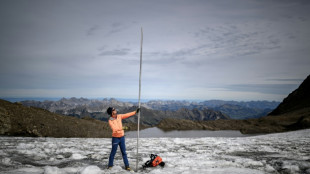
July is on track to be the hottest month in recorded history, scientists confirmed Thursday, as UN chief Antonio Guterres warned Earth has moved into an "era of global boiling".
Searing heat intensified by global warming has affected tens of millions of people in parts of Europe, Asia and North America this month, combining with fierce wildfires that have scorched across Canada and parts of southern Europe.
"Climate change is here. It is terrifying. And it is just the beginning," said Guterres, urging immediate and bold action to cut planet-heating emissions.
"The era of global warming has ended; the era of global boiling has arrived."
With the first three weeks of July already registering global average temperatures above any comparative period, the World Meteorological Organization and Europe's Copernicus Climate Change Service (C3S) said it is "extremely likely" that July 2023 will be the hottest month on records going back to the 1940s.
Carlo Buontempo, Director of C3S, said the temperatures in the period had been "remarkable", with an anomaly so large that scientists are confident the record has been shattered even before the month ends.
Beyond these official records, he said proxy data for the climate going back further -- like tree rings or ice cores -- suggests the temperatures seen in the period could be "unprecedented in our history in the last few thousand years".
Possibly even longer "on the order of 100,000 years" he said.
About 1.2 degrees Celsius of global warming since the late 1800s, driven by the burning of fossil fuels, has made heatwaves hotter, longer and more frequent, as well as intensifying other weather extremes like storms and floods.
- 'Heat can kill' -
The WMO has said the eight years to 2022 were the warmest on record, despite the cooling effects of the La Nina weather pattern. That has now given way to the warming El Nino, although this is not expected to strengthen until later in the year.
"The extreme weather which has affected many millions of people in July is unfortunately the harsh reality of climate change and a foretaste of the future," said World Meteorological Organization's Secretary-General Petteri Taalas.
"The need to reduce greenhouse gas emissions is more urgent than ever before. Climate action is not a luxury but a must."
The intense heat and devastating wildfires seen in July across parts of the northern hemisphere have caused alarm over the impact on health, ecosystems and economies.
With large swathes of the United States facing a record-breaking heatwave, President Joe Biden held a White House conference with city mayors to discuss the extreme temperatures like those seen in Phoenix, Arizona, which is enduring a brutal 27-day streak of days above 43 degrees Celsius (110 degrees Fahrenheit).
New York was under an excessive heat warning on Thursday and Friday as the city opened 500 air-conditioned cooling centres.
"Let's be clear: heat can kill. This is dangerous," Mayor Eric Adams said on Twitter, which is being rebranded as 'X'.
Biden also announced moves to bolster heat-related safety rules for workers, especially those labouring outdoors.
In Beijing, which saw a record-breaking streak of four weeks of highs above 35C, authorities urged the elderly to stay indoors and children to shorten outdoor playtime.
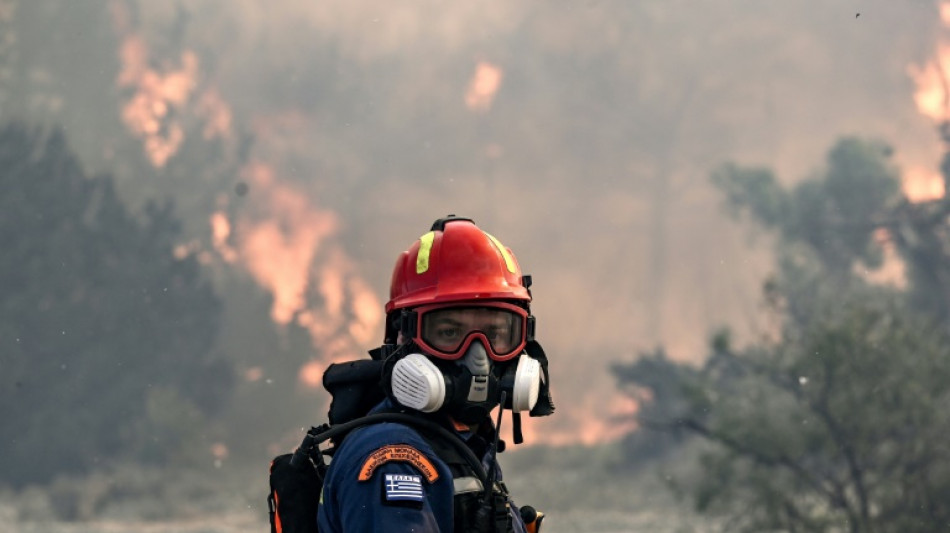
Wildfires raged in several countries across the Mediterranean region, where extreme heat has left landscapes tinder dry.
Hundreds of firefighters are struggling to contain deadly blazes across Greece that have raged for two weeks.
- Hot water -
Copernicus and WMO said global average sea surface temperatures, which have been well above those previously registered for the time of year since May, have contributed to the exceptionally warm July.
Buontempo said "a significant swathe" of the central Mediterranean is now close to or above all previous records.
Meanwhile, bathtub temperatures in the shallow waters off south Florida -- topping 37.8C for several hours on Monday -- potentially set a new world record and threatened coral reefs.
Scientists say the world will need to adapt to the heat and other impacts already caused by emissions -- and that carbon pollution must be slashed dramatically this decade to avoid worse in the future.
The WMO predicts it is more likely than not that global temperatures will temporarily rise 1.5C above the pre-industrial benchmark for at least one of the next five years.
They stress, however, that this would not mark a permanent breach of the 1.5C limit set out in the Paris Agreement, which refers to long-term warming.
This week scientists from the World Weather Attribution group found that the heatwaves in parts of Europe and North America would have been almost impossible without climate change.
klm-bl-burs/rox
J.Liv--ThChM