Running wild: stray dogs threaten rare Balkan lynx / Photo: © AFP

For years, the Balkan lynx has struggled to survive as deforestation destroyed its habitat and poachers targeted the elusive mountain cat along with the animals it relies on for food.
But now, scientists have uncovered another potent enemy likely adding pressure on the endangered species -- wild dogs.
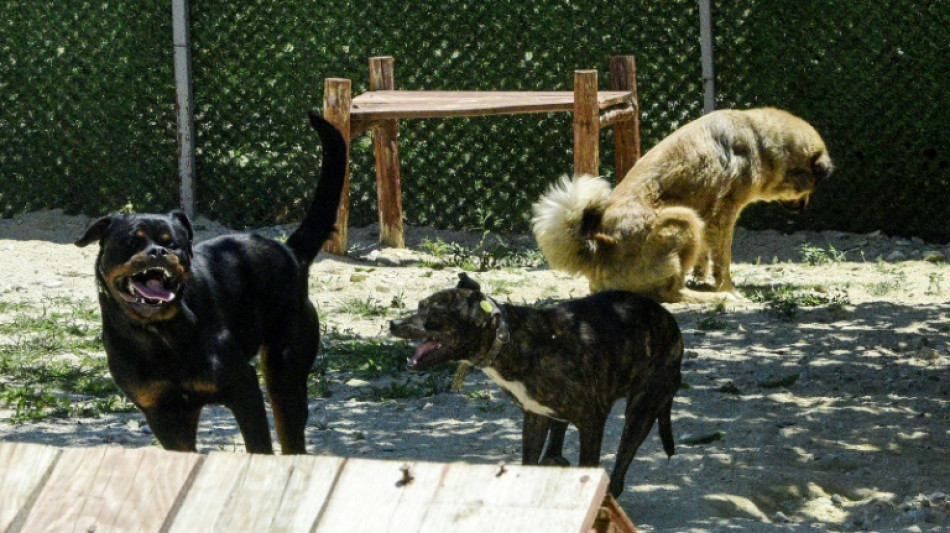
Feral dogs have been a long but growing problem across wide stretches of the Balkans, with large packs stirring public health fears in cities and harming livestock in rural communities.
The problem has been particularly acute in North Macedonia, where an estimated 6,000 wild dogs are believed to populate the capital Skopje alone. There is no official data on the number of feral dogs nationwide.
The persistent problem is running headfirst into the years-long conservation battle to save the Balkan lynx, considered one of the region's most endangered animals.
Experts estimate that there are approximately 40 of these solitary cats left in their habitat, which covers mountainous swaths of Albania, Kosovo, and North Macedonia.
"We realised that there is another predator, that so to speak is not typical or natural. And those are wild dogs," said Dime Melovski from the Macedonian Ecological Society that has been monitoring the lynx in Mavrovo National Park since 2006.
"They are another predator that the lynx has to compete with," the 42-year-old ecologist told AFP.
Melovski along with a network of other conservation outlets, volunteers, hunters and rangers have kept a close eye on the forests over the years, thanks in part to the use of trail cameras.
Roughly four years ago, the group began to notice an emerging pattern.
Wild dogs were consuming large amounts of the deer population in the lynx's habitat that make up roughly 70 percent of the cat's diet.
- Government inaction -
Experts admit that the extent of the problem is still hazy, with limited resources only allowing them to survey narrow strips of territory.
Animal rights activists say issues involving stray dogs have been a long time coming in North Macedonia and the Balkans at large, due to chronic neglect by governments, along with the actions of irresponsible pet owners.
"The source is irresponsible citizens -- households that 'produce' dogs, abandon the dogs, especially in the rural areas where the dogs are freely wandering around," said Radmila Pesevska, the director of Laika -- an animal welfare centre in Skopje.
Laika is one of a handful of organisations dedicated to managing the population of strays through its "catch, sterilise, vaccinate, return" programme.
While Laika admits to making limited headway, Pesevska says only with effective government support will it be possible to address the issue.
"The state has to jump in with measures," Pesevska told AFP.
For years, animal activists in North Macedonia have been lobbying officials for the adoption of a law that will enforce obligatory sterilisation of all pets.
In the face of government inaction, activists have taken a piecemeal approach -- including the housing of 5,000 strays in the Skopje area in recent years.
"We are trying to find a home for a portion of them... but unfortunately some of them end up in rural, mountain areas where they continue to live as wild animals," said Emilija Gogova, a 42-year-old animal rights activist based in Skopje.
Experts say the growing population of strays has led to myriad issues, including the dogs' ability to mate with wolves -- creating hybrids that threaten to dilute the wolf population.
All of these issues compound, experts argue, putting even greater pressure on endangered species like the lynx.
"Every threat to a critically endangered animal, such as the lynx, has to be addressed," Melovski told AFP.
"Because every threat leads to the lower possibility for the survival of this animal."
J.Thompson--ThChM