The China Mail - Minnows blamed for algae-filled French, Spanish lakes

USD -
AED 3.672504
AFN 66.503991
ALL 80.629676
AMD 365.091035
AOA 917.000367
ARS 1491.937897
AUD 1.417435
AWG 1.80125
AZN 1.70397
BAM 1.691649
BBD 2.00813
BDT 123.418242
BHD 0.375989
BIF 2985.079791
BMD 1
BND 1.277602
BOB 11.849673
BRL 5.083304
BSD 0.997016
BTN 94.875232
BWP 13.457596
BYN 2.968819
BYR 19600
BZD 2.00519
CAD 1.39545
CDF 2262.50392
CHF 0.80949
CLF 0.023206
CLP 913.315746
CNY 6.747604
CNH 6.743285
COP 3142.844787
CRC 453.228387
CUC 1
CUP 26.5
CVE 95.372573
CZK 20.982104
DJF 177.546166
DKK 6.46804
DOP 58.20179
DZD 132.308956
EGP 49.631449
ERN 15
ETB 160.923669
EUR 0.86495
FJD 2.20855
FKP 0.740916
GBP 0.742583
GEL 2.610391
GGP 0.740916
GHS 11.700039
GIP 0.740916
GMD 73.503851
GNF 8756.649224
GTQ 7.607144
GYD 208.588851
HKD 7.842304
HNL 26.723176
HRK 6.518804
HTG 130.363707
HUF 314.060388
IDR 17801
ILS 2.99985
IMP 0.740916
INR 95.210504
IQD 1306.058902
IRR 1375550.000352
ISK 123.340386
JEP 0.740916
JMD 158.335856
JOD 0.70904
JPY 157.80604
KES 129.014401
KGS 87.450384
KHR 4049.647537
KMF 426.00035
KRW 1407.860383
KWD 0.30866
KYD 0.830861
KZT 467.275008
LAK 22510.919863
LBP 89282.792025
LKR 334.420274
LRD 179.959348
LSL 16.197552
LTL 2.95274
LVL 0.60489
LYD 6.341738
MAD 9.29222
MDL 17.337716
MGA 4254.638239
MKD 53.215413
MMK 2099.750695
MNT 3597.347644
MOP 8.056654
MRU 40.080439
MUR 47.070378
MVR 15.450378
MWK 1728.841413
MXN 17.13645
MYR 4.090104
MZN 63.905039
NAD 16.197552
NGN 1364.860377
NIO 36.690741
NOK 9.51237
NPR 151.800372
NZD 1.701115
OMR 0.382693
PAB 0.997016
PEN 3.376465
PGK 4.406003
PHP 60.705038
PKR 276.796523
PLN 3.719205
PYG 5928.296501
QAR 3.644596
RON 4.536304
RSD 101.492021
RUB 81.598409
RWF 1466.072741
SAR 3.744756
SBD 8.065696
SCR 14.449077
SDG 600.503676
SEK 9.480804
SGD 1.278038
SLE 24.603667
SOS 569.822255
SRD 37.866504
STD 20697.981008
STN 21.191022
SVC 8.723782
SZL 16.194265
THB 33.050369
TJS 9.197509
TMT 3.51
TND 2.929032
TRY 47.697504
TTD 6.757774
TWD 32.250604
TZS 2639.622886
UAH 44.653894
UGX 3714.050945
UYU 40.133201
UZS 11924.058297
VES 755.762404
VND 26204.5
VUV 119.414824
WST 2.733661
XAF 567.363231
XAG 0.015731
XAU 0.00023
XCD 2.70255
XCG 1.796912
XDR 0.705618
XOF 567.363231
XPF 103.152705
YER 238.403589
ZAR 16.14632
ZMK 9001.203584
ZMW 18.818492
ZWL 321.999592
  • CMSC

    0.0240

    21.744

    +0.11%

  • RIO

    1.4500

    101.1

    +1.43%

  • RYCEF

    0.2300

    20.85

    +1.1%

  • GSK

    0.7900

    52.96

    +1.49%

  • BTI

    0.6000

    59.33

    +1.01%

  • RELX

    0.0485

    35.52

    +0.14%

  • RBGPF

    0.7600

    70.5

    +1.08%

  • NGG

    0.4700

    80.88

    +0.58%

  • BP

    -0.6000

    41.63

    -1.44%

  • CMSD

    -0.1600

    21.82

    -0.73%

  • AZN

    1.4100

    161.42

    +0.87%

  • BCC

    2.3400

    86.6

    +2.7%

  • BCE

    -0.0200

    22.75

    -0.09%

  • JRI

    0.1500

    12.81

    +1.17%

  • VOD

    0.1900

    16.19

    +1.17%

Minnows blamed for algae-filled French, Spanish lakes
Minnows blamed for algae-filled French, Spanish lakes / Photo: © AFP

Minnows blamed for algae-filled French, Spanish lakes

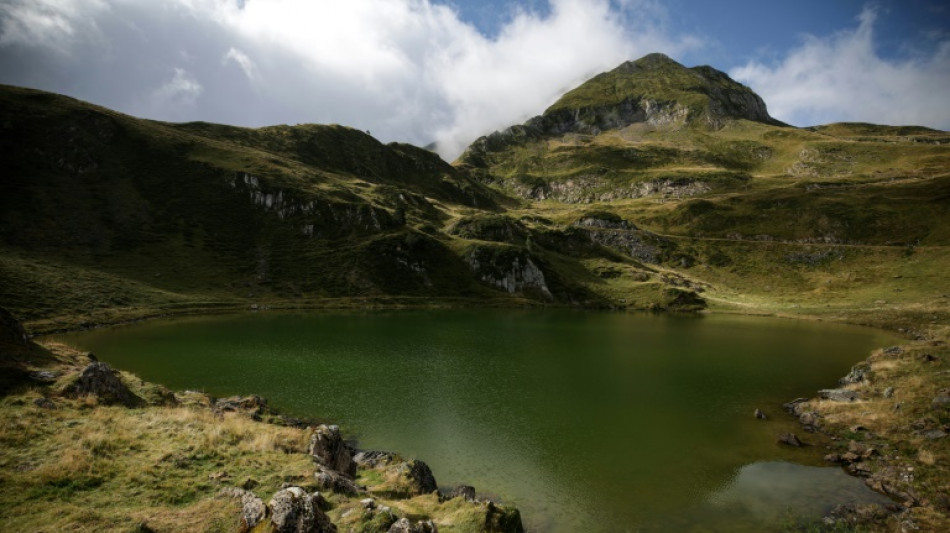
Perched 1,800 metres (about 6,000 feet) near France's border with Spain lies the emerald Areau lake -- whose colour experts blame on minnows used by anglers as live bait.

Text size:

"When one sees these fish in the mountain lakes, we see a disturbed ecosystem," said Adeline Loyau, a biologist and researcher at the National Polytechnic Institute (INP) in the southern French city of Toulouse.

These tiny fish, less than 10 centimetres long, are used as live bait.

But some managed to escape the hooks and have thrived, devouring amphibians, insects and zooplankton -- "microscopic crustaceans whose role is to devour algae and keep the water crystal clear and very pure", Loyau told AFP.

When the lake became green "it meant the algae won", said Dirk Schmeller, a professor specialising in mountain ecology at the INP.

But the abundance of algae in the once clear waters is not only due to this, and several other issues are being examined.

- 'Cocktail of factors' -

"There are a cocktail of factors," said Didier Galop, head of research at the National Scientific Research Centre (CNRS) who specialises in the history and geography of the environment.

The growing concentration of herds of cattle around these lakes means an increase of manure spewing nutrients into the water and make it a breeding ground for algae.

Others say higher temperatures due to global warming is exacerbating the problem.

But some say the greening of the lakes is not necessarily alarming.

"There are also lakes that are very blue but have zero biodiversity," Galop said.

Schmeller and Loyau however said green lakes were becoming more and more common in the region.

"We even have hikers who sometimes come 30 years later" and notice this, Loyau said.

- Diverse laws -

On the other side of the Pyrenees in Spain, green lakes have been observed since 2011 by Spanish researchers and a programme was launched three years later to get rid of the minnows with nets and electrical techniques.

In 2018, France's National Pyrenees Park copied the Spanish initiative but they found that the fish had been reintroduced by anglers.

Some highlight the need to educate fishermen.

Sebastien Delmas, the head of an association grouping anglers' groups from the French Pyrenees, said local laws needed to be harmonised to outlaw live bait.

But he emphasised that other species like trout had their place in the lakes.

"The fish, they too are biodiversity. If they have been here for centuries, it's because they fit in," he said.

Delmas said tourism was also partly to blame, saying swimmers smeared with sunblock and mosquito repellents were also affecting the ecosystem.

"On a summer's day, there may be three or four anglers around a lake but 300 swimmers. But one always blames the anglers," he said.

Schmeller said there was a real need to eliminate pollutants around lakes, adding sardonically: "After that, there's just climate change that needs to be tackled".

G.Tsang--ThChM