The China Mail - Brazil tries to avoid climate bust up at COP30 summit

USD -
AED 3.672502
AFN 63.999576
ALL 80.977186
AMD 362.829809
ANG 1.790365
AOA 918.000184
ARS 1524.997501
AUD 1.43976
AWG 1.8025
AZN 1.69885
BAM 1.722428
BBD 2.015086
BDT 123.012972
BGN 1.683441
BHD 0.376997
BIF 2995
BMD 1
BND 1.277405
BOB 12.040458
BRL 5.181501
BSD 1.000454
BTN 95.892522
BWP 14.09417
BYN 3.010995
BYR 19600
BZD 2.012171
CAD 1.423715
CDF 2309.999986
CHF 0.835405
CLF 0.024646
CLP 973.179852
CNY 6.704751
CNH 6.709685
COP 3314.79
CRC 456.985341
CUC 1
CUP 24.01166
CVE 97.750138
CZK 21.561986
DJF 177.719945
DKK 6.598698
DOP 59.697254
DZD 133.911021
EGP 51.938599
ERN 15
ETB 163.421342
EUR 0.88272
FJD 2.24775
FKP 0.756991
GBP 0.754035
GEL 2.60498
GGP 0.756991
GHS 11.699323
GIP 0.756991
GMD 73.5159
GNF 8798.844552
GTQ 7.643396
GYD 209.328131
HKD 7.84663
HNL 26.859007
HRK 6.650974
HTG 130.939066
HUF 323.646983
IDR 17897.45
ILS 3.07365
IMP 0.756991
INR 95.93015
IQD 1310.606294
IRR 1693792.500038
ISK 120.930408
JEP 0.756991
JMD 158.336929
JOD 0.709025
JPY 157.684016
KES 129.709357
KGS 87.448698
KHR 4057.22564
KMF 435.00025
KPW 900.000318
KRW 1358.609932
KWD 0.30894
KYD 0.833726
KZT 440.074329
LAK 22455.503791
LBP 89592.031739
LKR 330.60617
LRD 171.583824
LSL 16.385613
LTL 2.95274
LVL 0.60489
LYD 6.399
MAD 9.71296
MDL 17.763022
MGA 4394.578552
MKD 54.34255
MMK 2099.600314
MNT 3599.1704
MOP 8.086624
MRU 40.069045
MUR 47.760183
MVR 15.450398
MWK 1734.754084
MXN 18.076375
MYR 4.083989
MZN 63.909674
NAD 16.385685
NGN 1327.250222
NIO 36.821108
NOK 9.626335
NPR 153.428035
NZD 1.77508
OMR 0.384499
PAB 1.000449
PEN 3.44424
PGK 4.528402
PHP 62.740501
PKR 277.158584
PLN 3.85239
PYG 5852.979771
QAR 3.647324
RON 4.6567
RSD 103.766003
RUB 83.375789
RWF 1477.228194
SAR 3.755513
SBD 8.032647
SCR 13.871342
SDG 601.495377
SEK 10.00818
SGD 1.27803
SHP 0.755829
SLE 24.649652
SLL 20969.491881
SOS 571.727998
SRD 37.6215
STD 20697.981008
STN 21.576683
SVC 8.75393
SYP 13002.000254
SZL 16.377071
THB 33.619691
TJS 9.214436
TMT 3.51
TND 2.978703
TOP 2.40776
TRY 49.036597
TTD 6.787408
TWD 31.882899
TZS 2640.003023
UAH 44.690709
UGX 3921.672237
UYU 40.308767
UZS 11835.41907
VES 857.98905
VND 25962
VUV 119.008285
WST 2.76852
XAF 579.026255
XAG 0.016607
XAU 0.000240904065
XCD 2.70255
XCG 1.803098
XDR 0.707052
XOF 579.026255
XPF 105.029547
YER 236.402537
ZAR 16.43561
ZMK 9001.197648
ZMW 19.559579
ZWL 321.999592
SSP 5712.591902
MXV 2.046206
  • RYCEF

    0.4000

    19.71

    +2.03%

  • CMSC

    0.0000

    20.4

    0%

  • BTI

    0.4200

    56.05

    +0.75%

  • BP

    0.2800

    44.43

    +0.63%

  • RBGPF

    1.6000

    67

    +2.39%

  • RIO

    -0.1500

    94.41

    -0.16%

  • AZN

    -0.4300

    166.15

    -0.26%

  • GSK

    0.4600

    49.7

    +0.93%

  • BCE

    -0.4100

    20.56

    -1.99%

  • NGG

    -0.2500

    75.24

    -0.33%

  • VOD

    -0.0400

    16.58

    -0.24%

  • RELX

    -0.4500

    33.07

    -1.36%

  • BCC

    -0.5500

    76.59

    -0.72%

  • CMSD

    -0.0300

    20.27

    -0.15%

  • JRI

    -0.2500

    10.77

    -2.32%

Brazil tries to avoid climate bust up at COP30 summit
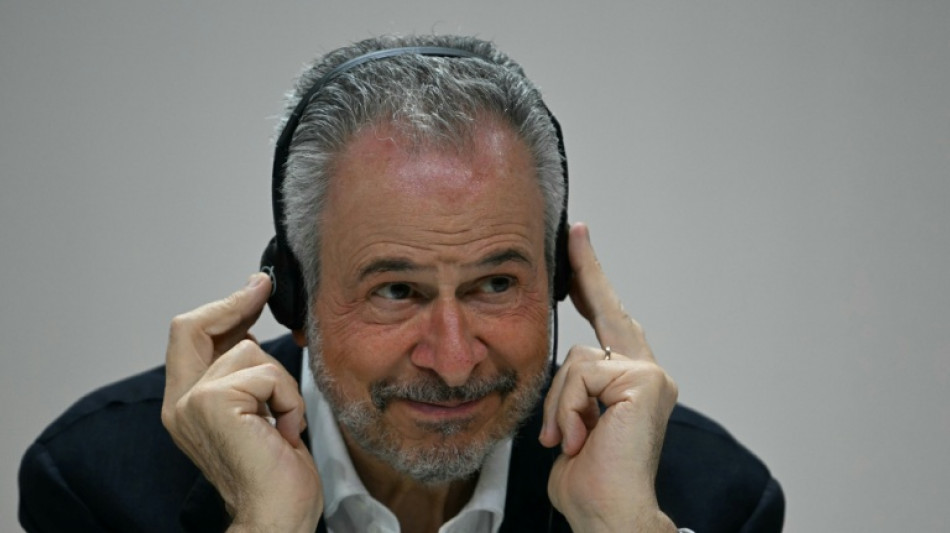
Brazil tries to avoid climate bust up at COP30 summit / Photo: © AFP

Brazil tries to avoid climate bust up at COP30 summit

COP30 hosts Brazil will seek to land a compromise on Wednesday as some nations seek to put ambitious climate action and financial obligations on the summit agenda -- flashpoints that have stalled past negotiations.

Text size:

The United Nations summit narrowly avoided a so-called "agenda fight" at its Monday opening in Belem only because Brazil promised to hear these demands informally and broker an amenable solution.

Four divisive issues are being considered: trade, transparency and reporting measures, climate finance obligations, and efforts to slash heat-trapping pollution.

The latter two are the most sensitive, with rich countries unenthusiastic about reopening bitter fights over financial aid, and oil-producing giants against any focus on the role of fossil fuels in climate change.

Brazil is expected to reveal Wednesday whether it has been successful in finding a middle ground when it wraps up two days of backroom consultations in Belem.

The rotating hosts of these annual Conference of the Parties do not have decision-making power, but still play a crucial role in forging compromise.

Any decision at the COP summits must be reached by consensus among the 197 countries and the European Union that are members of the UN Framework Convention on Climate Change.

One close observer of the consultations told AFP that a few countries were "still not on board" but the dialogue had been "clearly constructive."

There is a growing sense that Brazil could be warming to the idea of a "cover decision" -- an overarching text, delivered at the COP's close, that provides space for articulating a compromised stance.

One diplomat attending Belem's closed-door discussions expects a "slightly more innovative" format where the specific proposals in question are considered on their own.

- Flashpoints -

The most incendiary of the four comes from the Alliance of Small Island States (AOSIS), which wants countries attending Belem to acknowledge their collective failure to keep global warming to safer levels.

Scientists say a temporary breach of 1.5 Celsius -- the lower limit of the Paris Climate Agreement's goal on global temperature rise -- is inevitable because nations have not cut planet-heating emissions fast enough to meet this target.

Other country blocs -- including the European Union and Latin American states -- support the push by AOSIS, whose members are some of the most threatened by rising seas.

Brazil's presidency had "finally found the courage to tackle this issue head-on," the diplomat told AFP.

This has agitated the Arab Group -- a collection of 22 nations including major petrostates -- which has criticised Brazil for opening this discussion, observers say.

The other major bone of contention is the provision by richer nations of financial support to help poorer ones cope with climate change.

The third issue concerns "unilateral" trade measures -- notably Europe's carbon border tax, which is fiercely opposed by China and India.

A fourth relates to an EU demand for greater transparency around how countries report key climate data.

H.Ng--ThChM