The China Mail - Regional temperature records broken across the world in 2025

USD -
AED 3.673042
AFN 62.503991
ALL 81.503989
AMD 377.000368
ANG 1.789731
AOA 917.000367
ARS 1393.633504
AUD 1.406074
AWG 1.795
AZN 1.70397
BAM 1.656622
BBD 2.013137
BDT 122.141801
BGN 1.647646
BHD 0.373577
BIF 2965
BMD 1
BND 1.265294
BOB 6.906687
BRL 5.131104
BSD 0.999496
BTN 90.946514
BWP 13.155231
BYN 2.893456
BYR 19600
BZD 2.010258
CAD 1.36475
CDF 2210.000362
CHF 0.769413
CLF 0.022126
CLP 873.660396
CNY 6.85815
CNH 6.86112
COP 3761.68
CRC 471.626595
CUC 1
CUP 26.5
CVE 93.62504
CZK 20.519204
DJF 177.720393
DKK 6.324304
DOP 60.250393
DZD 129.92804
EGP 47.492703
ERN 15
ETB 156.250392
EUR 0.846204
FJD 2.19255
FKP 0.7407
GBP 0.741675
GEL 2.680391
GGP 0.7407
GHS 10.67039
GIP 0.7407
GMD 72.503851
GNF 8780.000355
GTQ 7.666473
GYD 209.114895
HKD 7.82315
HNL 26.53504
HRK 6.375904
HTG 131.018681
HUF 318.940388
IDR 16802.45
ILS 3.135765
IMP 0.7407
INR 91.08085
IQD 1310.5
IRR 1314315.000352
ISK 121.470386
JEP 0.7407
JMD 155.836676
JOD 0.70904
JPY 156.05504
KES 129.000351
KGS 87.450384
KHR 4012.00035
KMF 417.00035
KPW 899.969408
KRW 1440.00035
KWD 0.30654
KYD 0.83297
KZT 497.833719
LAK 21415.000349
LBP 89206.209477
LKR 309.098378
LRD 183.650382
LSL 15.910381
LTL 2.95274
LVL 0.60489
LYD 6.330381
MAD 9.142504
MDL 17.106628
MGA 4210.000347
MKD 52.155337
MMK 2099.949955
MNT 3583.748993
MOP 8.05526
MRU 39.960379
MUR 46.403741
MVR 15.450378
MWK 1736.000345
MXN 17.235304
MYR 3.891304
MZN 63.905039
NAD 15.910377
NGN 1362.440377
NIO 36.725039
NOK 9.509204
NPR 145.514762
NZD 1.667501
OMR 0.380966
PAB 0.999496
PEN 3.355504
PGK 4.258604
PHP 57.740504
PKR 279.375038
PLN 3.57445
PYG 6438.279003
QAR 3.641104
RON 4.315038
RSD 99.595038
RUB 77.083295
RWF 1456
SAR 3.750615
SBD 8.045182
SCR 14.280212
SDG 601.503676
SEK 9.030904
SGD 1.264504
SHP 0.750259
SLE 24.550371
SLL 20969.49935
SOS 571.503662
SRD 37.722038
STD 20697.981008
STN 21
SVC 8.74559
SYP 110.55196
SZL 15.910369
THB 31.000337
TJS 9.510374
TMT 3.5
TND 2.861038
TOP 2.40776
TRY 43.924504
TTD 6.784714
TWD 31.390367
TZS 2565.000335
UAH 43.094202
UGX 3603.267844
UYU 38.395894
UZS 12187.503617
VES 416.836204
VND 26045
VUV 118.917841
WST 2.704188
XAF 555.615601
XAG 0.010657
XAU 0.00019
XCD 2.70255
XCG 1.80138
XDR 0.691464
XOF 554.503593
XPF 101.375037
YER 238.550363
ZAR 15.92866
ZMK 9001.203584
ZMW 18.88624
ZWL 321.999592
  • RBGPF

    0.1000

    82.5

    +0.12%

  • NGG

    0.0500

    93.77

    +0.05%

  • GSK

    1.0600

    59.13

    +1.79%

  • CMSD

    -0.3100

    23.28

    -1.33%

  • VOD

    -0.0400

    15.36

    -0.26%

  • BCE

    0.6400

    26.31

    +2.43%

  • RYCEF

    -0.1200

    18.32

    -0.66%

  • RELX

    0.7300

    34.79

    +2.1%

  • CMSC

    -0.4299

    23.45

    -1.83%

  • RIO

    0.2500

    99.34

    +0.25%

  • AZN

    4.4700

    208.45

    +2.14%

  • BCC

    -0.9000

    82.74

    -1.09%

  • BTI

    -0.0200

    62.65

    -0.03%

  • JRI

    0.1200

    13.29

    +0.9%

  • BP

    0.8700

    38.86

    +2.24%

Regional temperature records broken across the world in 2025
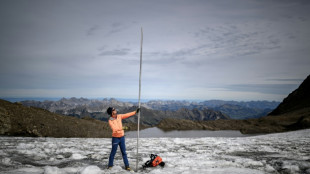
Regional temperature records broken across the world in 2025 / Photo: © AFP

Regional temperature records broken across the world in 2025

Central Asia, the Sahel region and northern Europe experienced their hottest year on record in 2025, according to AFP analysis based on data from the European Copernicus programme.

Text size:

Globally, the last 12 months are expected to be the third hottest ever recorded after 2024 and 2023, according to the provisional data, which will be confirmed by Copernicus in its annual report in early January.

But the average, which includes land and oceans, masks overall records for certain parts of the world.

Many poorer nations do not publish detailed climate data, so AFP has completed the global picture by independently analysing Copernicus data from climate models, measurements from about 20 satellites, and weather stations.

The data spans the whole world, hour by hour, since 1970.

Here is what the detailed analysis revealed for 2025, during which 120 monthly temperature records were broken in more than 70 countries.

- Records shattered in C.Asia -

Every country in Central Asia broke its annual temperature records.

Landlocked, mountainous Tajikistan, where only 41 percent of the population has access to safe drinking water, saw the highest abnormal temperatures in the world, at more than 3C above its seasonal averages from 1981 to 2010.

Monthly temperature records have been broken every month since May, with the exception of November.

Neighbouring countries such as Kazakhstan, Iran and Uzbekistan experienced temperatures 2C to 3C above the seasonal average.

- Up to 1.5C hotter in the Sahel -

Temperature records were beaten in several countries in the Sahel and west Africa.

Mali, Niger, Nigeria, Burkina Faso and Chad saw a rare divergence in temperatures, notching 0.7C to 1.5C above their seasonal average.

The last 12 months were the hottest ever recorded in Nigeria, and one of the fourth hottest in the other countries.

Scientists from the World Weather Attribution (WWA) network, who assess the role of human-induced climate change in extreme weather events, wrote in their annual report published on Monday that extreme heat events "have become almost 10 times more likely since 2015".

Countries in the Sahel -- the semi-arid region of west and north-central Africa stretching from Senegal to Sudan -- are among the most vulnerable to rising temperatures, with many already facing armed conflict, food insecurity and widespread poverty.

- Scorching summer in Europe-

Around 10 European countries are on the verge of, or coming close to, breaking their annual temperature record, notably due to an exceptional summer.

In Switzerland and several Balkan countries, summer temperatures were 2C and even 3C above their seasonal average.

Spain, Portugal and Britain also recorded their worst summer on record, with extreme heat fuelling massive wildfires.

The driest spring in more than a century led to a UK water shortage.

Northern Europe was largely spared the heatwave that hit Europe at the end of June but it instead experienced an abnormally warm autumn.

The last 12 months are expected to be one of the two warmest years on record in Norway, Sweden, Finland and Iceland.

X.Gu--ThChM